


“Steel Wolves Hunt With Soldiers”: China’s Military Unveils Armed Robot Pack for Precision Strikes, Recon, and High-Terrain Combat
 By
Adam Kovács
By
Adam Kovács
| IN A NUTSHELL |
|
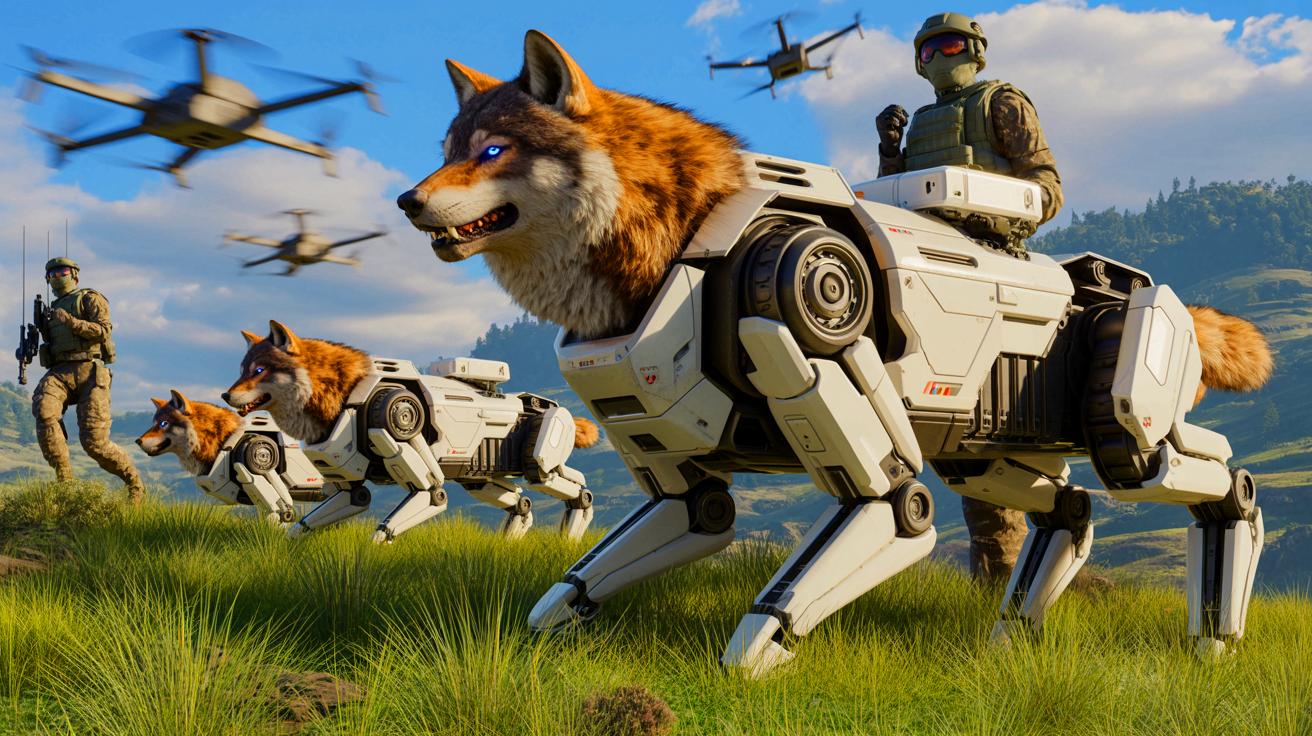
In a striking display of technological advancement, China’s military has unveiled its latest innovation, robot wolves, blurring the line between humans and machines on the battlefield. These quadrupedal robots have been introduced as part of the Chinese People’s Liberation Army’s (PLA) efforts to integrate unmanned devices into traditional military tactics. During a recent exercise, these robot wolves were seen in action, demonstrating their capabilities alongside human soldiers and aerial drones. This development marks a significant shift in military strategy, aiming to reduce human casualties in combat zones by deploying robotic substitutes.
The Evolution of Battlefield Technology
China’s recent military exercise involving robot wolves represents a significant leap forward in integrating technology into combat scenarios. Two motorized infantry companies from the PLA’s 76th Group Army participated in this drill, which was designed to test the synergy between manned and unmanned forces. The focus was on precision strikes, reconnaissance missions, and coordinated assaults in challenging terrains, facilitated by these advanced machines.
The exercise included remarkable footage broadcast by China Central Television (CCTV), showcasing soldiers equipped with QBZ-191 rifles and portable rocket launchers moving in unison with robot wolves. These robots, equipped with similar weaponry, demonstrated their ability to walk, climb, and maintain pace with human troops, simulating a coordinated ground advance. The presence of FPV drones, operated by soldiers in ghillie suits, added another layer of complexity to the operation, conducting reconnaissance and mock suicide attacks.
“US Firm’s New System With High-Tech Sensors”: Experts Say Precision Targeting Just Hit A New Level
“Our primary-level companies aim to use the newly commissioned unmanned equipment well, and integrate them with humans,” stated Hu Te, a brigade member involved in the exercise.
Technological Advancements in Military Robotics
The robot wolves, first introduced during Airshow China 2024, have been developed by China South Industries Group Corporation. Weighing in at 154 pounds, these machines are designed for a variety of roles, including armed assault, surveillance, transport, and support. Their high mobility and adaptability make them particularly valuable in complex terrains where traditional vehicles may falter.
These robotic units are not only capable of operating alongside human soldiers but can also climb ladders and navigate high obstacles. This versatility allows them to enhance combat operations in urban settings, plateaus, and mountainous regions, providing strategic advantages in a variety of environments. The ability of robot wolves to coordinate with human forces in networked formations further underscores their potential impact on future military operations.
Implications for Global Military Strategy
The introduction of robot wolves into military exercises has implications far beyond China’s borders. According to Chinese military analyst Fu Qianshao, these robots could potentially surpass the effectiveness of aerial drones on the battlefield. The psychological impact of facing robotic adversaries is another aspect to consider, as they can weaken the mental resolve of opposing forces.
This relentless advance of robotic units poses a significant threat to traditional combat strategies. As technology continues to evolve, the nature of warfare is likely to change, with an increasing reliance on unmanned systems. This shift raises important questions about the future of military engagement and the ethical considerations surrounding the use of autonomous machines in combat zones.
As China pushes the boundaries of man-machine warfare, the rise of robot wolves signals a future where the frontlines may be filled not with soldiers, but with steel, sensors, and silent precision.
Looking Ahead: The Future of Military Robotics
China’s deployment of robot wolves is a clear indication of the nation’s commitment to advancing military technology. As these machines become more integrated into military operations, they are likely to influence global defense strategies. The potential for these robots to reduce human casualties is a compelling argument for their continued development and deployment.
However, the rise of such technology also raises important questions about the future of warfare. How will international regulations adapt to the presence of autonomous machines on the battlefield? What ethical considerations must be addressed as nations increasingly rely on unmanned systems for defense? These are questions that military strategists and policymakers will need to consider as the boundaries of technology and warfare continue to evolve.
As the world witnesses the rapid evolution of military robotics, the implications of these advancements stretch beyond national borders. How will nations balance the benefits of technological innovation with the ethical and strategic challenges they present?