



“Our Ships Can Now See Everything Coming”: Raytheon Unveils Revolutionary SPY-6 Radar That Tracks Hypersonic Missiles And Multiple Threats Simultaneously Across 60 Navy Vessels
 By
Adam Kovács
By
Adam Kovács
| IN A NUTSHELL |
|
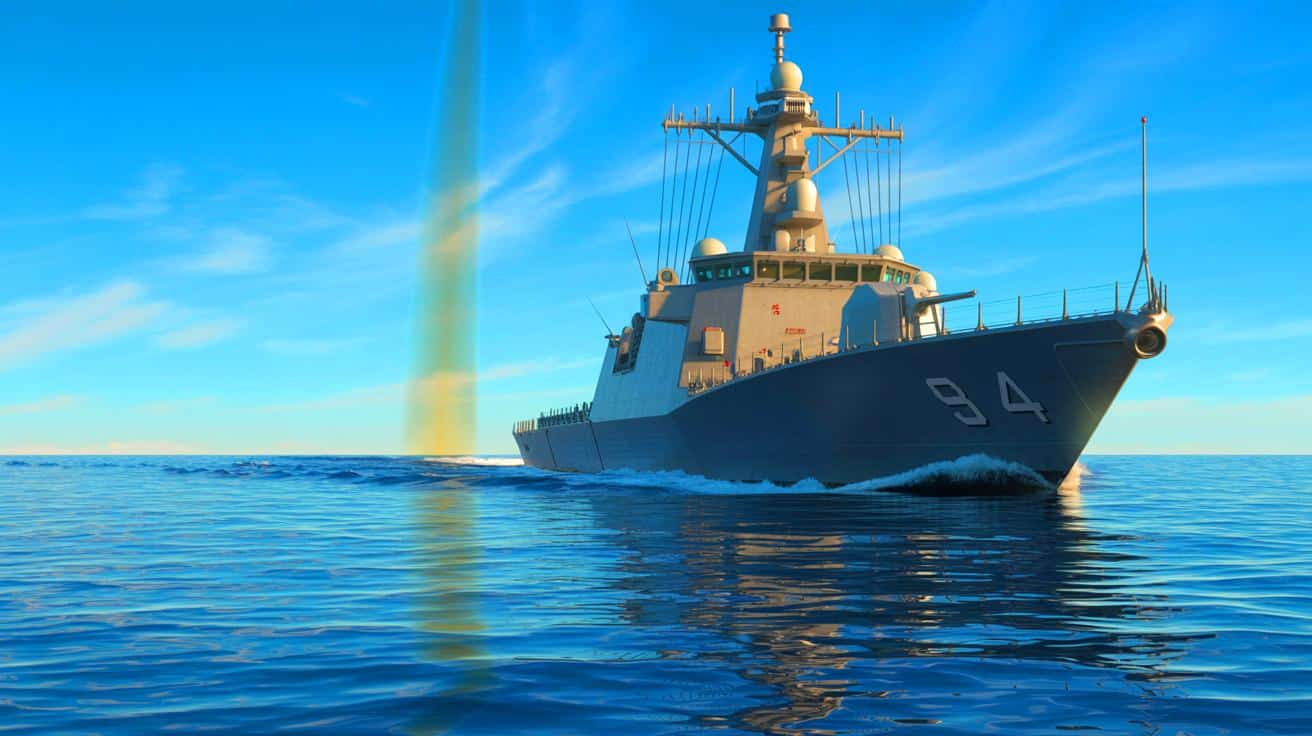
In recent developments, Raytheon, a Virginia-based defense firm, has successfully completed a test of its advanced spy radar system in a maritime environment. This radar, known as the AN/SPY-6(V)4, demonstrated its capability to track air and surface targets across various mission scenarios. Conducted in collaboration with the U.S. Navy, the test represents a significant leap in enhancing the defensive capabilities of naval vessels. The successful outcome of these tests paves the way for future refinements and potential shipboard deployment of this cutting-edge technology.
Transforming Naval Defense Capabilities
The AN/SPY-6(V)4 radar is a groundbreaking development in naval defense technology. According to Barbara Borgonovi, president of Naval Power at Raytheon, “The successful live demonstration of the SPY-6(V)4 radar is a major step forward in advancing the capabilities of today’s fleet and supporting allied operations worldwide.” This radar system allows existing U.S. Navy Flight IIA Destroyers to upgrade their detection and tracking abilities significantly. With these enhancements, sailors can monitor and respond to potential threats with unprecedented real-time precision.
The tests conducted have yielded the first live data set for the (V)4 configuration. This data is crucial for refining the system, ensuring it meets the rigorous demands of future testing and eventual deployment on naval vessels. The potential of this radar to transform maritime defense is immense, offering a robust shield against diverse threats.
Widespread Deployment Across the U.S. Navy
The AN/SPY-6(V)4 radar is the latest addition to the U.S. Navy’s SPY-6 Family of Radars undergoing live maritime testing. Over the next decade, it is expected to be deployed on more than 60 U.S. Navy ships. This deployment will significantly enhance defenses against a wide array of threats, including air, surface, and ballistic threats.
One of the standout features of these radars is their ability to integrate seamlessly, enabling them to defend against multiple threats such as ballistic missiles, cruise missiles, hypersonic missiles, hostile aircraft, and surface ships. The radars’ superior detection range, increased sensitivity, and precise discrimination capabilities render them vastly superior to legacy radar systems.
Optimizing Naval Weaponry
Raytheon asserts that the SPY-6 radars can optimize the effectiveness of the Navy’s most advanced weapons systems, including all Standard Missile variants. By providing precise targeting information and threat data, these radars enable weapons systems to perform at their maximum potential. The use of common hardware and software across all radar variants ensures reliability and reduces maintenance costs.
The modular construction of each SPY-6 radar, using radar modular assemblies (RMA), is a revolutionary feature. Each RMA is a self-contained radar antenna within a compact 2-foot cube. These RMAs can be combined to meet the mission-specific needs of any ship, making the SPY-6 family the first truly scalable radars for the Navy. This adaptability is a game-changer for naval operations.
Integration and Future Prospects
The integration of SPY-6 radar arrays onto the Navy’s newest ships, including DDG 51 Flight III destroyers, frigates, aircraft carriers, and amphibious warships, is underway. Moreover, legacy DDG 51 Flight IIA destroyers and aircraft carriers are being retrofitted with this advanced technology. This broad application underscores the Navy’s commitment to maintaining a formidable defensive posture.
The ongoing enhancements and testing of the SPY-6 radar systems highlight a future where naval operations are more secure and efficient. As these systems continue to evolve, they promise to provide robust protection against emerging threats, ensuring the safety of naval personnel and assets.
As the U.S. Navy advances its defensive technologies with systems like the AN/SPY-6(V)4 radar, the question arises: How will these innovations shape future maritime security strategies and influence global naval power dynamics?