



“Tank Crews Can Now See Through Armor With Their Eyes”: China Unveils Revolutionary AR Headsets That Control Weapons Through Simple Gaze Direction
 By
Adam Kovács
By
Adam Kovács
| IN A NUTSHELL |
|
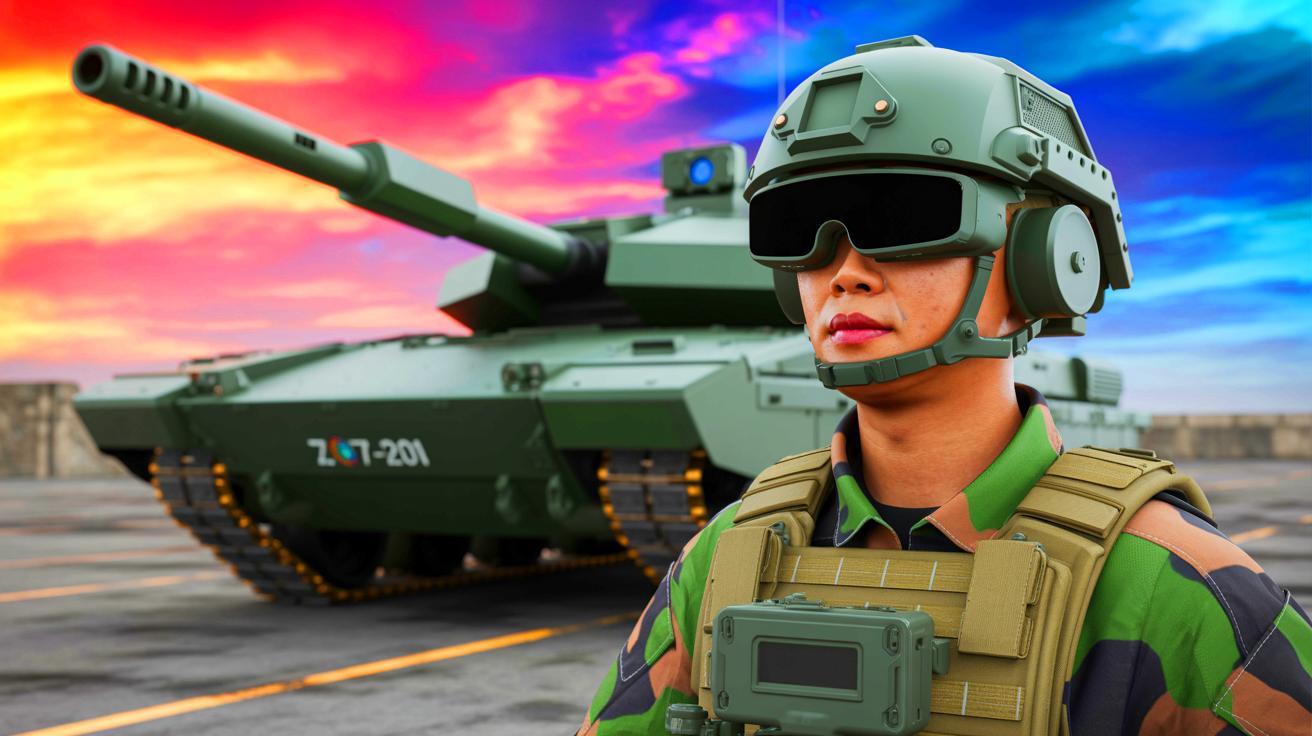
In recent developments, China has made significant strides in military technology with its introduction of augmented reality (AR) headsets for armored vehicle crews. This innovation aims to revolutionize battlefield strategies by enhancing situational awareness and reducing reaction times. The AR system integrates with cameras and sensors on tanks and infantry fighting vehicles, offering a comprehensive 360-degree view through a heads-up display. This technology enables tank crews to “see through” armor, providing critical data like vehicle status and targeting information in real-time. Such advancements underscore China’s commitment to modernizing its ground forces with cutting-edge digital solutions.
Enhanced Battlefield Awareness
The AR headsets represent a leap in military technology by providing unparalleled battlefield awareness. Tank crews equipped with these headsets can navigate through challenging terrains with improved visibility. The technology allows them to see beyond the confines of the armored vehicle, enhancing their ability to respond swiftly to threats. The system’s transparent display projects real-time video feeds, overlaid with crucial data such as ammunition levels and vehicle health. This integration of digital information directly into the crew’s field of vision reduces the need for separate screens, streamlining decision-making processes.
The modular design of the AR headsets suggests versatility, as it can be adapted for use across various military platforms. This flexibility ensures that the technology can be integrated into both existing and future armored vehicles. The system has already been showcased on the ZTZ-201 medium tank and other combat support vehicles, indicating China’s intention to incorporate this technology widely. By offering improved situational awareness, the AR headsets could potentially transform how Chinese ground forces operate, particularly in complex environments and during nighttime operations.
Weapon Control Integration
Beyond enhancing vision, the AR headsets introduce advanced weapon control capabilities. Gunners can aim and operate weapons simply by directing their gaze or turning their heads, a feature reminiscent of the U.S. Army’s Apache helicopter system. This innovation offers multiple advantages, including faster reaction times and reduced cognitive load for operators, allowing them to act instinctively in high-pressure situations. The ability for crew members to switch roles seamlessly further enhances operational flexibility on the battlefield.
The system’s reliance on external sensors makes it suitable for networked warfare, a strategic advantage in modern combat scenarios. By sharing targeting and surveillance data across units, Chinese armored formations can achieve a unified and comprehensive view of the battlefield. This interconnected approach to warfare underscores the potential for enhanced coordination and effectiveness in military operations.
Digital Push in Ground Forces
China’s AR initiative reflects a broader trend in modernizing military forces through digital technology. Similar to the U.S. Army’s Integrated Visual Augmentation System (IVAS), which overlays digital data onto real-world environments, China’s AR headsets aim to integrate technology across its services. This strategic push aligns with global military trends towards digitization, highlighting the importance of technology in future combat scenarios.
The headsets provide mission-critical displays of vehicle status and system health, accessible directly at eye level. This design feature ensures that crews can make informed decisions quickly, without diverting their attention to separate instruments. While it remains uncertain if the AR headsets are currently operational, their demonstration on the ZTZ-201 and other vehicles suggests readiness for broader deployment. Analysts anticipate that once trials conclude, the technology will be adopted more widely, marking a significant shift in armored warfare tactics.
Implications for Future Warfare
The potential deployment of AR headsets could significantly alter the dynamics of Chinese ground forces. By enabling tank crews to see through armor, share data in real time, and control weapons with a simple glance, the technology represents a transformative change in armored warfare. Such capabilities would provide a competitive edge in combat, emphasizing the role of digital technology in reshaping traditional military platforms.
These demonstrations highlight China’s focus on networked, sensor-driven combat systems. The AR project exemplifies how digital advancements are influencing even the most traditional aspects of warfare. As military strategies continue to evolve, the integration of such technologies will likely play a pivotal role in future conflicts.
As China continues to innovate in military technology, questions arise about the broader implications of these advancements. How will the integration of AR headsets and similar technologies influence global military strategies, and what might this mean for the future balance of power on the world stage?
Continue reading