

Close Menu
  • English
  • Top Stories
    • News
    • Culture
    • Economy
    • Lifestyle
    • World
    • Environment
    • Health
    • Science
    • Sports
  • About Us
  • Advertising
  • Contact

Subscribe to Our Newsletter

News, investigations, and analysis — our top stories every morning to start your day right.

discover the best tips and must-try dishes to fully enjoy europe's vibrant street food scenes, from bustling markets to hidden local favorites.
How to enjoy europe’s street food scenes
discover essential tips for solo travel across europe to make your journey safe, enjoyable, and unforgettable. from planning to exploring, learn how to navigate europe on your own with confidence.
Tips for solo travel across europe
discover hidden european islands you need to visit, featuring secluded beaches, charming villages, and untouched natural beauty for your next unforgettable adventure.
Hidden european islands you need to visit
Facebook X (Twitter) YouTube TikTok
Visegrád Post
Facebook X (Twitter) YouTube TikTok
newsletter
  • Featured
  • News
    Illustration of U.S. President Donald Trump announcing a blockade on Venezuelan oil tankers.

    Trump Blocks Venezuelan Access: Europe Warns of Escalating Conflict, Defense Secretary Holds Key Strike Video, Impacts Await

    19/12/2025
    Illustration of Congress scrutinizing the proposal for a Space Force Special Operations Component Command.

    Space Force’s New Special Ops Plan Sparks Congressional Questions, Revealing Potential Impact on Military Strategy and Security

    19/12/2025
    Illustration of the United States Tech Force recruitment initiative aimed at revitalizing federal technology talent.

    Trump Administration’s New ‘Tech Force’ Initiative Aims to Hire Thousands for Two-Year Jobs, Transforming Federal Workforce

    17/12/2025
    Illustration of U.S. soldiers in Syria and the impact of geopolitical tensions.

    Three Americans Killed in Syria: Tragic Loss Highlights Ongoing Conflict and Global Tensions Amid Ukraine Peace Talks

    17/12/2025
    Illustration of the integration of Artificial Intelligence in modern military operations and strategic defense systems.

    Global AI Arms Race: Paul Scharre Reveals How Advanced Technologies Are Reshaping Modern Warfare and Global Power Dynamics

    15/12/2025
  • Culture
    discover the rich history and stunning architecture of europe's medieval castles and fortresses. explore ancient strongholds, majestic palaces, and timeless ruins that tell stories of knights, kings, and legends.

    Exploring europe’s medieval castles and fortresses

    26/05/2026
    discover the best european cities for art lovers, featuring world-renowned museums, vibrant galleries, and rich cultural heritage.

    The best european cities for art lovers

    28/04/2026
    explore the must-visit european museums and galleries showcasing rich art, history, and culture across iconic cities.

    Must-visit european museums and galleries

    14/04/2026
    discover why europe is a must-see destination for history enthusiasts, offering rich cultural heritage, ancient landmarks, and fascinating historical sites.

    Why europe is a must-see for history enthusiasts

    10/03/2026
    discover the history and beauty of europe's most iconic landmarks with our comprehensive guide to must-see destinations.

    Exploring europe’s most iconic landmarks

    10/02/2026
  • Eco
    explore the future of electric travel in europe, highlighting innovations, sustainable transportation solutions, and the impact on the environment and economy.

    The future of electric travel in europe

    07/04/2026

    Behind the scenes of a digital war: how a battle for influence escalated into an international legal case

    27/03/2026

    Tisza Party donor data leak: financial data of thousands of Péter Magyar supporters appeared on the dark web

    28/02/2026
    Illustration of the Thacker Pass lithium mining project in Nevada, highlighting its partnership with General Motors and the U.S. Department of Energy.

    “They Finally Fought Back”: This U.S.–GM Lithium Deal Challenges China’s Grip on Batteries (and Could Change Every Electric Car You Buy)

    14/10/2025
    Illustration of the Benin-flagged tanker Boracay blacklisted by the European Union for being part of Russia's shadow fleet.

    “They’re Funding the Enemy”: This Hidden Shadow Economy Undermines Sanctions and Fuels Global Conflicts (and It’s Already Expanding Fast)

    14/10/2025
  • Lifestyle
    discover the best tips and must-try dishes to fully enjoy europe's vibrant street food scenes, from bustling markets to hidden local favorites.

    How to enjoy europe’s street food scenes

    23/06/2026
    discover essential tips for solo travel across europe to make your journey safe, enjoyable, and unforgettable. from planning to exploring, learn how to navigate europe on your own with confidence.

    Tips for solo travel across europe

    16/06/2026
    discover hidden european islands you need to visit, featuring secluded beaches, charming villages, and untouched natural beauty for your next unforgettable adventure.

    Hidden european islands you need to visit

    09/06/2026
    discover the top european destinations perfect for a romantic getaway, offering charming cities, breathtaking scenery, and unforgettable experiences for couples.

    Top european destinations for a romantic getaway

    02/06/2026
    discover essential tips and important information you need to know before visiting europe in 2026. plan your trip with confidence and make the most of your european adventure.

    What to know before visiting europe in 2026

    19/05/2026
  • World

    Georgi Markov on the Hungarian elections: Soros and Zelensky will be against Orbán’s victory

    06/04/2026
    Illustration of the Trump administration's National Security Strategy highlighting geopolitical tensions with NATO and Russia.

    Trump Administration’s Europe Policy Faces Sharp Discrepancy with Congress, American Public, Exposing Deep Political Divide

    14/12/2025
    Illustration of diplomatic negotiations involving a controversial peace plan between the U.S., Ukraine, and Russia.

    US Envoy’s Advice to Russia Sparks Debate as Navy Ends Frigate Program and USAF Plans Tanker Extension

    29/11/2025
    Illustration of Chinese military using AI deception tactics during a training exercise in the Gobi Desert.

    China’s War Planners Use AI for Deception, Raising Concerns Over Global Security and Ethical Implications

    26/11/2025
    Illustration of the United States applying pressure on Ukraine to accept a controversial peace proposal with Russia.

    US Presses Kyiv Amid Defense Challenges, While Coast Guard Faces Backlash Over Controversial Symbol Change Decision

    23/11/2025
  • Green
    discover effective ways to travel sustainably through europe, minimizing your environmental impact while exploring beautiful destinations.

    Ways to travel sustainably through europe

    24/02/2026
    Illustration of a mobile biochar production unit operating on a farm to capture atmospheric CO2.

    “They’re Burning Waste to Save Earth”: This U.S. Invention Turns Farm Leftovers Into Carbon Gold (and It’s Already Capturing Billions of Tons)

    15/10/2025
    Illustration of a data center pod being installed underwater off the coast of Shanghai.

    “This Could Change the Internet Forever”: This Underwater Data Center Off Shanghai Promises Huge Energy Savings (but Could Threaten the Ocean Itself)

    11/10/2025
    Illustration of an albino fawn being rescued by a compassionate individual on a Texas road.

    “He Thought It Was a Sheep”: Texas Driver Rescues Rare Albino Fawn by the Roadside (and It’s a Miracle It Survived)

    10/10/2025
    Illustration of the Amazon rainforest engulfed in fires releasing significant carbon emissions.

    “See What We’ve Done to the Amazon”: These Unstoppable Fires Released More Carbon Than Germany (and Scientists Warn the Worst Is Yet to Come)

    10/10/2025
  • Health
    Illustration of a healthy bladder and urinary system highlighting common habits that impact bladder health.

    “This Is What No One Told You”: These Everyday Habits Quietly Destroy Your Bladder Health (and One of Them You Do Every Day)

    11/10/2025
    Illustration of military personnel exposed to repeated shock waves impacting brain functionality.

    “Soldiers Face Hidden Damage”: Harvard Study Warns Repeated Blasts Alter Brain Connectivity Even When Standard Scans Show No Visible Injury

    02/10/2025
    Illustration of vitamin B3 counteracting the effects of miR-93 in fatty liver disease.

    “Vitamin B3 Destroys Fatty Liver Disease Gene”: Korean Scientists Discover Simple $5 Supplement Reverses Deadly Condition Affecting 30% of Global Population

    15/09/2025
    Illustration of Vibrio vulnificus bacteria in Gulf Coast waters.

    “They Watched My Skin Disappear”: US Beaches Rocked by Flesh-Eating Bacteria Outbreak as Multiple Deaths Spark Nationwide Panic and Urgent Health Warnings

    08/08/2025
    Illustration of toddlers in a daycare setting exposed to hidden toxins, generated by artificial intelligence.

    “American Parents Outraged by Toxin Exposure”: New Study Reveals 90% of US Toddlers Are Ingesting Dangerous Hidden Chemicals Daily

    10/07/2025
  • Science
    Refined Title: "The Stealth Bomber: A $80 Billion Defense Asset That Instills Fear in Adversaries"

    Refined Title: “The Stealth Bomber: A $80 Billion Defense Asset That Instills Fear in Adversaries”

    18/10/2025
    Illustration of high-energy particles and radiation from a star in deep space impacting molecules and atoms in the Earth's atmosphere.

    China’s Deep-Sea ‘Spider’ Unveils the Mysteries of Ghostly Cosmic Neutrinos, Transforming Our Understanding of the Universe

    18/10/2025
    Illustration of the ExoMars Rosalind Franklin Rover drilling below the Martian surface.

    “This Could Be the Moment We Find Life”: Europe’s Mars Rover Will Drill Deeper Than Ever to Uncover What’s Hidden Beneath the Red Planet

    17/10/2025
    Secret Supersonic Plane Discovered on Google Earth: Traveling at Six Times the Speed of Sound

    Secret Supersonic Plane Discovered on Google Earth: Traveling at Six Times the Speed of Sound

    17/10/2025
    Here’s a Shocking New Threat: Metal-Cutting Drones From China Could Soon Be Flying Over Your Home

    Here’s a Shocking New Threat: Metal-Cutting Drones From China Could Soon Be Flying Over Your Home

    17/10/2025
  • Sports
    Illustration of Wunderbar triumphantly crossing the finish line at Sha Tin. Image generated by AI.

    “Wunderbar Stuns Rivals”: Astounding Comeback as Racing Star Dominates 6-Furlong Class Two Victory at Sha Tin, Reigniting Fans’ Passion

    20/06/2025
    Illustration of a paraglider caught in a cloud suck ascending to a high altitude. Image generated by AI.

    “Dragged to 28,000 Feet”: Paraglider Survives Terrifying Cloud Suck Ordeal That Nearly Ended in Instant Death

    07/06/2025
  • English
Visegrád Post

Historical Interview with Viktor Orbán: is a Budapest-Cluj-Bucharest axis in the making?

Gabriel CruzGabriel Cruz19/10/20175
Share Twitter Facebook LinkedIn WhatsApp Email Copy Link
Follow Us
Google News
Share
Twitter Facebook LinkedIn WhatsApp Email Copy Link

Romania – Last week the Visegrád Post published the official English translation of an interview given by Viktor Orbán to a small provincial newspaper for Romania’s Hungarian minority (Bihari Napló, i.e. “Bihar Daily”). Those readers less familiar with Central European issues probably viewed the offer of assistance in border control which the Hungarian PM extended to the Romanian authorities as its key point.

While this offer is certainly deserving of attention, as it confirms once again that Viktor Orbán’s Hungary, despite phenomenal pressure from the fiercest propagators of anti-national thought within the EU (notwithstanding, in particular, E. Macron’s election in France, Hungary’s recent disavowal by the Union’s Court of Justice, and the un-triumphant, though nonetheless comfortable re-election of A. Merkel as Chancellor of Germany), has no intention whatsoever of backing down from its position that the ethnic composition of the country is non-negotiable. Hungary’s capitulation, as speculated by some French sovereignist analysts based on the contradiction between Hungary’s anti-immigration policy and its loyalty to the Euro-Atlantic structures, does not seem to be any closer. It would, however, be bold to assert – as the Hungarian liberal opposition, in particular through the voice of former Hungarian PM F. Gyurcsány – that Orbán deliberately opts for a break with the EU. It seems much more reasonable to think that the Hungarian government continues to hope that Western European states will eventually return to reason. Should this fail to happen, then the Hungarian people, through the voice of its very charismatic leader, has once again warned Brussels and Berlin that their loyalty is not unconditional.

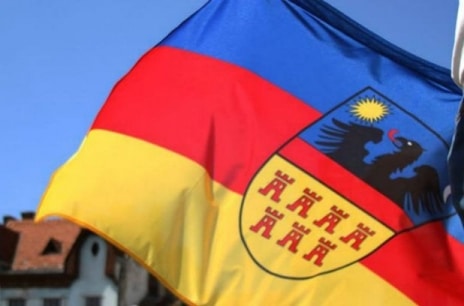
For more seasoned observers, however, the main lessons of this extensive and in-depth interview lie elsewhere. It should be kept in mind that it was granted to a newspaper belonging to the Hungarian minority in Romania (mainly present in Transylvania, a former Hungarian province, where Hungarians still number over a million – thus constituting the largest national minority within any EU member state), which – like most of the ethnic Romanian population of the country – does not have the migration crisis as its principal concern: Romania remains essentially a country of outward migration, having bled one-fifth of its population since the fall of communism, and where few migrants want to take the risk of lingering, as welfare payments are almost non-existent, and wages even lower than in Hungary – while consumer prices are essentially the same. Within the Hungarian minority, the bulk of the population (and in particular the social segments that have been voting most heavily for FIDESZ, ever since the latter – as Orbán recalls in the interview – has made much more easy for them the obtaining of Hungarian passports) lives in villages and small towns, most of them ethnically homogeneous (many Hungarians, few or no Romanians and gypsies, especially in the Szekler Land); the problems that dominate their daily lives are therefore primarily of an economic nature (few jobs in the primary and secondary sectors, outside of major cities), infrastructural (poor road and supply networks, particularly water and gas) or, at the most, educational (as if by chance, it is the only aspect of the “minority” problems with which V. Orbán concerns himself in the interview, referring in particular to Hungarian-language technical education). Urban Hungarians in Romania, on the other hand, are – apart from the employees of multinationals, recruited from a liberal-libertarian fauna which, in line with its cosmopolitan vision of the world, has long since turned its back on not only FIDESZ, but even the ethnic Hungarian parties in Romania – mostly white-collar workers in a typical Third World bureaucratic economy, where the state and local administration generate the bulk of jobs; these bureaucrats, generally bound by client relations to the Democratic Union of Hungarians in Romanian (DUHR, the main party of the Hungarian minority), but often finding FIDESZ “too radical”, tend to be culturally liberal and pro-Western, but find themselves in competition with their Romanian colleagues for grabbing the public manna, which makes them structurally more sensitive to any autonomist discourse which – although it implies little chance of real changes and / or appreciable improvements in the condition of Hungarians in Romania – at least provides a useful tool for bargaining with the Bucharest pay desk. This fraction of the minority population therefore has, as might be expected, followed with great attention the events of the Catalan crisis (which also reactivated, on the Romanian side, the almost neurotic phobia of “Hungarian irredentism”). To the inevitable question of the Transylvanian journalist (perfectly representative of the social category described above), nevertheless, V. Orbán’s answer is a cold shower:

“The Hungarian government does not wish to respond to the events taking place in Catalonia, because we regard them as Spain’s internal affair.”

One could not be more clear. Rather than joining some imaginary “irredentist Internationale” in the hope – perhaps illusory, moreover – of adding, at the cost of an irredentist rhetoric without real content, a meagre one or two percent to the already impressive electoral results of FIDESZ among Hungarian voters from Romania, V. Orbán behaves as a responsible head of state: with Hungarians now constituting less than 20% of the Transylvanian population, the very idea of a “return to Hungary” is rather fanciful. He might also be aware that the networks behind the bulk of autonomist agitation in Transylvania (such as the media trust “Transilvania”, owned by the Cluj-based oligarch A. Pászkány, ethnically Hungarian, but dependent on German financial interests) relies on the regionalism of some Transylvanian Romanians, and is guided by Western (particularly German) circles who are generally hostile to the FIDESZ regime.

Instead, V. Orbán devoted much of the interview to confirming the existence of cordial personal relations with L. Dragnea, leader of the ruling Social Democratic Party (SDP) in Bucharest [these relations were established during a recent telephone conversation we reported on here], and – contrary to the insinuations of the journalist who conducted the interview – the deepening of the partnership he maintains with H. Kelemen, the young and talented DUHR president who, although the anointed heir to former DUHR president B. Markó’s, has never shown clear hostility to FIDESZ, and now uses this good personal record to reorient his ideologically amorphous party (which a few years ago was still locked in Europhile centre-left positions inherited from the 1990s) towards a doctrine of regional integration compatible with the philosophy of the Visegrád project.

V. Orbán seems to have realized that a part the urban-dwelling segment of Transylvania’s Hungarian population is culturally indistinguishable from their Romanian counterparts. Not only are they anti-DUHR, anti-SPD, and strong supporters of perceived “anti-corruption” lustration, but they are also allies of the anti-FIDESZ movement currently radicalizing in Hungary among left-wing liberals and – more surprisingly – in the ranks of a Jobbik party which no longer seems to have any fear of becoming the Hungarian version of Ukraine’s Svoboda. The Hungarian urban elites in Romania show the same structure, orbiting around a “youth” vanguard compassed by G. Soros’ “civil society” and employees of English-speaking multinationals. They have, for most part, renounced the ethnic vote and thrown their support behind the new USR party (a kind of En Marche, theoretically multi-ethnic, but de facto Romanian). Therefore, paradoxically, the fiercest Transylvanian opponents of the “neo-communist” and “nationalist” power in place in Bucharest are also predominantly the mortal enemies of the Hungarian national project promoted by FIDESZ (now exclusively, since Jobbik’s betrayal of Hungarian sovereignism). In any case, a recent speech held in Cluj by Orbán’s right hand, L. Kövér, bears witness to such a realization.

From L. Dragnea, Orbán has already obtained the promise of a satisfactory solution to the problem of the Marosvásárhely / Târgu-Mureş Catholic High School (a problem created out of nowhere by a court decision which could well be explained by the well-known influence of Romanian secret services – themselves notoriously dependent on the West – on the Romanian judicial institutions). In publicly confirming, in the press of the Hungarian minority, the reality and content of their telephone conversation, V. Orbán acknowledges and politically rewards the risky gesture of his Romanian partner, who chose to swim against the tide of the Magyarophobic propaganda in which even a faction of his own SDP party (the sympathizers of V. Ponta, notoriously close to the secret services) also indulges. As he also did in Serbia, Orbán shows Hungary’s neighbours that his country is a reliable and realistic negotiating partner, and to its enemies, that it is no longer as easy as in the past to take action against Hungary’s long term interests by “taking hostage” some Hungarian minority in neighbouring countries. In the case of Romania, the neutralization of these old mechanisms of Western (and especially German) Realpolitik requires the neutralization of irredentist “free radicals” within the Hungarian minority – a task that FIDESZ can now clearly delegate to a DUHR which, renouncing its old function as a bone of contention between Budapest and Bucharest, seems even, under the intelligent leadership of H. Kelemen, prone to becoming a bridge between the consolidated Hungarian sovereignism and the timid and difficult beginnings of an emancipated national governance in Bucharest.

Exposed, in Hungary, to the violently demagogic attacks of a formerly Eurasianist Jobbik recently “flipped” by the West, V. Orbán, by publicly assuming this beginning of a geopolitical and trans-partisan alliance with the “social democratic” SDP party in power in Bucharest (generally described as “centre-left”, though supported by a culturally conservative rural Romanian electorate) – an alliance now favoured by his improved relations with a DUHR party affiliated, like FIDESZ, to the EPP (although historically characterized by a more liberal and Europhile line) –, shows that he is also capable of effective Realpolitik. This sovereignist “ecumenism” also extends to religious questions: to the great despair of the Hungarian urban elites in Transylvania (prone to chauvinism in spite of their societal liberalism, and generally anticlerical, or at least utterly hostile to orthodoxy), shortly after opening a Calvinist church in Cluj, on the evening of a building inauguration at the Partium Christian University (also dominated by the Reformed Hungarian Church of Transylvania), V. Orbán openly proclaims his confidence in the Romanian Orthodox Church, conscious that the latter, even more than an ideologically amorphous and blackmail-vulnerable SDP, is the main institutional obstacle to the globalist agenda in Romania.

Both sides being obviously aware of the risks of inter-ethnic tensions involved in the series of celebrations scheduled for 2018 to commemorate the events of 1918 (remembered by official Romanian historiography as the “reunification” of the Romanian provinces on both sides of the Carpathians – and Hungarian official historiography as the “Trianon Catastrophe”), the “strong men” of Budapest, Bucharest and Cluj (provided we – rather arbitrarily – consider Cluj as the centre of the diffuse power of the DUHR over the Hungarian minority in Romania), all three seated on comfortable electoral majorities – V. Orbán, L. Dragnea and H. Kelemen – seem determined to build a patriot-social and “moderately Eurosceptic” (to quote the ideological category attributed to FIDESZ by Wikipedia) axis to meet the challenge of potential provocations by chauvinistic elements remote controlled by Western powers. Not to mention the common interests of Hungary and Romania in Ukraine (in the face of the anti-minority bullying of the pro-NATO junta in power), one can easily see Romania’s collective interest in building this axis – which, in the voice of V. Orbán, explicitly promises Romania full support in its regional integration efforts (currently sabotaged by Western member states, such as the Netherlands). Will it suffice to impose a minimum of geostrategic discipline on a Romanian political class dangerously dominated by personal interests (including outright bribery) and powerfully influenced by the instruments of Western (and especially German) soft power? This is probably the main unknown in the short term of this new centre-European equation.
Subscribe to Our Newsletter

News, investigations, and analysis — our top stories every morning to start your day right.

Follow on Google News Follow on X (Twitter)
Share. Twitter LinkedIn Facebook WhatsApp Email Copy Link
Previous ArticleHungarian Christian Democrats against Satan, Soros and the freemasons
Next Article Hungary Hosts First Ever Government Conference for Persecuted Christians
Gabriel Cruz
  • X (Twitter)

Gabriel Cruz is a U.K.-based journalist at Visegrád Post, where he has reported for five years on politics, society, environmental affairs, and global developments. Trained in journalism in London, he combines sharp analysis with a strong commitment to justice and sustainability. His work explores the forces shaping our era, from shifting power dynamics to planetary challenges. Contact: [email protected]

Related Posts
Illustration of U.S. President Donald Trump announcing a blockade on Venezuelan oil tankers.

Trump Blocks Venezuelan Access: Europe Warns of Escalating Conflict, Defense Secretary Holds Key Strike Video, Impacts Await

Illustration of Congress scrutinizing the proposal for a Space Force Special Operations Component Command.

Space Force’s New Special Ops Plan Sparks Congressional Questions, Revealing Potential Impact on Military Strategy and Security

Illustration of the United States Tech Force recruitment initiative aimed at revitalizing federal technology talent.

Trump Administration’s New ‘Tech Force’ Initiative Aims to Hire Thousands for Two-Year Jobs, Transforming Federal Workforce

Illustration of U.S. soldiers in Syria and the impact of geopolitical tensions.

Three Americans Killed in Syria: Tragic Loss Highlights Ongoing Conflict and Global Tensions Amid Ukraine Peace Talks

View 5 Comments
5 Comments
  1. anthony on 19/10/2017 10:23

    Interesting article! But is this axis really feasible given the historical tensions? 🤔

    Reply
  2. laurenpandora2 on 19/10/2017 11:24

    Great read! I had no idea about the complexities of Hungarian minority politics in Romania. Thank you for enlightening me. 😊

    Reply
  3. alan_infinity on 19/10/2017 12:26

    Are there any official statements from Bucharest regarding this potential alliance?

    Reply
  4. christinelight on 19/10/2017 13:24

    Orbán’s confidence in the Romanian Orthodox Church is a surprising twist. Any thoughts on how this might play out?

    Reply
  5. Franciswisdom on 19/10/2017 14:26

    So, is this Budapest-Cluj-Bucharest axis just a political maneuver, or does it have real potential?

    Reply
Leave A Reply Cancel Reply

Subscribe to Our Newsletter

News, investigations, and analysis — our top stories every morning to start your day right.

discover the best tips and must-try dishes to fully enjoy europe's vibrant street food scenes, from bustling markets to hidden local favorites.
How to enjoy europe’s street food scenes
discover essential tips for solo travel across europe to make your journey safe, enjoyable, and unforgettable. from planning to exploring, learn how to navigate europe on your own with confidence.
Tips for solo travel across europe
discover hidden european islands you need to visit, featuring secluded beaches, charming villages, and untouched natural beauty for your next unforgettable adventure.
Hidden european islands you need to visit
News by category
  • Top Stories
  • News
  • Culture
  • Economy
  • Lifestyle
  • World
  • Environment
  • Health
  • Science
  • Sports
Information
  • About Us
  • Advertising
  • The editorial team
  • Contact
  • Legal Information
  • Privacy and Cookie Policy

Subscribe to Our Newsletter

News, investigations, and analysis — our top stories every morning to start your day right.

Facebook X (Twitter) YouTube TikTok
© Visegrad Post. All rights reserved.

Type above and press Enter to search. Press Esc to cancel.