

“Superbug Breaks the Rules of Nature”: This Engineered Microbe Extracts Rare Earths and Eats Carbon Straight From the Atmosphere
 By
Adam Kovács
By
Adam Kovács
| IN A NUTSHELL |
|
In a groundbreaking development, scientists at Cornell University have engineered a remarkable microbe to revolutionize two critical environmental challenges: extracting rare earth elements and capturing carbon dioxide. This innovative approach bypasses the need for harsh chemicals and high energy, offering a sustainable alternative to traditional mining and carbon capture methods. At the core of this advancement is Gluconobacter oxydans, a microbe reprogrammed to perform these dual roles efficiently. This breakthrough not only promises to transform the mining industry but also presents a potent tool in combating climate change by accelerating carbon capture. How does this tiny organism manage to achieve such impactful feats?
Harnessing Nature’s Chemistry
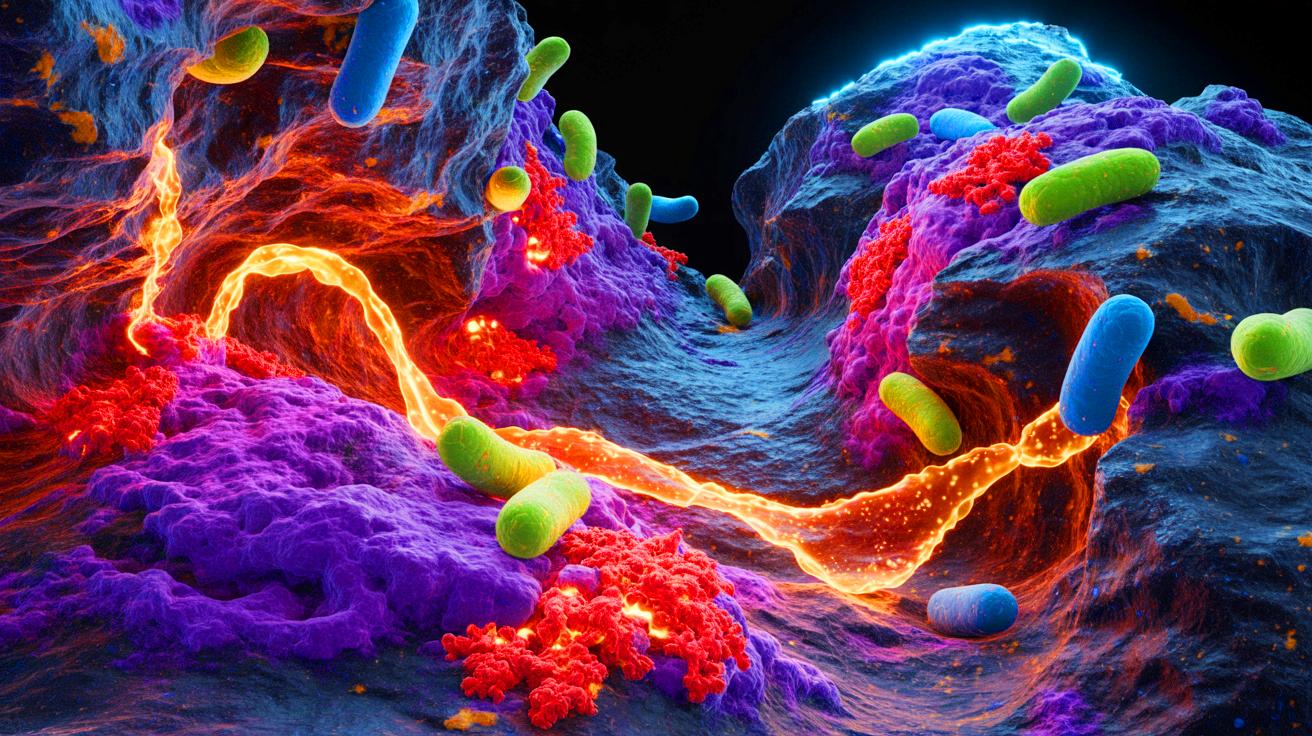
The innovative strides made in harnessing the potential of G. oxydans stem from its unique biochemical capabilities. By genetically enhancing this microbe, researchers have increased its acid production, enabling it to effectively break down rocks to extract rare earth elements. Remarkably, this process has boosted extraction efficiency by 73 percent without the environmental drawbacks associated with traditional mining.
Furthermore, the microbe’s ability to accelerate natural carbon capture by 58 times showcases its dual utility. By fostering reactions between magnesium, iron, and calcium with carbon dioxide, it forms stable minerals, trapping the CO₂ permanently. This method turns the earth into a natural carbon sink, effectively reducing atmospheric carbon levels. These advancements underscore a significant leap towards sustainable environmental practices, potentially altering how we address resource extraction and climate change.
Microbial Magic: Decoding the Genetic Code
Exploring the genetic makeup of G. oxydans has been pivotal in unlocking its potential. Scientists at Cornell have identified specific genetic tweaks that enhance its rock-dissolving capabilities. Two key genome edits were found to significantly boost the microbe’s acid production and rare earth recovery efficiency.
In a deeper dive, researchers discovered that the microbe employs previously unknown pathways to extract metals. By systematically deactivating genes, they identified 89 genes linked to bioleaching, many of which were not previously associated with this process. This genetic insight has propelled extraction efficiency by more than 100 percent, highlighting the untapped potential within these microbial processes.
Pioneering Carbon Capture Techniques
The ability of G. oxydans to enhance carbon capture processes presents a significant breakthrough in climate science. Unlike conventional methods that require high temperatures and pressures, this microbe facilitates carbon capture under ambient conditions. As it breaks down magnesium- and iron-rich rocks, these elements react with carbon dioxide, forming solid minerals like limestone.
This approach not only sequesters carbon permanently but also recovers other valuable metals like nickel, offering a comprehensive solution to environmental challenges. The process is supported by funding from major institutions, including the National Science Foundation and the Department of Energy, and is poised to transition from laboratory research to real-world applications.
Bridging Research and Application
The journey from laboratory research to practical application is crucial for the widespread adoption of this technology. Led by Alexa Schmitz, now CEO of REEgen, efforts are underway to commercialize these microbial processes. The research findings, published in prominent journals, reflect the commitment to sustainable innovation.
As the technology moves towards real-world implementation, the potential impact on the mining and environmental sectors is immense. By offering a cleaner, more efficient method of rare earth extraction and carbon capture, this approach could redefine industry standards and contribute significantly to global sustainability goals.
As we stand on the brink of this new technological frontier, the possibilities seem endless. The integration of these microbial processes into industrial applications could revolutionize how we approach resource management and climate mitigation. What other untapped potentials might these tiny organisms hold, and how will they continue to shape our environmental future?
Continue reading