


“China’s Fueling Satellites in Orbit”: Secret Test Alarms U.S. Intelligence as Space Race Takes a Dangerous New Turn
 By
Adam Kovács
By
Adam Kovács
| IN A NUTSHELL |
|
China is positioning itself as a formidable player in the arena of space exploration with its latest venture: an orbital refueling test. This initiative has captured the attention of global powers, particularly the United States, as it challenges the longstanding dominance of the U.S. in space technology. The successful execution of this test could revolutionize the lifespan and efficiency of satellites, potentially altering the dynamics of space operations. As the world watches, the race for supremacy beyond our planet intensifies, raising questions about the future of international cooperation and competition in space.
China’s In-Orbit Refueling Demonstration
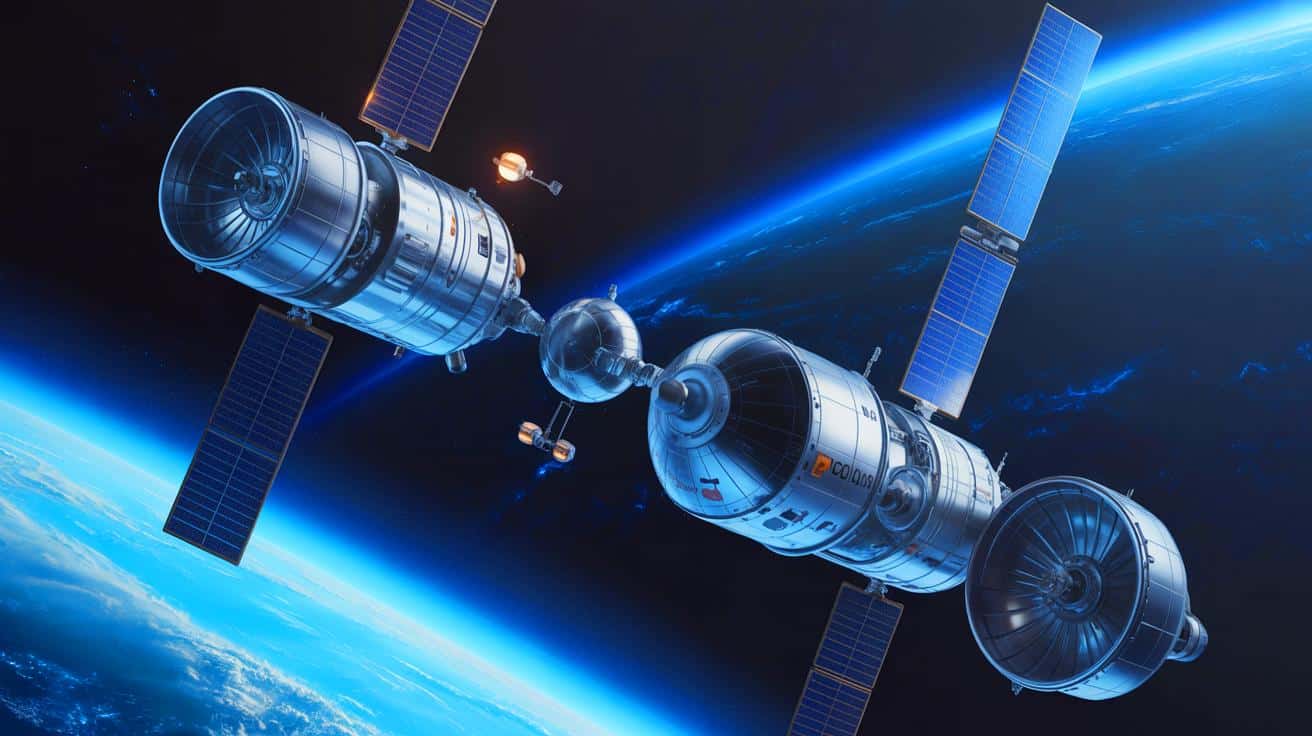
The ambitious plan involves two Chinese satellites, Shijian-21 and Shijian-25, which have been meticulously maneuvering over the past few days. Their rendezvous is set in geostationary orbit, an unusual and challenging location for such operations. On June 9, the satellites aligned within a mere two degrees of longitude from each other, a testament to the precision required for this mission. Scheduled to dock on June 11, the event marks China’s first attempt at on-orbit refueling in geostationary orbit.
In this demonstration, Shijian-25 will serve as a fuel depot, transferring approximately 313 pounds of hydrazine to Shijian-21. This transfer is expected to extend Shijian-21’s operational lifespan by eight years, highlighting the importance of refueling technologies in prolonging satellite missions. The development of these satellites was orchestrated by the Shanghai Academy of Spaceflight Technology, a key player in China’s aerospace ambitions.
Shijian-21 is no stranger to complex operations, having previously docked with a defunct navigation satellite, Beidou-2 G2, and then towing it to a graveyard orbit. This maneuver demonstrated China’s growing capabilities in satellite servicing and debris management, reinforcing its status as a rising space power.
China, US Battle for Space Dominance
This demonstration is under the watchful eye of two U.S. surveillance satellites, USA 270 and USA 271, which are part of the Geosynchronous Space Situational Awareness Program. The Pentagon’s interest in this development stems from the strategic implications of China’s advancements in space technology. According to COMSPOC, these U.S. satellites have adjusted their orbits to closely monitor the Chinese operation.
The presence of American surveillance assets underscores the competitive nature of space exploration today. As noted by industry experts, this event occurs in a crowded and dynamic part of geostationary orbit, where strategic maneuvers could have significant implications for international space policies. The U.S. is particularly concerned about the potential military applications of such technologies, which could alter the balance of power in space.
While the U.S. satellites are not interfering directly with the Chinese operation, their proximity highlights the increasing complexity and strategic stakes of space activities. This scenario exemplifies the ongoing tug-of-war between nations vying for technological supremacy and strategic advantage in the final frontier.
The Strategic Importance of In-Orbit Refueling
In-orbit refueling is not only a technological marvel but also a strategic asset. For instance, SpaceX and the U.S. Starship program view refueling as a cornerstone for future missions to Mars. The ability to refuel spacecraft in orbit could determine the feasibility of long-duration space travel, particularly when considering the immense fuel requirements for interplanetary journeys.
In 2019, the U.S. company Northrop Grumman successfully refueled a space satellite, extending its lifespan by five years. Such operations demonstrate the critical role of refueling technologies in maintaining and enhancing the utility of space assets. As the demand for satellite services increases, the ability to refuel and repair satellites in orbit becomes a strategic necessity.
Moreover, the success of in-orbit refueling could reduce costs and increase the sustainability of space missions. By prolonging the operational life of satellites, space agencies and companies can maximize their investments and minimize the frequency of launching new satellites, thereby conserving resources and reducing space debris.
Observations and Future Implications
The ongoing developments in China’s space program signify a shift in global space dynamics. As China continues to innovate and expand its capabilities, the implications for international space policy and cooperation are profound. The potential for collaboration in areas such as scientific research and planetary exploration stands in contrast to the competitive tensions that dominate the current landscape.
As nations like China and the U.S. push the boundaries of space technology, the need for a robust framework of international laws and agreements becomes increasingly apparent. The risks of miscalculation or misunderstanding in space operations are high, necessitating clear communication and cooperative mechanisms. Additionally, the role of private companies in advancing space technologies adds another layer of complexity to the governance of space activities.
With China emerging as a key player in space, the question remains: How will this new era of space exploration reshape global alliances and rivalries, and what role will international cooperation play in ensuring the peaceful use of space?
Continue reading