

This Futuristic Monster Airport Planned by Dubai Will Crush All Records With Its Unbelievable Scale and High-Tech Ambitions
 By
Adam Kovács
By
Adam Kovács
| IN A NUTSHELL |
|
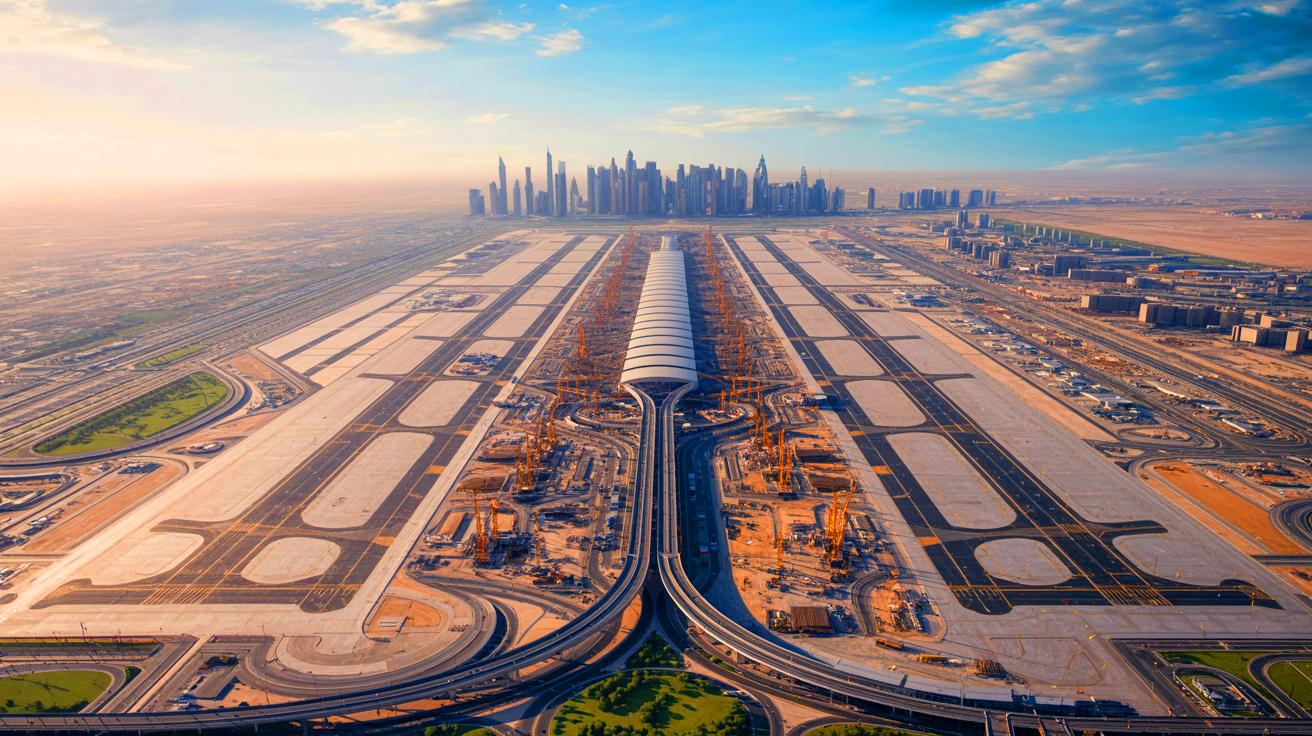
Dubai’s vision for the world’s largest airport is not just an expansion; it’s a transformation of global air travel. The ambitious project at Al Maktoum International Airport will set new standards in capacity and infrastructure, making it a pivotal hub for international passengers. This initiative reflects Dubai’s broader aspirations to position itself as a central player in the global aviation industry. From its economic implications to its architectural marvels, the Al Maktoum expansion is poised to redefine what modern airports can achieve, promising to accommodate an unprecedented number of travelers and create a bustling city around its facilities.
Dramatic Increase in Passenger Capacity
The Al Maktoum International Airport is set to revolutionize air travel with its unprecedented capacity. Upon completion of the expansion, the airport will be able to handle more than 260 million passengers annually. This staggering figure not only dwarfs the current capacity of Atlanta’s Hartsfield-Jackson, the world’s busiest airport with 110 million passengers, but also positions Dubai as the epicenter of global air traffic. The expansion will include the construction of five parallel runways, facilitating efficient handling of the increased traffic.
By 2034, the airport aims to handle approximately 150 million passengers each year, marking a significant step toward its ultimate goal. This monumental growth is a testament to Dubai’s strategic vision, aiming to capitalize on its geographical position as a bridge between East and West. The project underscores the city’s ambition to become a premier global destination for travelers, offering seamless connectivity and unrivaled services.
A $34.8 Billion Colossal Project
With a budget of $34.8 billion, the expansion project is nothing short of colossal. It is designed to make Al Maktoum International Airport five times larger than Dubai International Airport, which currently sits in the heart of the city. The new development will boast 400 aircraft gates, enabling efficient passenger flow and minimizing delays. Additionally, the five parallel runways will ensure that the airport can accommodate even the busiest travel periods without congestion.
Moreover, the vision extends beyond the airport itself. Plans include the construction of a city around the airport, which will host global giants in logistics and air transport. This new urban area will be a hub of economic activity, attracting businesses and creating countless job opportunities. As the project progresses, Al Maktoum International is set to become not only the main airport of Dubai but also a symbol of the emirate’s forward-thinking approach to infrastructure and urban planning.
Comparing with Other Major Projects: The Line
Dubai’s ambitious airport project is not an isolated case in the Arabian Peninsula. The region is known for its groundbreaking initiatives, such as Saudi Arabia’s The Line. This visionary project proposes a city built along a single line, stretching 170 kilometers (approximately 105 miles) with a height of 1,640 feet and a width of 656 feet. The estimated cost is a staggering $500 billion, aiming to accommodate around nine million residents.
The Line represents a radical rethinking of urban development, promising to integrate sustainability and cutting-edge technology. Like Al Maktoum’s expansion, it signifies the region’s commitment to innovation and its readiness to challenge conventional urban planning. Both projects reflect a broader trend toward mega-developments that are set to transform the landscape of the Middle East, showcasing the potential of visionary leadership and bold investments.
Implications of Dubai’s Airport Expansion
The expansion of Al Maktoum International Airport carries significant implications for Dubai and beyond. Economically, it positions the city as a critical node in global trade and travel networks, potentially attracting billions in investments and creating thousands of jobs. The surrounding city will draw businesses worldwide, fostering a vibrant economic ecosystem.
Moreover, the project represents a leap forward in airport design and efficiency, setting a new benchmark for what is possible in aviation infrastructure. It underscores Dubai’s commitment to innovation and its determination to lead in the global arena. As the airport becomes operational, it will likely reshape air travel patterns, influencing how airlines plan routes and how passengers experience international travel.
Dubai’s bold vision for Al Maktoum International Airport is a testament to its ambition and ingenuity. As construction progresses, the world watches with anticipation to see how this monumental project will unfold. How will this expansion change the future of global air travel, and what new opportunities will it present for the region and the world?