

Hungary’s deficit would fall from 7.5% to 2.8% of GDP by 2030, mostly in 2027
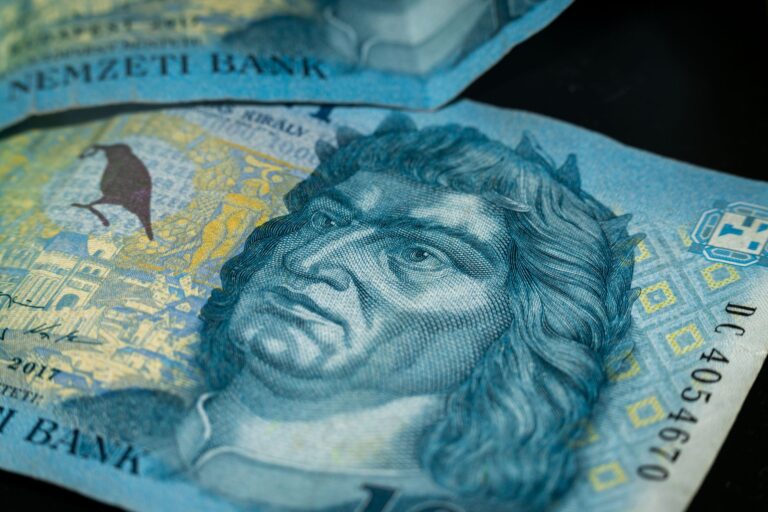
Budapest’s medium-term programme cuts the deficit from 7.5% of GDP in 2026 to 2.8% by 2030 and commits to meeting the euro’s entry conditions, not a start date.
 By
Adam Kovács

In brief
- The Finance Ministry’s 2027-2030 programme commits Hungary to satisfy euro accession conditions by 2030, not to adopt the currency that year.
- The deficit is planned to fall from 7.5% of GDP in 2026 to 2.8% in 2030, with most of the cut in 2027.
- Growth of 3% in 2029 and 3.1% in 2030 is described as an aspiration that depends on reforms and investment.
- EUR 16.4 bln in EU resources is placed at the centre of the recovery, with access tied to reforms.
Hungary’s government has pledged to meet the conditions for joining the eurozone by 2030, but the pledge concerns readiness rather than a date. Reporting by the Budapest Business Journal shows that the euro serves as the medium-term anchor of the government’s fiscal and economic policy programme for the medium term, 2027-2030, and that the commitment is to fulfil the accession criteria, not to adopt the currency that year.
The Finance Ministry published the document on a Wednesday in late October. Its first target is a deficit below 5% of GDP in 2027. According to Daily News Hungary, Prime Minister Péter Magyar and Finance Minister András Kármán had unveiled broadly the same numbers a week earlier, at a shared press event.
The ministry argues that trade ties support the case: in 2025 about three quarters of Hungarian exports were sold in EU markets, with 60% of the total going to eurozone countries. The ministry anticipates that joining would lower currency uncertainty, borrowing costs and exposure to outside shocks. Those are ministry expectations, not demonstrated outcomes.
A deficit path with the heavy lifting in 2027
For 2026 the programme sets the general government shortfall at 7.5% of GDP, against an original budget target of 3.7%. Without corrective action and agreements on EU funds, the ministry says, it would have reached 8.3%. It blames pre-election measures, weak expenditure control, unfavourable contracts, court-ordered tax refunds and growth below the 4.1% originally assumed.

| Year | Planned deficit (% of GDP) |
|---|---|
| 2027 | 4.9 |
| 2028 | 4.0 |
| 2029 | 3.4 |
Most of the adjustment therefore falls in 2027. The government intends to find another HUF 1,465 bln in savings that year, on top of measures expected to save about HUF 700 bln in 2026. It targets overpriced procurement and operating costs, poorly targeted corporate subsidies and weak competition for public contracts. The 2027 result also gets extra help as one-off outlays lapse, such as the bonus for armed forces and law enforcement staff, and some housing support schemes.
Public debt stood at 74.4% of GDP in 2025. It should reach 77.5% in 2026, before slipping to 77.2% in 2027 and falling to 74.9% by 2030. The primary balance, which leaves out interest, is not forecast to move into surplus before 2029.
Growth and inflation: forecasts, aspirations and the central bank
Expected GDP growth is 1.7% for 2026, 2.4% for 2027 and 2.6% for 2028. For 2029 and 2030 the government sets paths of 3% and 3.1%, which the programme itself describes as policy ambitions that hinge on structural reform and greater investment, rather than standard forecasts.
The National Bank of Hungary was more optimistic for the nearer years. In its September inflation report it expected growth of 2.9% for 2027 and 2.8% for 2028, and inflation of 3.1% and 2.6%. For 2026 the government projects inflation of 1.7%, rising to 3% for 2027, then 2.5% from 2028, even though September inflation stood at 1.6%. The programme points to drought, pricier food, the waning impact of a stronger forint and the end of caps on retail margins.
Deficit falls every year of the plan, and growth is projected to accelerate to 3.1% by 2030.
Debt rises in 2026, the primary balance stays negative until 2029, and the final growth figures are aspirations.
The levers: EU money, productivity and the cost of the state
- EU funds. The strategy puts EUR 16.4 bln of EU money at the heart of the recovery, with annual inflows that could approach 3% of GDP. Disbursement remains tied to reforms and benchmarks, among them judicial changes and procurement transparency.
- Productivity. The programme says Hungary’s annual growth between 2015 and 2025 trailed Poland’s by more than one percentage point on average, a gap it attributes entirely to weaker domestic productivity growth.
- Cost of the state. The ministry says running the state costs between 1 and 1.7 percentage points of GDP above what neighbouring countries spend, and state intervention adds around three points above the regional benchmark.
- Subsidies. Corporate subsidies deemed inefficient would be replaced by targeted programmes financed with EU funds, and investment and exports are expected to contribute more from 2027.
- Rules. A wider reform of public finances, touching fiscal rules, planning over the medium term, spending reviews and the capacity of the Fiscal Council, is due to reach parliament in 2027.
The limits are spelled out in the programme: delivery depends on spending discipline, reform execution and effective absorption of EU funds, and it assumes better European demand and easier energy costs. It sets the government’s intended direction, not a guarantee that Hungary will meet its 2030 euro objective.
Photo: Matias Mango / Pexels