


“They Just Outsensed the Pentagon”: China’s Insect-Inspired Missile Detector Triggers Panic Over 20,000x Faster Threat Response
 By
Adam Kovács
By
Adam Kovács

| IN A NUTSHELL |
|
Innovations in military technology continue to reshape the landscape of defense systems worldwide. Recently, Chinese scientists have unveiled a groundbreaking advancement inspired by nature. By studying the unique capabilities of the fire beetle, researchers have created a high-speed infrared sensor that is poised to revolutionize surveillance and missile detection. This new technology is reportedly 20,000 times faster than existing systems, providing a significant leap in the ability to detect motion and heat in challenging environments. Such advancements raise intriguing questions about the future of global defense dynamics and the potential implications for international security.
Fire Beetle-inspired Infrared Sensor
The fire beetle, known for its extraordinary ability to detect forest fires from great distances, has become the muse for a team of Chinese researchers aiming to enhance infrared sensing technology. Infrared sensors are crucial in situations where visibility is compromised, such as in smoke, fog, or dust. They are widely used in military operations, firefighting, and various industrial applications to track movement, identify heat sources, and navigate in the dark. Inspired by the fire beetle’s heat-sensing organ, Professors Hu Weida and Miao Jinshui from the Chinese Academy of Sciences have developed a sensor using palladium diselenide and pentacene. These materials mimic the beetle’s sensory system, allowing the device to work in the mid-infrared range and detect extremely low levels of heat.
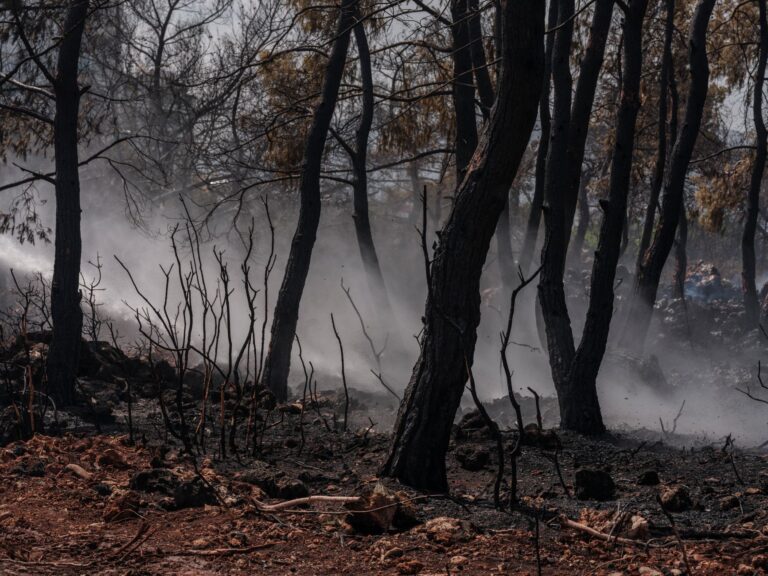
This innovative sensor was tested under simulated wildfire conditions, reaching temperatures of 1,700°F. Remarkably, it was able to track flame movement and store heat patterns with an accuracy of nearly 95%. Such precision makes it a strong candidate for applications in night vision, fire detection, industrial safety, and defense surveillance. Additionally, a related device using black phosphorus and indium selenide demonstrated photonic memory speeds of just 0.5 microseconds, significantly improving the clarity and speed of data capture compared to older technologies.
Rival US Missile Defense Plans
The rapid advancements in China’s infrared sensor technology could have profound implications for military applications, including missile defense and high-speed targeting. The sensors have been tested for real-time memory and image recognition, potentially integrating with autonomous drones, satellites, or ground-based missile systems. These developments could lead to a highly responsive infrared surveillance network spanning land, sea, and space. Although no official military application has been announced, the technology could enhance Chinese systems like the HQ-17AE missile defense unit, enabling them to intercept threats even in harsh conditions such as sandstorms or nighttime engagements.
In contrast, the US has announced its own plans for a multibillion-dollar missile defense initiative known as the “Golden Dome.” This system, proposed by former President Donald Trump, relies on space-based satellites equipped with infrared sensors. However, these systems use traditional silicon-based sensors, which Chinese researchers argue cannot match the speed or precision of their new devices. Recent studies emphasize the advantages of integrating sensing, memory, and processing into a single unit, as it reduces delays, conserves energy, and facilitates real-time operations, benefits crucial for future technologies like drone fleets, self-driving cars, and edge computing.
Strategic Implications and Future Prospects
The development of the fire beetle-inspired sensor highlights the strategic importance of biomimicry in advancing military technology. By mimicking natural systems, researchers can create solutions that offer unparalleled efficiency and effectiveness. The potential to integrate this sensor technology into existing defense systems could reshape military strategies and provide a competitive edge in global defense capabilities. Furthermore, the ability to detect and respond to threats with unprecedented speed and accuracy may lead to new applications beyond traditional military uses, including disaster management and environmental monitoring.
As nations continue to invest in cutting-edge technologies, the race to develop superior defense systems intensifies. The fire beetle-inspired sensor serves as a reminder of the power of innovation and the ever-evolving nature of technological advancements. As these technologies become more integrated into various sectors, the implications for global security and stability become increasingly significant.
As technology continues to advance at a rapid pace, the question remains: How will these innovations shape the balance of power in the future, and what new challenges will they present for global security and cooperation?
Continue reading