


Scientists Reveal “Potentially Habitable Planet” Just Next Door Raising Hopes for Life Beyond Earth
 By
Adam Kovács
By
Adam Kovács
| IN A NUTSHELL |
|
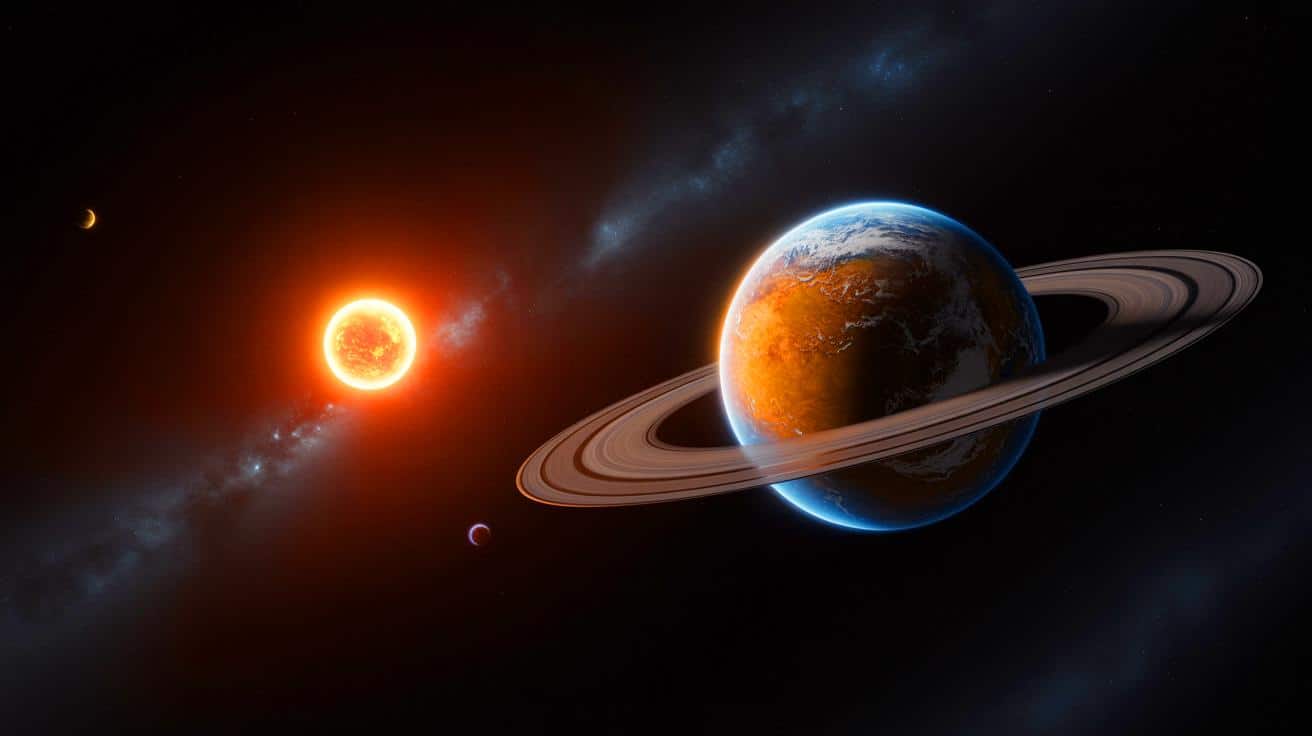
Recent discoveries in astronomy have led to the identification of a potentially habitable planet in a nearby star system, sparking excitement and curiosity within the scientific community. This discovery was made by researchers at the Trottier Institute for Exoplanet Research at the University of Montreal, who have been studying the L 98-59 star system. The newly found planet, L 98-59 f, is located in the habitable zone of its star, which means it might have the right conditions to support liquid water. This breakthrough has significant implications for our understanding of the universe and the potential for life beyond Earth.
The Discovery of L 98-59 f
The planet L 98-59 f is situated approximately 35 light-years from Earth, orbiting a cool, dim red dwarf star. This star, known as L 98-59, hosts a compact system of small, rocky planets. The recent detection of L 98-59 f was achieved through a meticulous analysis of data collected by the High Accuracy Radial velocity Planet Searcher (HARPS) and Echelle Spectrograph for Rocky Exoplanet and Stable Spectroscopic Observations (ESPRESSO) at the European Southern Observatory.
Researchers found that this exoplanet has a minimum mass 2.8 times that of Earth and follows an almost perfectly circular orbit with a period of 23 Earth days. The planet receives a similar amount of stellar energy as Earth, placing it in the star’s habitable zone, where liquid water could exist under favorable atmospheric conditions. According to Charles Cadieux, a postdoctoral researcher and lead author of the study, the discovery highlights the diversity of exoplanetary systems and the importance of investigating potentially habitable worlds around low-mass stars.
Diverse Planetary System
In addition to L 98-59 f, the planetary system includes several other intriguing worlds. The inner planet, L 98-59 b, is notable for its small size, measuring just 84% of Earth’s size and half its mass, making it one of the smallest exoplanets observed. The inner planets may experience tidal forces that drive volcanic activity, while the unusually low density of the third planet suggests it could be a water-rich world, offering a unique opportunity to study different planetary formations.
The research team utilized data from NASA’s Transiting Exoplanet Survey Satellite (TESS) and the James Webb Space Telescope, combining these observations with advanced techniques to filter out stellar noise. This comprehensive approach allowed them to determine the size, mass, and key properties of the five planets within the system. The findings provide a detailed picture of the L 98-59 system, demonstrating the potential for further atmospheric studies using the James Webb Space Telescope. If L 98-59 f has an atmosphere, future observations could detect water vapor, carbon dioxide, or even biosignatures.
Implications for Exoplanet Research
The discovery of L 98-59 f and its neighboring planets offers a glimpse into the complex and varied nature of planetary systems beyond our own. This system’s proximity and the small size of its star make it an ideal target for future atmospheric studies, which could reveal the presence of crucial compounds necessary for life. The research underscores the importance of combining data from both ground-based instruments and space telescopes to uncover new insights into planetary formation and evolution.
Moreover, the study of L 98-59 f and its system enriches our understanding of the conditions that might support life elsewhere in the universe. The potential for diverse planetary environments raises intriguing questions about the possibility of life existing in forms and conditions different from those on Earth. As astronomical techniques continue to advance, the exploration of these distant worlds remains a priority for scientists seeking to understand the potential for life beyond our planet.
Future Directions in the Search for Life
The discovery of potentially habitable planets like L 98-59 f opens new frontiers in the search for extraterrestrial life. Astronomers are eager to explore these worlds further, using advanced telescopes and instruments to analyze their atmospheres and surface conditions. The presence of water vapor or other life-supporting compounds could provide essential clues about the habitability of these planets.
As research progresses, scientists hope to identify more exoplanets within habitable zones, broadening our understanding of the universe’s capacity to support life. The findings from the L 98-59 system contribute to a growing body of knowledge that challenges our assumptions about where and how life might arise. This expanding field of study continues to inspire curiosity and wonder about the possibility of discovering life beyond Earth.
The discovery of L 98-59 f raises many questions about the potential for life on other planets and the conditions necessary for its emergence. As astronomers continue to explore the universe, what new insights might we uncover about the diversity of planetary systems and the potential for life beyond our solar system?
Continue reading