



“They’re replacing us with machines”: China’s Robot Boom Sparks Fears of Massive Job Loss as AI Factories Multiply
 By
Adam Kovács
By
Adam Kovács
| IN A NUTSHELL |
|
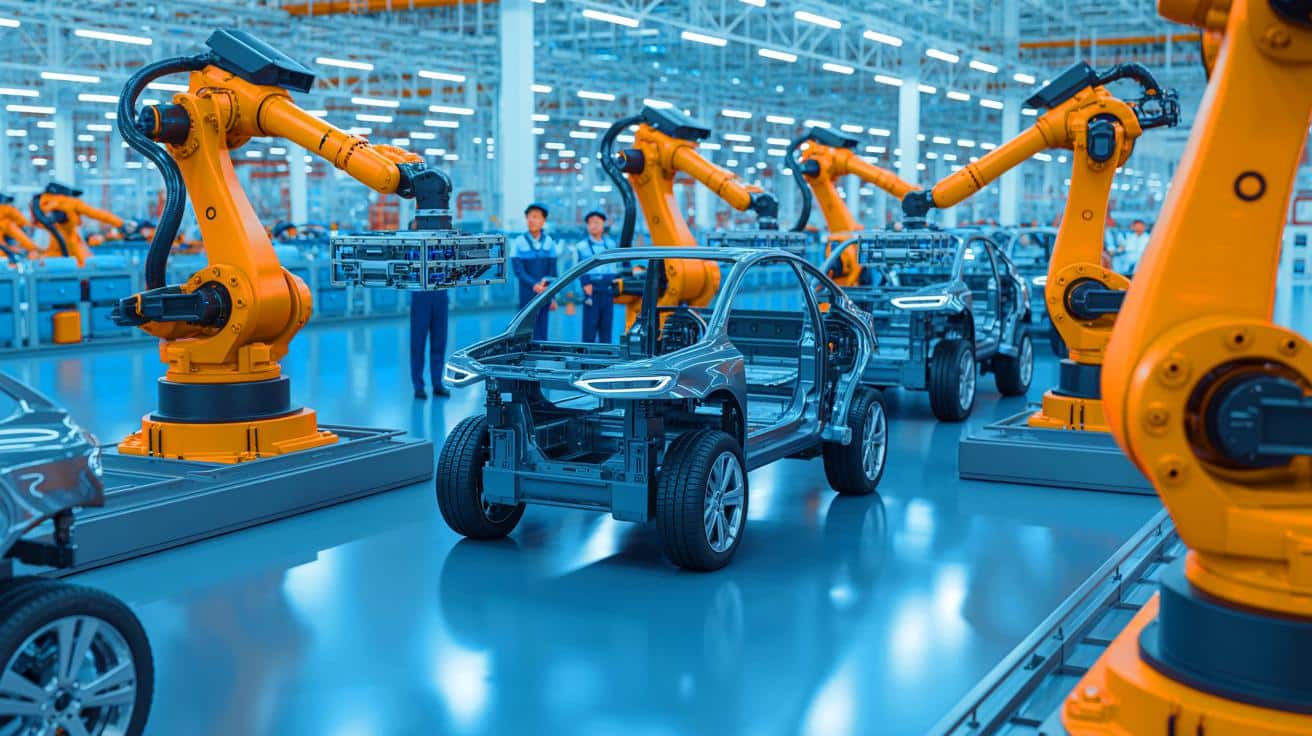
China has emerged as a leader in the global robotics industry, defying a worldwide decline in robot sales in 2024. According to the International Federation of Robotics (IFR), while global installations fell, China saw an impressive 5% growth in industrial robot installations, reaching approximately 290,000 units. This growth propelled China’s share of the global market from 51% in 2023 to 54% in 2024. As major markets like the U.S., Japan, and the EU witnessed declines, China’s strategic shift towards technology-driven growth is setting it apart. The country’s robust push towards automation and innovation signals a significant transformation in its manufacturing landscape.
Rising Global Rank in Robot Density
China’s ascent in the global rankings for robot density is noteworthy. In just a few years, the country has nearly doubled its robot density, moving from ninth place in 2020 to third in 2023. The number of industrial robots per 10,000 workers rose from 246 to 470, placing China behind only South Korea and Singapore. This surge is not confined to traditional industries like electronics and automotive manufacturing. The adoption of industrial robots is now expanding into general industries, which accounted for 53% of installations in 2024, up from 38% in 2020. This diversification highlights China’s commitment to integrating advanced technology across various sectors.
Despite geopolitical challenges and tariffs, the outlook for China’s robotics industry remains optimistic. IFR President Takayuki Ito has emphasized that China’s next five-year plan will likely continue to drive modernization and economic resilience. This plan is expected to further boost demand for robots as new production capacities are developed across different industries. China’s growing dominance in industrial robotics underscores its role as a pivotal player in the global market.
Humanoid and Embodied AI Push
Beyond industrial robotics, China is making significant strides in humanoid and embodied artificial intelligence (AI). This week, Beijing launched the world’s first “Robot Mall,” a unique retail space dedicated to humanoid robots. This innovation mirrors the format of car dealerships, offering sales, service, spare parts, and customer feedback, but focuses entirely on humanoid products. The initiative highlights China’s commitment to integrating AI into physical entities, allowing robots to perceive, learn, and interact with their surroundings.
Local governments are actively promoting embodied AI. For instance, Shanghai has released an action plan to develop its embodied AI industry, following Shenzhen’s initiative earlier this year. Shenzhen, known as China’s “Silicon Valley,” aims to achieve an industrial output exceeding 100 billion yuan by 2027. By leveraging its dense network of AI companies and strong manufacturing base, Shenzhen intends to accelerate robotics innovation and adoption. These efforts position China at the forefront of the global automation and robotics industry.
China’s Strategy for Technological Advancement
China’s focus on technological advancement is evident in its aggressive push towards automation. The country is transitioning from a labor-intensive growth model to one driven by technology. The results are already visible; in the first half of 2025, China’s industrial robot production surged by an impressive 35.6% year on year, reaching nearly 370,000 units. This surge is part of a broader strategy to upgrade China’s manufacturing chain and enhance its global competitiveness.
Investment in robotics and AI is a core component of China’s industrial policy. By fostering innovation and supporting new technologies, China aims to reduce its reliance on foreign technology and enhance its industrial capabilities. These efforts are not only reshaping China’s domestic market but are also influencing global trends. As China continues to invest in cutting-edge technologies, it is setting the stage for a future where it could lead the world in technological innovation.
Challenges and Opportunities Ahead
While China’s progress in robotics and AI is significant, challenges remain. Geopolitical tensions, trade disputes, and the need for regulatory frameworks are potential hurdles. Additionally, as the country scales its robotics and AI industries, ensuring ethical standards and addressing workforce displacement will be crucial. However, these challenges are accompanied by immense opportunities. As China continues to innovate and expand its technological capabilities, it has the potential to drive significant changes in the global industrial landscape.
The country’s focus on automation and AI reflects its commitment to long-term growth and sustainability. By investing in these areas, China is not only enhancing its own economic prospects but also contributing to global technological advancements. As the world watches China’s progress, one question remains: How will its aggressive push in robotics and AI shape the future of global manufacturing?