

“Hypersonic Madness”: US Pancake Probes Launched at Blistering Orbital Speed Spark Alarming Chinese Military Reaction in Space
 By
Adam Kovács
By
Adam Kovács
| IN A NUTSHELL |
|
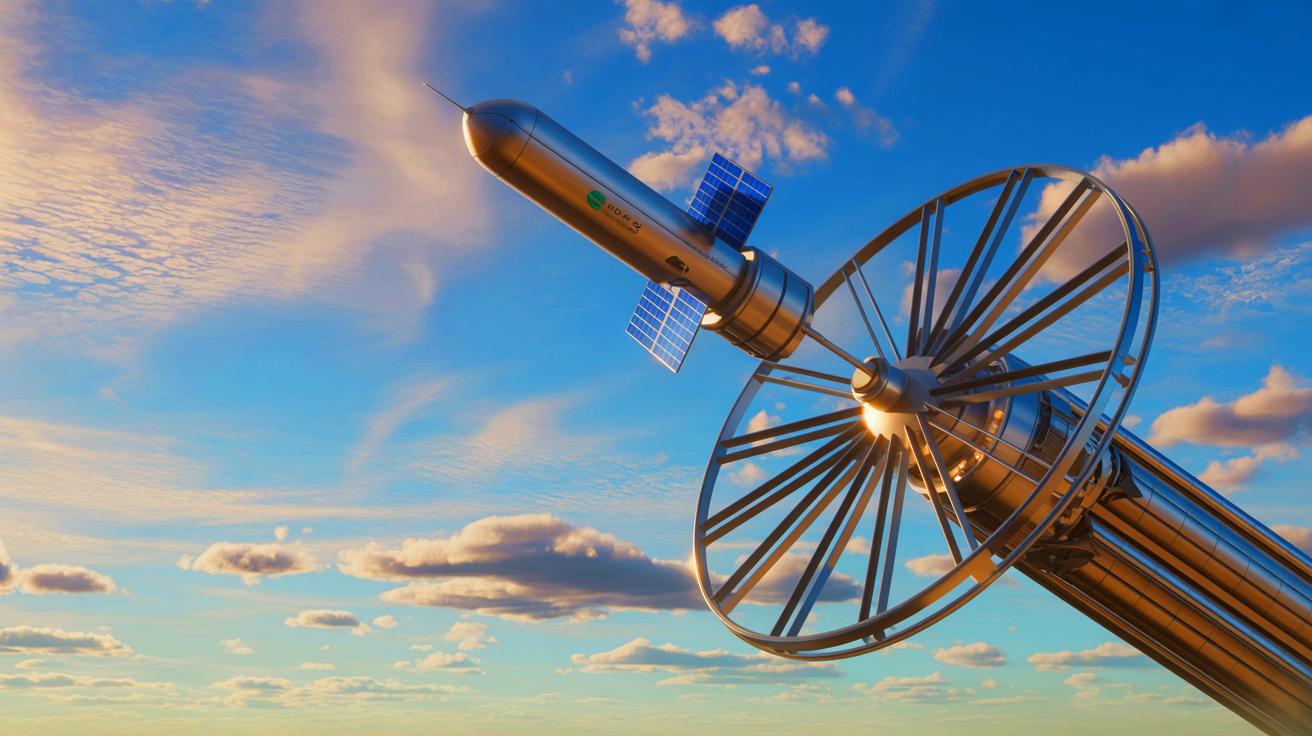
SpinLaunch, an ambitious California-based startup, is poised to revolutionize the satellite launch industry with its unique centrifugal launch system. By utilizing giant spinning arms to accelerate and launch payloads, SpinLaunch aims to offer a more cost-effective and environmentally friendly alternative to traditional rocket launches. The company has garnered significant attention and financial backing, positioning itself as a strong contender against established industry giants like SpaceX. As the space industry evolves, SpinLaunch’s innovations could reshape the landscape of satellite deployment, raising both exciting possibilities and pressing concerns.
A New Era of Satellite Launches
SpinLaunch’s centrifugal launch technology represents a paradigm shift in how we approach satellite deployment. Their giant mechanical system uses spinning arms to propel microsatellites into the stratosphere, significantly reducing both the cost and environmental impact associated with traditional rocket launches. These pancake-like satellites are intended to be lighter and more efficient, promising to set new records in simultaneous satellite launches. SpinLaunch’s approach not only challenges established players like SpaceX but also signals a potential transformation in space industry norms.
With nearly $150 million in funding, including a $12 million investment from Kongsberg Defence and Aerospace, SpinLaunch is well-equipped to disrupt the satellite market. The involvement of credible partners like NanoAvionics, responsible for constructing the initial batch of 250 satellites, strengthens the project’s viability. SpinLaunch is planning to conduct its first official launch in 2026, which could redefine expectations for satellite deployment going forward.
The Revolutionary Launch System
The core of SpinLaunch’s breakthrough lies in its Suborbital Accelerator, a vacuum-sealed chamber that spins payloads to speeds exceeding 5,000 mph. This innovative system has already demonstrated success with multiple suborbital launches from its New Mexico facility, showcasing its potential for future orbital missions. By subjecting payloads to forces up to 10,000 Gs, the company prepares them for a seamless release into space, promising a reliable and efficient launch process.
One of the most compelling advantages of this system is its cost efficiency. With projected commercial launch costs ranging from $1,250 to $2,500 per kilogram, SpinLaunch offers a significantly cheaper alternative compared to SpaceX’s Falcon 9. Additionally, the elimination of booster rockets and greenhouse gas emissions makes this method more environmentally sustainable. SpinLaunch’s innovative technology could not only lower costs but also set a new standard for eco-friendly space travel.
Implications for the Satellite Industry
SpinLaunch’s technology could have far-reaching implications for the satellite industry. By providing an affordable and sustainable launch option, the company stands to challenge industry leaders and potentially democratize access to space-based technologies. The Meridian Space constellation, designed for rapid communication services, aims to offer these capabilities at a competitive price, expanding technological access on a global scale.
Plans for a larger Orbital Accelerator could enable SpinLaunch to execute up to five commercial payload launches daily. This increased frequency could unlock new opportunities for industries dependent on satellite technology. However, the potential uptick in activity in low-Earth orbit raises concerns about space debris, light pollution, and interference with astronomical research. Addressing these challenges will be crucial as the industry adapts to new technological advancements.
Looking Ahead: Challenges and Opportunities
While SpinLaunch’s innovations open doors to new possibilities, they also present challenges that require thoughtful solutions. The anticipated surge in satellite launches could exacerbate issues of space debris and atmospheric pollution from re-entering satellites. As SpinLaunch progresses with its ambitious timeline, finding sustainable and responsible solutions will be essential to balance industry growth with environmental stewardship.
The success of SpinLaunch’s forthcoming launches could redefine the standards for satellite deployment, ushering in an era of more accessible and sustainable space exploration. Yet, as the industry evolves, the critical question remains: how will stakeholders address the inherent risks of increased low-Earth orbit activity, and what measures will be necessary to ensure a sustainable future in space?
Continue reading