


“Not a Single Error”: World’s First Robotic Surgeon Performs Entire Operation Alone With Perfect Precision and No Human Hands
 By
Adam Kovács
By
Adam Kovács
| IN A NUTSHELL |
|
Recent advancements in medical technology have brought us closer to a future where robots could perform surgeries with minimal human intervention. A groundbreaking development from Johns Hopkins University has demonstrated a robot’s ability to conduct a gallbladder removal surgery with precision comparable to experienced surgeons. This achievement signifies a major leap in medical robotics, highlighting the potential of artificial intelligence (AI) to transform healthcare. As we explore this new frontier, it is essential to understand the technology driving these innovations and the implications they hold for the future of surgical procedures.
The Rise of SRT-H: A New Era in Surgical Robotics
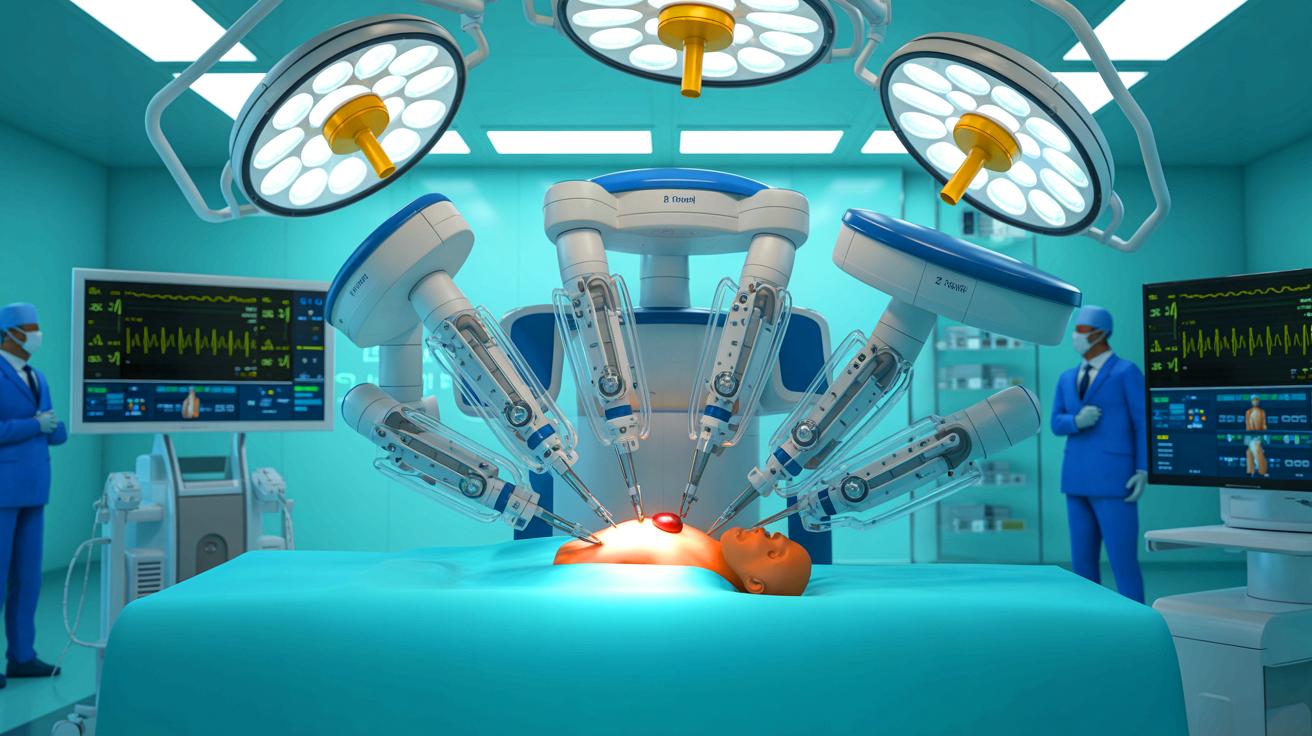
The emergence of the SRT-H robot marks a significant advancement in the field of surgical robotics. Unlike its predecessors, SRT-H is designed to learn and adapt in real-time, responding to the dynamic nature of surgical environments. This capability represents a departure from traditional robotic systems that are limited to executing pre-programmed tasks. The SRT-H robot can analyze surgical videos to internalize procedures, allowing it to perform complex tasks autonomously.
During trials, SRT-H successfully completed gallbladder removal surgeries on human-like models, demonstrating its ability to mimic the precision of human surgeons. This includes critical tasks such as identifying ducts and arteries, and performing incisions with surgical accuracy. Such achievements underscore the robot’s potential to revolutionize surgical practices by enhancing precision and reducing human error.
Understanding the Technology Behind SRT-H
Central to the SRT-H robot’s capabilities is its advanced machine learning architecture, which is akin to technologies used in AI systems like ChatGPT. This architecture enables the robot to process and respond to voice commands from medical staff, making it an invaluable assistant in the operating room. Its ability to adjust actions based on real-time feedback is critical for addressing unforeseen challenges during surgeries.
According to medical roboticist Azwl Krieger, the robot’s evolution from performing isolated tasks to understanding entire surgical procedures is a significant milestone. This development paves the way for autonomous surgical systems that can function effectively in clinical settings, where variability and unpredictability are common.
Real-World Implications and Future Directions
Although the SRT-H robot has excelled in controlled environments, it is yet to be used on human patients. However, its success in trials indicates a future where robots could independently perform surgeries with minimal oversight. The development team envisions training SRT-H to handle various surgical procedures, further reducing the necessity for human intervention.
Ji Woong “Brian” Kim, a key developer of SRT-H, asserts that the reliability of AI models for surgical autonomy is now demonstrable. Such progress could enhance surgical precision and safety, potentially revolutionizing patient care by minimizing human error and improving surgical outcomes.
Challenges and Ethical Considerations
Despite these promising advancements, the path to integrating autonomous surgical robots into mainstream healthcare is fraught with challenges and ethical considerations. Transitioning from controlled models to live surgeries requires rigorous scrutiny and regulatory approvals. Additionally, the dependence on autonomous systems raises questions about accountability and the evolving role of human surgeons.
As surgical robotics continues to evolve, addressing ethical complexities is crucial to ensuring that technological progress aligns with patient safety and care principles. Engineers, medical professionals, and ethicists must collaborate to navigate these challenges responsibly. As we stand on the brink of a new era in healthcare, the question remains: How will autonomous robots in surgery reshape medical practice, and what implications will this have for future patient care?
Continue reading