


“Durham Scientists Test 5,500 Nuclear Fusion Wires”: UK Team Verifies Superconducting Materials for 302-Million-Degree ITER Reactor
 By
Adam Kovács
By
Adam Kovács
| IN A NUTSHELL |
|
As the global energy crisis intensifies, scientists at Durham University have unveiled a remarkable advancement in fusion energy research. Their work is a key component of the international ITER project, the largest endeavor aimed at harnessing fusion as a sustainable power source. This colossal undertaking involves testing over 5,500 samples of superconducting wires, crucial for the powerful magnets that will contain plasma at temperatures exceeding 302 million degrees Fahrenheit. The meticulous quality verification process, which began in 2011, underscores the growing momentum in fusion research worldwide. With collaborations involving 35 nations, the potential for fusion energy is gaining significant attention and investment.
New Quality Control Method
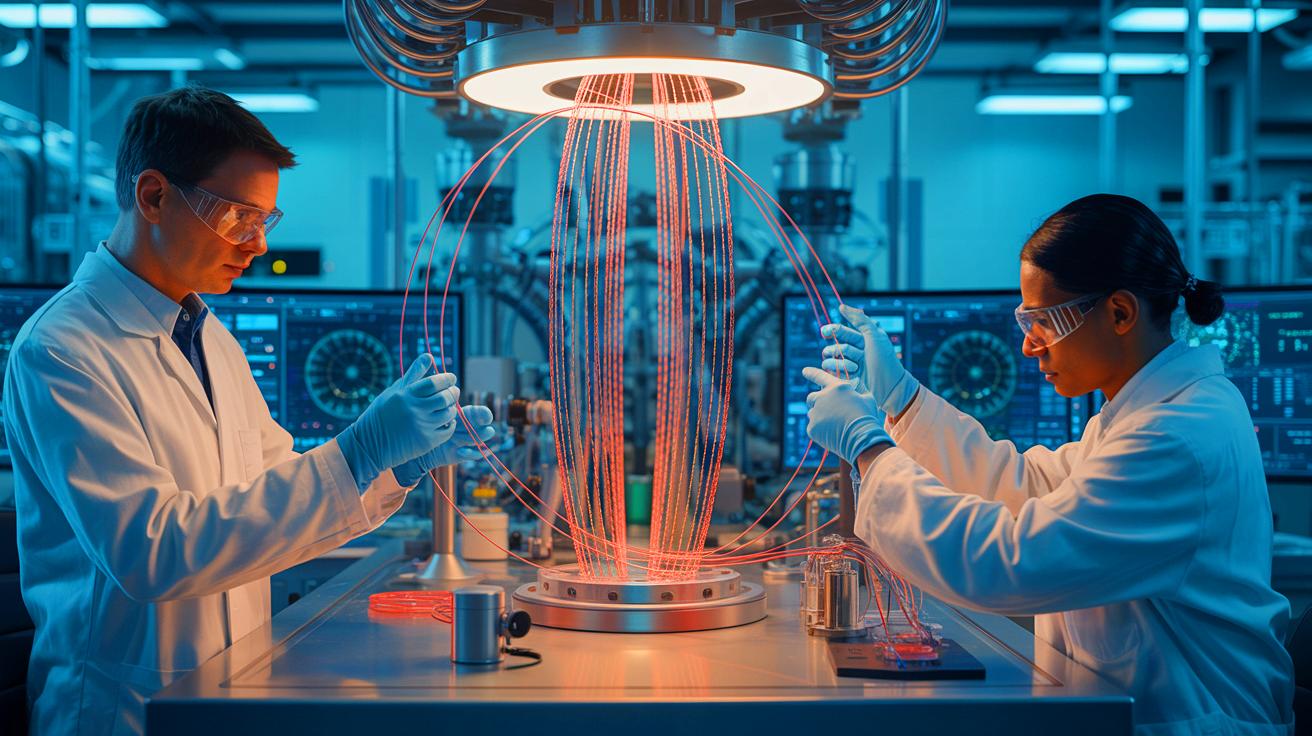
The rigorous testing of superconducting wires at Durham University has led to a groundbreaking quality control method. The process involved heat-treating Nb3Sn materials at temperatures over 1202°F to endow them with superconducting properties. These wires must withstand extreme mechanical forces and carry substantial electrical currents within the fusion reactor’s magnetic structure. However, the heat treatment also renders them unsuitable for repeated testing, posing a considerable challenge for quality assurance.
Through innovative research, the Durham team has developed a reliable statistical method that allows quality assessment by measuring adjacent strands from the same manufacturing batch in different labs. This method not only ensures manufacturing consistency but also offers a cost-effective alternative to repeated measurements. By establishing a practical solution for quality control, the researchers have set a precedent for maintaining high standards across the global supply chain of superconducting materials.
“The UK leads the world in the manufacture of MRI body scanners using superconducting magnets,” said Professor Damian Hampshire, emphasizing the potential for Britain to also lead in commercializing fusion power generation.
An Essential Benchmark for ITER Fusion Energy Experiment
The success of the ITER fusion project is heavily reliant on the quality of the superconducting wires verified by Durham University. These wires are foundational to the reactor’s operation, and the comprehensive testing data provides a critical benchmark for the project’s progress. The verified methodologies and extensive dataset are invaluable resources for scientists globally, facilitating advancements in fusion technology.
In a significant development, ITER recently completed a 20-month repair process on a crucial component, the Sector #8 vacuum vessel. This 440-ton piece is now back in assembly, ready to move to the tokamak assembly pit by February 2026. The installation of its thermal shield and toroidal field coils marks a pivotal step in the reactor’s construction. These advancements highlight the intricate, collaborative efforts required to bring fusion energy closer to reality.
Global Momentum in Fusion Energy Research
The global landscape of fusion energy research is rapidly evolving, with key players making substantial commitments. Microsoft has inked a deal to purchase electricity from Helion’s planned fusion plant by 2028, while Google has pre-ordered 200 megawatts of fusion power from Commonwealth Fusion Systems in the 2030s. Meanwhile, the UK government has pledged £2.5 billion to fusion research, initiating the construction of its prototype plant, STEP, at a former coal site in Nottinghamshire.
“Microsoft has already signed a deal to buy electricity from Helion’s planned fusion plant in 2028, and Google has pre-ordered 200 megawatts of fusion power from Commonwealth Fusion Systems in the 2030s,” said the researchers in a press release.
These developments reflect a growing confidence in fusion as a viable energy source, driven by the need for sustainable alternatives to fossil fuels. As investments pour into fusion research, the potential for breakthroughs increases, paving the way for a transformative shift in global energy production.
The Future of Fusion Energy
The advancements in superconducting materials and fusion technology signify a promising future for energy generation. The collaborative efforts in projects like ITER are crucial in addressing the challenges of sustainable energy. As more nations and corporations invest in fusion research, the prospect of achieving a virtually limitless power source becomes more tangible. The journey toward fusion energy is complex, requiring meticulous scientific and engineering efforts. However, the potential benefits are enormous, offering a clean, safe, and abundant energy source.
The question remains: how will these developments in fusion technology shape the global energy landscape in the coming decades, and what further innovations will be required to make fusion power a mainstream reality?
Continue reading