


“China Unveils Stealth Threat”: Military Chiefs Warn J-35 Fighter’s Radar-Evading Power Could Undermine U.S. Naval Strength In Western Pacific
 By
Adam Kovács
By
Adam Kovács
| IN A NUTSHELL |
|
In recent years, China has made significant strides in developing its military capabilities, particularly in the realm of advanced aviation technology. The unveiling of the J-35 stealth fighter jet underscores Beijing’s commitment to enhancing its naval and air power. With a radar cross-section reportedly smaller than a human palm, the J-35 represents a significant leap forward in stealth technology. This development is part of China’s broader strategy to modernize its military forces and challenge the dominance of other global powers, especially in the western Pacific. As the J-35 undergoes various trials, it has captured international attention, raising questions about its potential impact on global military dynamics.
The Rise of the J-35: A New Era in Chinese Aviation
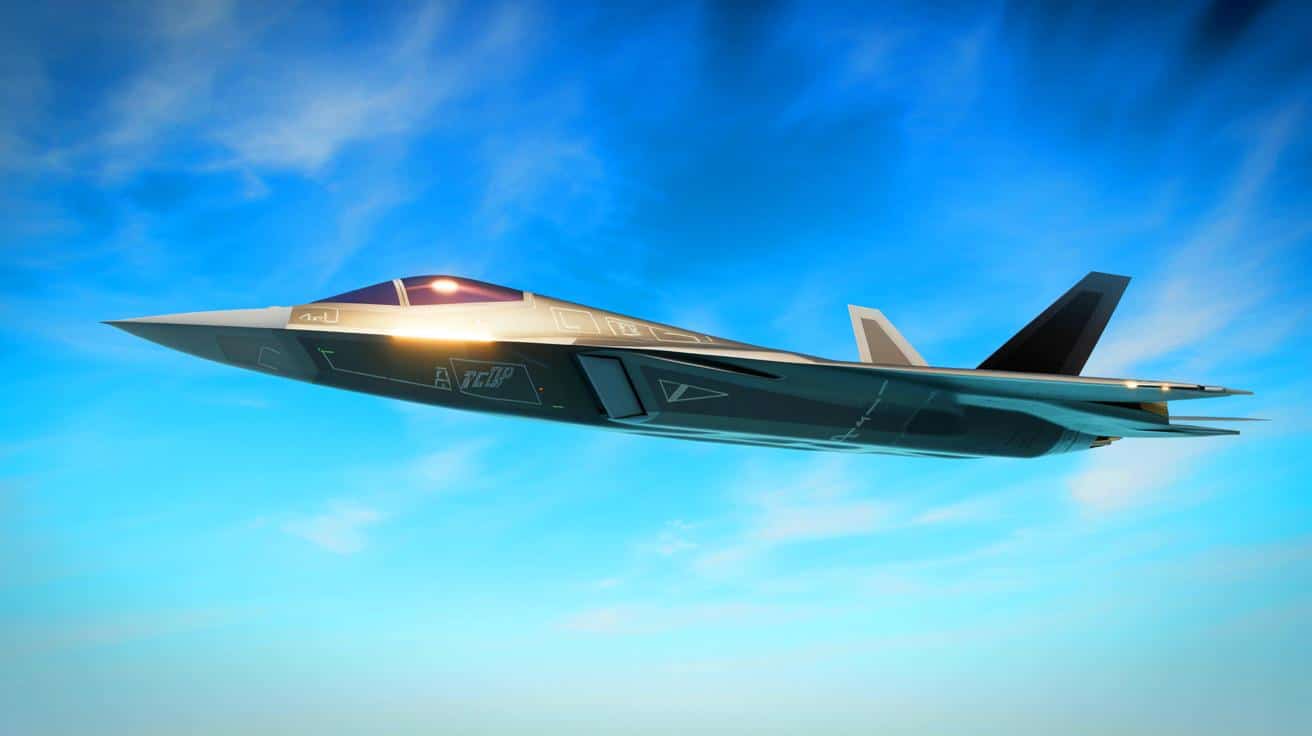
China’s J-35 stealth fighter is rapidly becoming a focal point in discussions about modern military aviation. Described as having a radar cross-section comparable to the size of a sparrow, this aircraft is designed to remain undetected until it is dangerously close to its target. Such capabilities highlight China’s ambition to develop a next-generation stealth fighter for its growing fleet of aircraft carriers. The J-35 recently participated in launch and recovery trials from the Fujian, marking a significant milestone in its development.
According to Wang Ya’nan, the chief editor of the Beijing-based magazine Aerospace Knowledge, the J-35’s stealth features could offer a considerable advantage in combat scenarios. By remaining undetected, the aircraft can approach targets with minimal risk of interception. This ability is crucial for modern warfare, where stealth and surprise can determine the outcome of engagements. The J-35’s design, coupled with the Fujian’s electromagnetic catapult technology, allows it to launch fully loaded with fuel and munitions, enhancing its operational range and firepower.
Technological Innovations and Strategic Implications
The J-35 program is notable for its emphasis on modularity and technological innovation. Wang Yongqing, a chief designer at the Shenyang Aircraft Design and Research Institute, explained that the development model allows for the application of research achievements across different variants. This approach not only reduces development costs and time but also increases production numbers, potentially lowering long-term maintenance costs.
China's focus on developing indigenous technology is evident in the J-35's medium-thrust engines, which are entirely developed within the country. This self-reliance enhances China's strategic autonomy and reduces dependency on foreign technology. The J-35's capabilities position China as a formidable contender in the arena of stealth aircraft, challenging the technological edge traditionally held by Western nations.
Global Reactions and Future Prospects
The J-35's emergence has sparked discussions among military analysts and policymakers worldwide. As China continues to modernize its navy and air force, it aims to challenge U.S. dominance in the western Pacific. The United States Navy operates a fleet of stealthy F-35C fighters, but the J-35, if it performs as claimed, could narrow this technological gap. The prospect of China fielding a homegrown alternative to Western fifth-generation carrier fighters raises strategic concerns for other nations.
China's rapid advancements in military aviation reflect its broader geopolitical ambitions. By developing advanced aircraft like the J-35, China seeks to project power and influence beyond its immediate region. As the J-35 undergoes further trials, its performance will be closely monitored by global powers, who will be assessing its potential impact on the balance of military power in the region.
Challenges and Opportunities Ahead
While the J-35 represents a significant achievement for China's defense industry, it also faces challenges. The successful integration of new technologies into operational military units requires extensive testing and refinement. As the J-35 undergoes carrier trials, there will be a need to address any potential technological or logistical issues that may arise.
Moreover, the global military landscape is continually evolving, with countries investing in emerging technologies such as artificial intelligence and unmanned systems. China's ability to adapt and innovate in response to these trends will be crucial in maintaining its competitive edge. The J-35's development offers opportunities for collaboration and competition, as countries seek to enhance their own military capabilities in response to China's advancements.
The unveiling of China's J-35 stealth fighter marks a pivotal moment in the evolution of global military aviation. As nations respond to this development, questions arise about the future of military technology and geopolitical dynamics. How will countries adapt their strategies in light of China's growing military capabilities, and what role will emerging technologies play in shaping the future of warfare?
Continue reading