


“They’re Beating Us Up There”: This Space Race With China Terrifies U.S. Commanders (and It’s Closer to a Real War Than You Think)
 By
Adam Kovács
By
Adam Kovács
| IN A NUTSHELL |
|
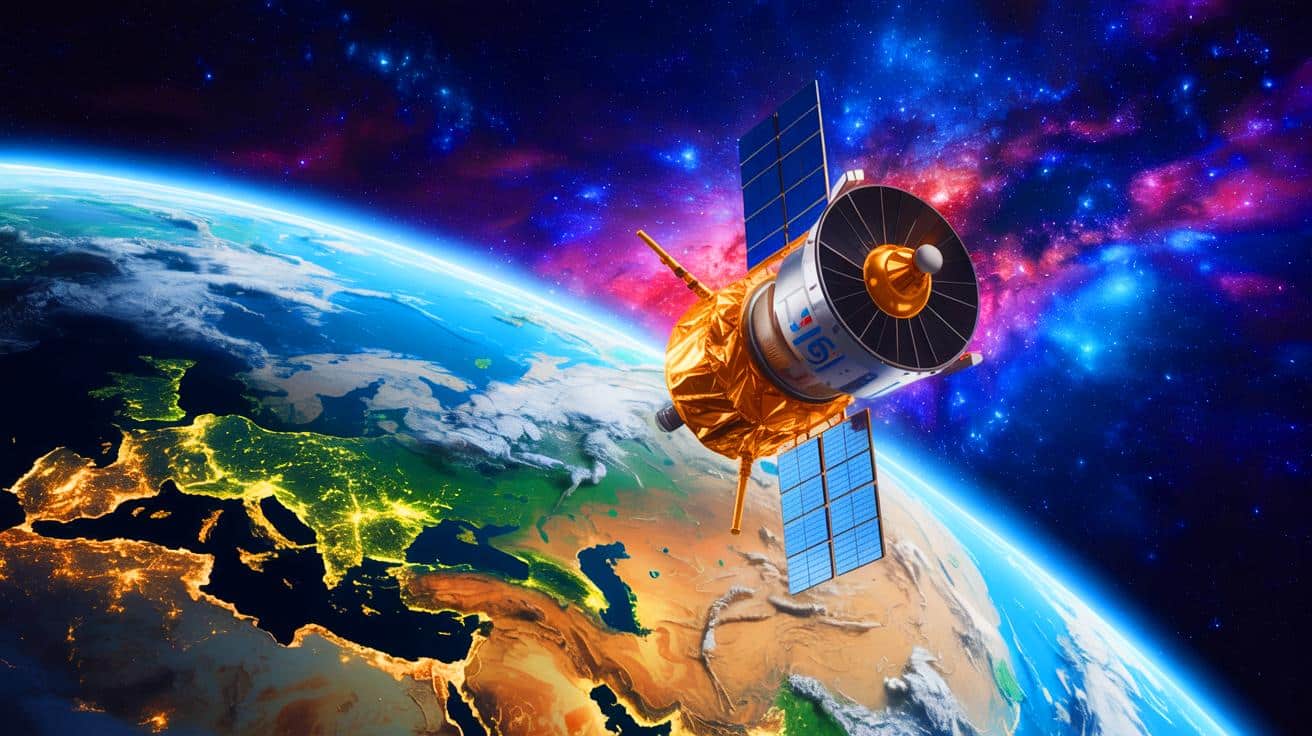
In a rapidly evolving global landscape, the realm of space has become a critical theater for military and strategic operations. At the forefront of this new frontier is China, which is emerging as a formidable challenger to the United States’ dominance in space. According to Lt. Gen. Douglas Schiess of the U.S. Space Force, China is swiftly advancing its capabilities in space, posing significant threats to U.S. assets. This revelation underscores the urgency for the United States to bolster its space defenses and maintain its strategic advantage in what many consider the ultimate high ground.
China’s Rapid Advancement in Space Capabilities
China’s progress in space technology is occurring at an “incredible pace,” as noted by Lt. Gen. Schiess. The rapid development of these capabilities is a cause for concern for U.S. military leaders. Schiess emphasized that China is enhancing its ability to target U.S. forces spanning maritime, land, and air domains from unprecedented distances. The use of space technology enables this extended reach, further complicating the strategic landscape for the United States.
Beyond merely extending their operational range, China is also focusing on developing counter-space capabilities. These advancements threaten to undermine U.S. assets in space, which form the backbone of modern military operations. The ability to disrupt or destroy space-based assets could significantly impair U.S. intelligence, surveillance, and reconnaissance (ISR) capabilities, giving China a distinct advantage in potential future conflicts.
The Strategic Importance of Space
Space has long been considered the ultimate high ground in military strategy. Bradley Bowman, a senior director at the Foundation for Defense of Democracies, highlights the critical role space plays in bolstering ISR and targeting capabilities. Space serves as our best eyes and ears, providing early warning and situational awareness essential for modern warfare.
If adversaries like China can surpass U.S. space-based ISR capabilities, it could lead to dire consequences for national security. A loss of the high ground in space would not only diminish early warning capabilities but also complicate effective combat engagements. This potential disadvantage underscores the need for the U.S. to maintain a robust and advanced presence in space, ensuring that it retains the strategic upper hand.
Implications of Losing the High Ground
The potential consequences of China surpassing U.S. space capabilities are significant. As Bowman articulated, the loss of space dominance could result in fewer early warnings and more challenging combat scenarios. Such disadvantages can aggregate, potentially leading to lost battles or even wars. The impact on national security would be profound, necessitating a reevaluation of strategy and investment in space technology.
To address these concerns, Lt. Gen. Schiess advocates for increasing the number of U.S. satellites, particularly those dedicated to ISR functions. The expansion of satellite networks would enhance detection capabilities and provide a buffer against potential adversarial actions. This strategy aims to ensure that the United States retains its strategic advantage and can effectively counter any threats posed by China or other nations.
The Growing Satellite Presence
China’s aggressive expansion in satellite deployment is a testament to its rising ambitions in space. As of July 2025, China had over 1,189 satellites in orbit, marking a 927% increase since 2015. More than 500 of these satellites are equipped with ISR capabilities, featuring advanced sensors that enhance China’s ability to detect and track U.S. military assets.
This proliferation of satellites underscores the need for the U.S. to not only match but exceed China’s capabilities in space. The deployment of advanced satellites is crucial for maintaining situational awareness and ensuring the security of U.S. forces. As space becomes increasingly contested, the United States must prioritize investment in cutting-edge space technologies to safeguard its interests.
As space continues to emerge as a critical domain for military operations, the strategic rivalry between the United States and China shows no signs of abating. The rapid advancements in China’s space capabilities pose significant challenges to U.S. dominance in this arena. As the U.S. seeks to fortify its position, the question remains: How will the evolving dynamics of space warfare shape future geopolitical conflicts and alliances?