



“They Heard the Hull Groan”: Inside the Polar Sea’s Battle With ‘Rubber Ice’ That Nearly Stopped America’s Most Powerful Icebreaker (and changed Arctic strategy forever)
 By
Adam Kovács
By
Adam Kovács
| IN A NUTSHELL |
|
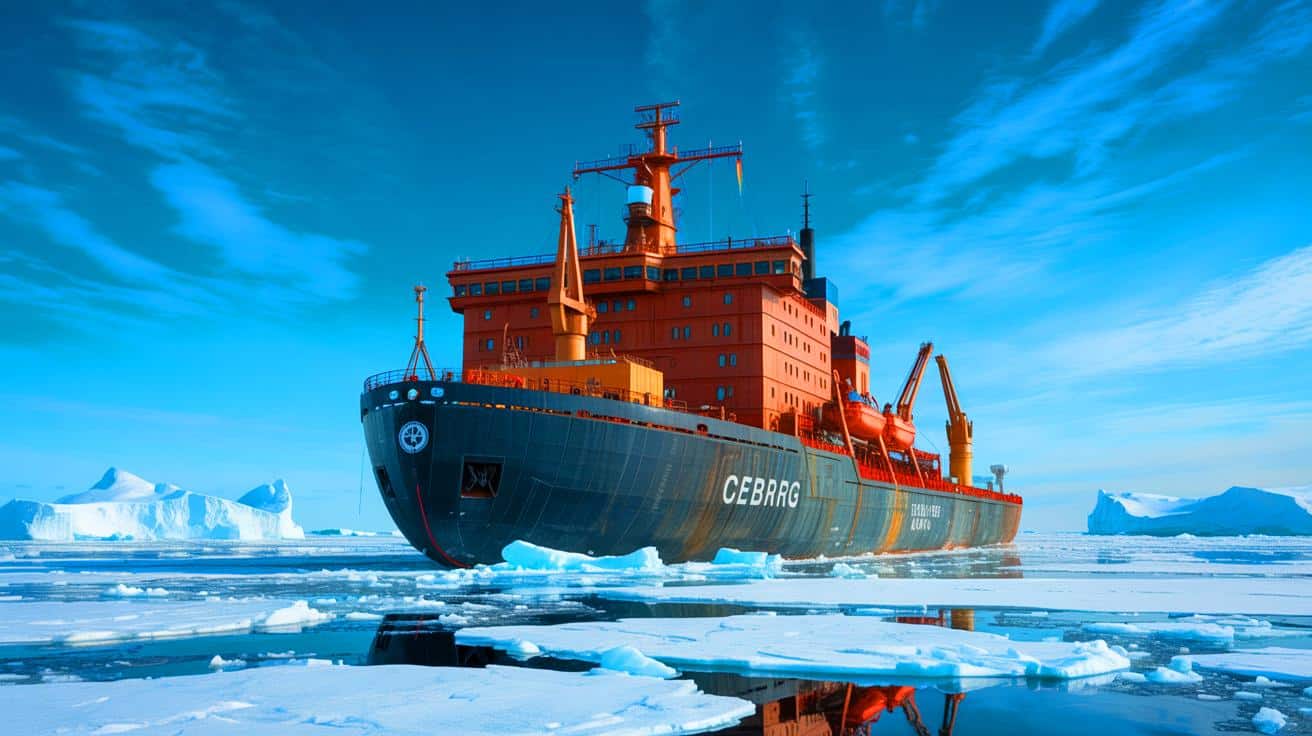
The U.S. Coast Guard Cutter Polar Sea, a vital player in America’s icebreaking fleet, has long stood as a testament to American resilience and ingenuity. Commissioned in 1978, this 399-foot vessel was designed to navigate some of the harshest climates on the planet, specifically supporting Operation Deep Freeze in Antarctica. The Polar Sea’s diesel-electric propulsion system allowed it to cut through polar ice up to 40 feet thick, marking its place in history as one of the first two North American ships to reach the North Pole. Despite the challenges posed by its environment, the Polar Sea completed its missions with unmatched efficiency, showcasing its advanced engineering and robust design.
The Polar Sea’s Enduring Legacy
Despite the advancements in icebreaker technology, the Polar Sea remains an enduring symbol of American prowess in polar exploration. While the U.S. has fallen behind countries like Russia and Canada in terms of fleet numbers and technical capabilities, the legacy of the Polar Sea remains unchallenged. This vessel is not merely a feat of engineering; it is a significant contributor to scientific research and military logistics in polar regions. Its ability to navigate through dense, icy waters has facilitated various missions, underscoring its importance in the history of polar exploration.
The Polar Sea’s contributions extend beyond its size and power. It has played a pivotal role in scientific discovery, enabling researchers to access some of the most remote areas on Earth. Its missions have often included transporting supplies, facilitating scientific studies, and supporting military operations. The vessel’s history and achievements continue to inspire future generations as the U.S. navigates its strategic priorities in increasingly competitive polar regions.
Confronting the Challenges of Rubber Ice
In December 2000, the Polar Sea faced one of its most challenging missions in Antarctica. The vessel encountered an unusual phenomenon known as "rubber ice," a softer, more elastic form of sea ice. This rare occurrence tested the ship's icebreaking capabilities and pushed its engineering to the limits. Lieutenant April Brown, aboard the Polar Sea, described the experience as "like hitting a pillow with a hammer." This metaphor highlights the difficulties encountered when breaking through such unpredictable ice conditions.
The rubber ice significantly slowed the Polar Sea's progress, reducing its speed to a mere fraction of its usual pace. The ship's crew had to rely on patience and resourcefulness to navigate through this unexpected obstacle. The potential risks of becoming stuck in rubber ice were immense, as it could lead to the crew being stranded and requiring rescue. Nonetheless, the Polar Sea ultimately overcame this challenge, demonstrating the resilience and adaptability of its crew and engineering.
The Diplomatic Significance of Polar Missions
In 1994, the Polar Sea found itself at the center of a significant diplomatic event. As the Cold War drew to a close, icebreakers from the U.S., Canada, and Russia met in the Arctic, symbolizing a new era of cooperation among former adversaries. This meeting was a testament to the changing geopolitical landscape and the growing importance of collaborative efforts in polar regions.
While the event did not capture international headlines, it marked a pivotal moment in global politics. The Arctic has long been considered a strategic region, with military and scientific interests intertwined. The meeting of these three nations' icebreakers in the high Arctic highlighted the potential for peaceful collaboration and the shared goal of scientific discovery. This moment served as a reminder of the complex interplay between geopolitics and scientific exploration in the polar regions.
The Future of U.S. Icebreaking Capabilities
The retirement of the Polar Sea in 2010 marked the end of an era for the U.S. Coast Guard. As the vessel is phased out, the U.S. is shifting its focus toward modernizing its icebreaking fleet. The Polar Security Cutter program aims to produce a new generation of heavy icebreakers, designed to meet the growing challenges and competition in the Arctic. With Russia's advanced fleet of nuclear-powered icebreakers, the U.S. faces a strategic imperative to bolster its own capabilities.
The Arctic is becoming an increasingly geopolitically important region due to its natural resources and emerging shipping lanes. The U.S. must prioritize investment in advanced icebreaking technologies to protect its national interests and ensure access to this critical area. As global interest in the Arctic grows, the U.S. must navigate this evolving landscape and maintain its presence in the face of international competition.
As the legacy of the Polar Sea continues to inspire, the U.S. must harness innovation and investment to protect its interests in polar regions. The icebreaking race is no longer solely about scientific exploration; it is a matter of strategic importance. How will the U.S. navigate these challenges to ensure its role as a leader in polar exploration and diplomacy?