



US Unveils New Ragnarok Missile, Reshaping Defense Capabilities with 575-Mile Range: What It Means for Security
 By
Adam Kovács
By
Adam Kovács
| IN A NUTSHELL |
|
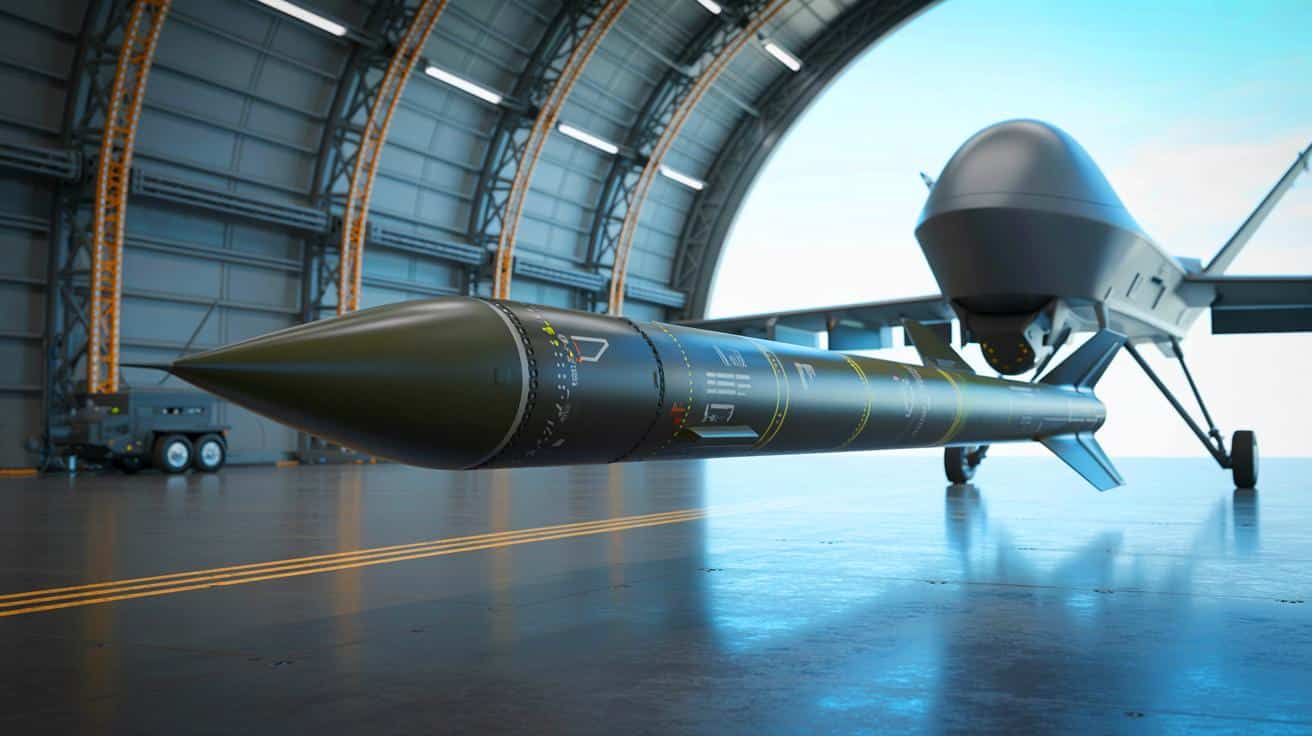
In the evolving landscape of military technology, the introduction of the Ragnarök Low-Cost Cruise Missile (LCCM) by Kratos Defense & Security Solutions marks a significant step forward in the pursuit of affordable, high-performance strike capabilities. As global defense strategies shift towards cost-effectiveness without sacrificing potency, the Ragnarök emerges as a formidable contender. With a range of 575 miles and a unit cost substantially lower than traditional cruise missiles, this new weapon system promises to reshape how militaries around the world approach precision strikes, particularly in high-stakes environments.
Innovation in Military Technology
Kratos Defense & Security Solutions has made headlines with the unveiling of their Ragnarök LCCM, a testament to innovation in military technology. Boasting a range of 575 miles and cruising at speeds greater than Mach 0.7, this missile is designed for precision strikes on high-value targets. The Ragnarök’s development emphasizes affordability and scalability, crucial elements as militaries worldwide seek cost-effective alternatives to traditional, expensive cruise missiles. Kratos has focused on manufacturability and modularity, ensuring that the Ragnarök can be produced efficiently and adapted to various platforms.
The missile’s design includes a carbon-composite fuselage and empennage components, reducing weight while maintaining structural integrity. Additionally, the enhanced propulsion system allows for long-endurance missions, and the wing-folding mechanism enables compact storage and rapid deployment. These features contribute to the missile’s tactical versatility, making it suitable for both manned and unmanned platforms. The Ragnarök represents a significant leap in military technology, combining advanced engineering with a focus on cost-efficiency.
Economic Impact of Affordable Strike Systems
The Ragnarök LCCM’s introduction is not just a technological advancement but also an economic one. With production costs estimated at $150,000 per missile when manufactured in large quantities, it offers a stark contrast to conventional cruise missiles like the Tomahawk, which costs around $1.5 million per unit. This cost reduction allows for the widespread deployment of precision strike capabilities, enabling military forces to conduct operations on a larger scale without the financial burden of traditional systems.
Kratos’ strategy of combining affordability with performance is evident in their design philosophy. By creating systems that are “affordable enough to lose, but capable enough to matter,” they align with modern military needs for attritable, high-performance weapons. This approach supports saturation attacks and distributed operations, enhancing the overall effectiveness of military strategies. Kratos’ commitment to cost-efficiency ensures that their systems can outnumber and outpace high-value threats, offering a strategic advantage.
Military Strategic Shifts
The Ragnarök LCCM exemplifies a broader shift in military strategy, where the focus is increasingly on quantity and cost-efficiency alongside performance. As defense budgets face scrutiny, the ability to deploy numerous affordable systems becomes crucial. The Ragnarök’s design allows it to integrate seamlessly with existing platforms, including the XQ-58A Valkyrie drone, enhancing its operational versatility. This capability aligns with modern defense needs for unmanned teaming and distributed operations.
Kratos’ development of the Ragnarök reflects a strategic emphasis on low-cost, high-performance weapons. These systems are designed for saturation attacks and distributed operations, providing a tactical edge in diverse combat scenarios. By focusing on modularity and manufacturability, Kratos ensures that their systems can be produced rapidly and deployed effectively, meeting the evolving needs of today’s warfighter. The Ragnarök’s introduction underscores the importance of balancing cost-efficiency with advanced capabilities in future air warfare strategies.
The Future of Air Warfare
The unveiling of the Ragnarök LCCM highlights a shift in the philosophy of weapon design, where the emphasis is on creating systems that are both affordable and effective. As defense strategies evolve, the ability to deploy large numbers of precision strike systems becomes increasingly important. The Ragnarök’s affordability and performance make it a key player in future air warfare, where the ability to conduct widespread operations without prohibitive costs will be crucial.
Kratos’ focus on cost-effective, modular systems positions them as a leader in this new era of military technology. By offering systems that are both capable and affordable, they provide military forces with the tools needed to adapt to changing threats. The Ragnarök’s development signals a new direction for air warfare, where the balance between quantity, cost, and performance defines strategic success. As militaries worldwide continue to seek innovative solutions, the Ragnarök LCCM stands out as a model for future developments.
As the Ragnarök LCCM enters production, its impact on military strategies and defense budgets will be closely watched. Kratos’ focus on affordability and performance represents a significant shift in military technology, highlighting the growing importance of cost-efficient systems in modern warfare. How will this trend towards affordable precision strike capabilities influence global military dynamics in the coming years?
Continue reading