



Ceuta crisis: why anti-migrant rhetoric puts Europe’s food economy at risk
The Ceuta crisis has renewed a polarised migration debate, even as Spain’s farm sector depends heavily on migrant labour for fruit production and a major share of Europe’s fresh food supply.
 By
Adam Kovács
By
Adam Kovács
The Ceuta crisis has brought migration back to the centre of Europe’s political debate, but the language used to describe it also obscures an economic reality. Spain’s agricultural sector, which supplies a significant share of fresh produce consumed across Europe, relies substantially on migrant labour. Presenting migration primarily through the lens of an “invasion” risks narrowing a discussion that also concerns food production, labour conditions and economic resilience.
In brief
- Around 72,000 people entered Ceuta from Morocco over two days in August 2026, according to The Conversation.
- The Guardian reported that Spain’s far-right Vox party described the arrivals as a migrant “invasion”.
- Migrant workers officially account for about 30% of Spain’s agricultural workforce, although undocumented workers are not fully counted.
- Spain produces one in four fresh fruits consumed in Europe, while its agricultural industry is valued at €43.9 billion annually.
The Conversation reported that around 72,000 people entered the Spanish enclave of Ceuta from Morocco over two days in August 2026. The humanitarian crisis was followed by sharp political responses across Europe. According to The Guardian, Spain’s far-right Vox party described the arrivals as a migrant “invasion”, while European leaders blamed Spain and raised the prospect of another migration crisis on the scale of 2015.
Such rhetoric can shape public debate quickly, yet it does not account for the position migrants already hold in essential parts of the European economy. In Spain, that position is particularly visible in agriculture, where seasonal work, harvesting and supply chains depend on a workforce that is often politically prominent only during moments of crisis.
Spain’s food production depends on migrant labour
Spain is the European Union’s fourth-largest agricultural producer and one of the world’s major citrus producers. The country’s fields and orchards supply stone fruit from Lleida, citrus from the Valencia region and strawberries from Huelva. One in every four fresh fruits consumed in Europe is produced in Spain, according to The Conversation.

That output is tied to a large migrant workforce. Migrants officially account for about 30% of agricultural workers in Spain, although the figure does not fully capture undocumented workers. Their work is described as pivotal to European food supply, particularly in the production and movement of fruit that reaches consumers across national borders.
Spain’s agricultural industry is worth €43.9 billion annually. This makes the issue more than a question of border politics. It concerns the continuity of a sector whose products are part of everyday diets throughout Europe. The economic role of agriculture is also why the European economy cannot be understood solely through manufacturing, finance or trade policy. Labour conditions in fields, orchards and distribution networks are part of the same picture.
The FOODCIRCUITS research project, cited by The Conversation, examines migrant workers in food systems in Europe and the United States. Its work on Spain’s citrus supply chains highlights how people, produce, legal status and labour rights intersect in systems that consumers may rarely see. The distance between a political headline at a border and the food supply chain is therefore shorter than it may appear.
What the Ceuta debate leaves out
Migration policy is often discussed in terms of control, deterrence and national security. Those issues are politically consequential, but they do not remove the practical dependence of food production on workers who are frequently exposed to insecure conditions. The Conversation notes that farmworkers worldwide face disproportionate exposure to dangerous work, with informal or irregular status compounding health risks.
This context matters when political language turns migration into a single, undifferentiated threat. A phrase such as “invasion” does not distinguish between the humanitarian circumstances in Ceuta, the people who have already built lives and careers in Europe, and the workers who support agricultural production. It can also make labour needs less visible precisely when they are central to the functioning of farms and supply chains.

The Conversation argues that harsh migration policies have been widely shown to harm national economies and productivity, as well as nutrition and health. That does not mean the Ceuta crisis has directly caused a food shortage or measurable economic damage across Europe. Rather, it points to a broader policy tension: governments seeking tougher migration measures must also confront the role migrants play in sectors that underpin daily life.
A political crisis with economic consequences to consider
The Ceuta events demonstrate how rapidly migration can become a tool of political confrontation. The Guardian’s account of the European response stressed the division among leaders, with criticism directed at Spain and renewed calls for stricter border action. In that environment, rhetoric can travel faster than the more complex facts of economic interdependence.
For Europe, the central question is not whether migration raises difficult policy choices. It clearly does. The question is whether those choices are being debated with an accurate view of the economies involved. Spain’s fruit production, its €43.9 billion agricultural sector and the documented role of migrant workers show why a politics of fear can leave essential facts outside the frame.
Ceuta should therefore be read not only as a border crisis, but as a reminder that migration, work and food supply are closely connected. A public debate that recognises those links is better equipped to distinguish immediate political claims from the longer-term economic conditions on which Europe’s food system depends.
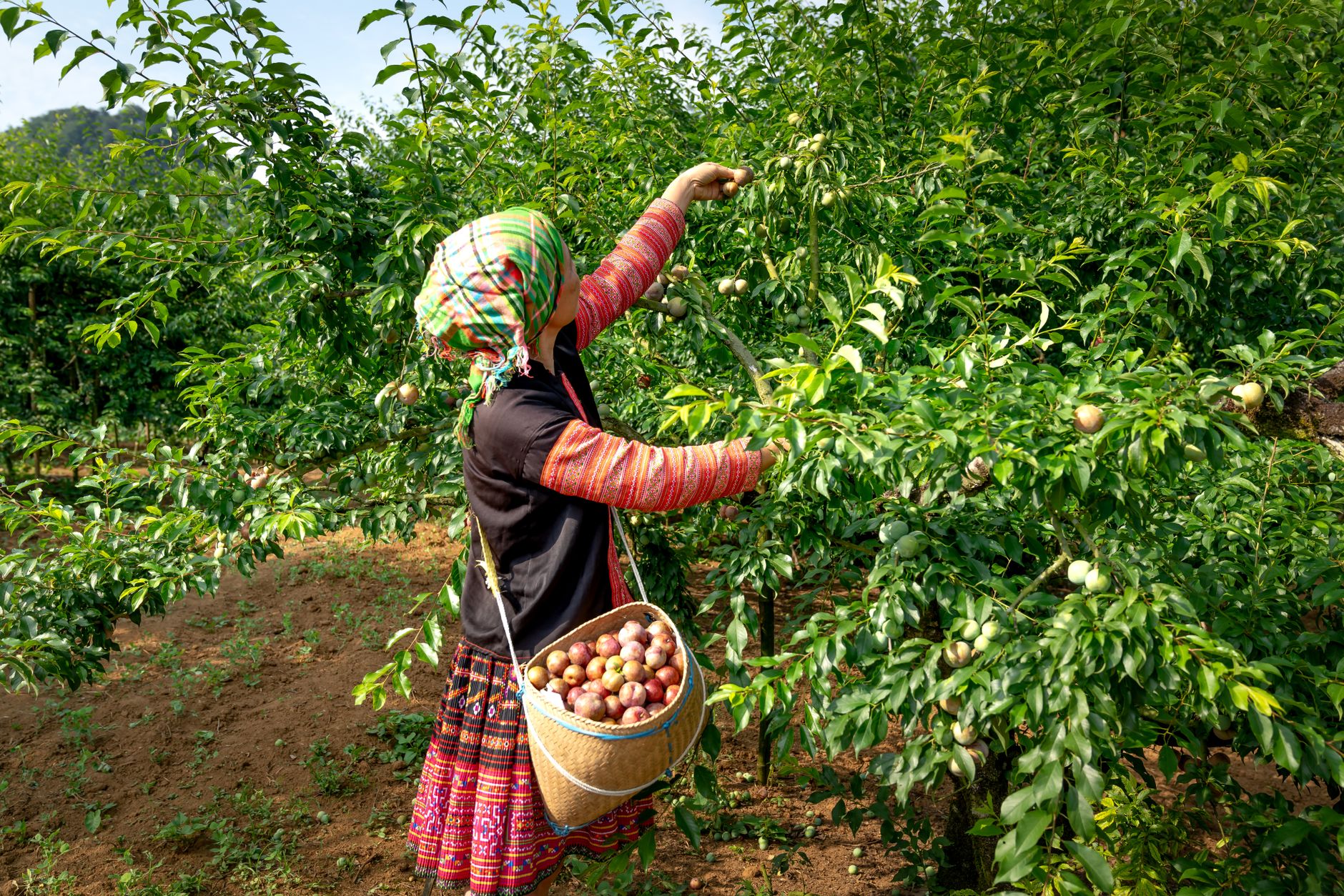
Featured image. Source: Pexels. Credit: Quang Nguyen Vinh. License: Pexels License.