

“France Prepares for Conflict”: This Military Powerhouse Gears Up for War with New Strategies and Advanced Weaponry
 By
Adam Kovács
By
Adam Kovács
| IN A NUTSHELL |
|
The French defense industry is undergoing a significant transformation as it shifts gears to a war footing. This change is driven by increased defense spending, causing traditional companies, particularly those in declining sectors like automobiles, to pivot towards defense. The transition is marked by an uptick in technological advancements and a renewed focus on strengthening national security. This article delves into the various facets of this transformation, exploring the economic implications, technological innovations, and the broader impact on the global stage.
The Economic Ripple Effect of Increased Defense Spending
France’s decision to boost defense spending is having a profound impact on its economy. As traditional industries, such as the automobile sector, face stagnation, many companies are finding new opportunities in the defense industry. This strategic shift not only revitalizes struggling businesses but also creates a wealth of new jobs. The increased funding allows companies to invest in research and development, leading to technological innovations that can be leveraged across multiple sectors.
The French government’s commitment to defense spending is evident in its allocation of resources. This commitment is not just about strengthening military capabilities; it’s also about boosting the economy. By channeling funds into defense, France is stimulating economic growth and ensuring that its industrial base remains competitive. This economic strategy underscores the importance of defense as a catalyst for growth, offering a lifeline to industries facing decline and fostering an environment where innovation can flourish.
Technological Advancements Fueling Defense Capabilities
Innovation is at the heart of France’s defense strategy. The increased investment in defense has spurred a wave of technological advancements that enhance military capabilities. Companies previously focused on the automobile industry are now channeling their expertise into developing cutting-edge defense technologies. This includes advancements in aerospace, cyber defense, and unmanned systems, positioning France as a leader in military technology.
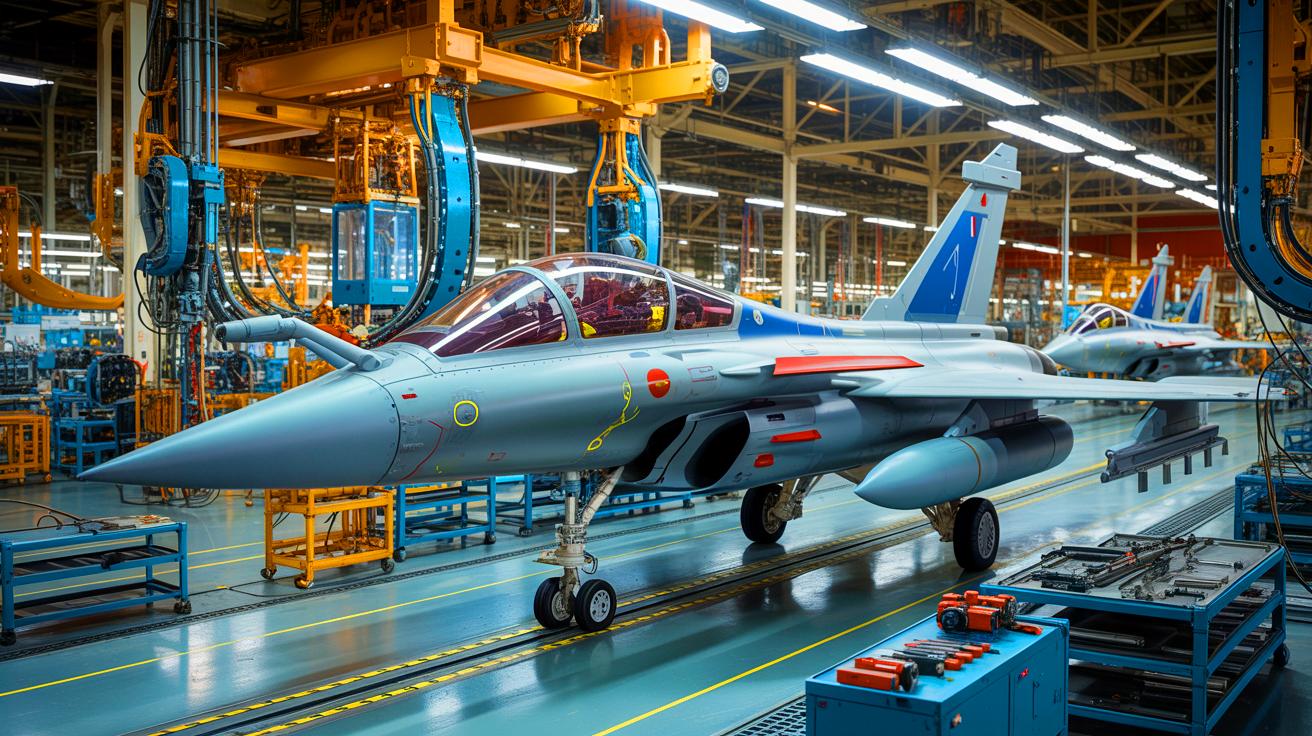
One of the most significant developments is in the realm of aerospace, with the French Rafale fighter plane exemplifying the country’s technological prowess. These advancements are not merely for show; they are crucial in maintaining a competitive edge in global defense. By integrating state-of-the-art technology into its military arsenal, France is ensuring that its defense forces are equipped to meet modern challenges. This focus on innovation reflects a broader trend within the global defense industry, where technological superiority is increasingly seen as a key determinant of military strength.
Shifting the Industrial Landscape
The pivot towards defense is reshaping France’s industrial landscape. As companies transition from traditional sectors to defense, the industrial landscape is becoming more diversified and resilient. This shift is not only revitalizing existing industries but also encouraging new ones to emerge. The defense sector is proving to be a fertile ground for innovation, attracting talent and investment from across the country.
This transformation is marked by a synergy between different sectors, with defense acting as a bridge that connects various industries. The skills and technologies developed in the defense sector often find applications in civilian industries, fostering a culture of cross-industry collaboration. This interconnectedness is crucial for building a robust industrial ecosystem that can withstand economic fluctuations and adapt to changing market demands. The result is a more dynamic and versatile industrial base that supports economic stability and growth.
Global Implications of France’s Defense Strategy
France’s shift to a war footing has implications that extend far beyond its borders. As a key player in the European Union, France’s defense strategy influences the security dynamics of the entire region. By strengthening its defense capabilities, France is contributing to the stability of the EU, serving as a bulwark against external threats. This proactive stance is crucial in a world where geopolitical tensions are on the rise.
Moreover, France’s advancements in defense technology enhance its position on the global stage. As countries around the world seek to modernize their military forces, France’s expertise and technological offerings make it a valuable partner in international defense collaborations. This not only bolsters France’s diplomatic standing but also opens up new avenues for economic and technological partnerships. In an increasingly interconnected world, France’s defense strategy serves as a model for balancing national security with economic growth.
The transformation of France’s defense industry is a testament to the power of strategic investment and innovation. As the country navigates this new era, the interplay between defense spending and economic growth will continue to shape its future. The question remains: how will other sectors adapt to this shifting landscape, and what role will they play in supporting France’s defense ambitions?