



America’s New Mach 5 Missiles: “A Threat to Global Peace” or the Ultimate Defense Against Rising Superpowers
 By
Adam Kovács
By
Adam Kovács
| IN A NUTSHELL |
|
Recent advancements in military technology have spurred a new era in global defense strategies. The United States’ hypersonic missile program marks a significant milestone in this ongoing arms race. With the announcement of the upcoming deployment of a second battery of “Dark Eagle” missiles, the U.S. military aims to enhance its capability to strike enemy targets swiftly and accurately. This development positions the United States as a leader in advanced defense technologies, while also sparking debates about its potential impact on global strategic balance and the future nature of armed conflicts.
The Strategic Deployment of Dark Eagle Batteries
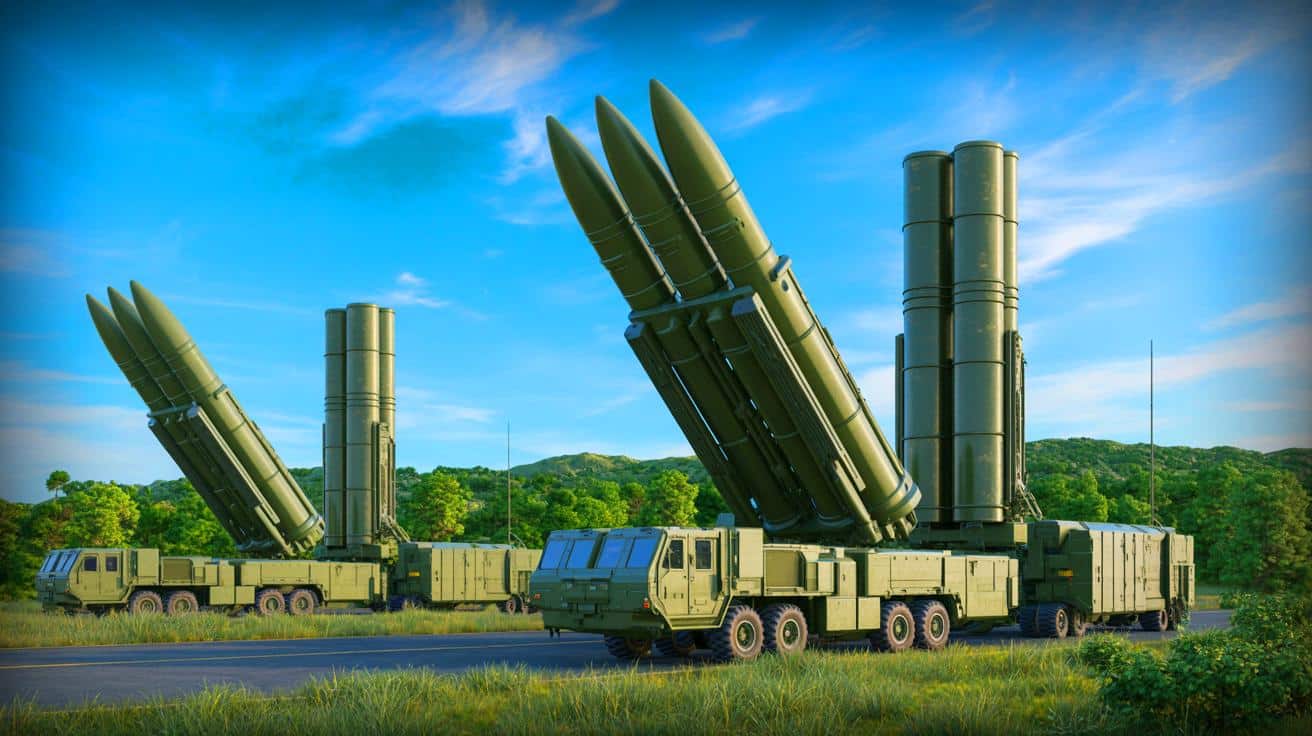
The Dark Eagle missile system comprises four mobile launchers per battery, with each launcher equipped to carry two missiles. These launchers are mounted on mobile trailers, allowing them to relocate swiftly after firing to evade counterattacks. The first battery was installed at Joint Base Lewis-McChord in Washington State, operational under the 5th Battalion of the 3rd Field Artillery Regiment, part of the 1st Multi-Domain Task Force.
This task force focuses on integrating cyber, space, air, maritime, and land capabilities into a cohesive force, particularly in the Indo-Pacific theater. Dark Eagle missiles are launched using a ground-based rocket equipped with a specialized warhead known as the Hypersonic Glide Body (HGB). Unlike traditional missiles that follow predictable arcs, these weapons glide at hypersonic speeds toward their targets after detaching from their boosters, making them extremely challenging to intercept.
A Weapon in the “Goldilocks Zone”
The concept of the “Goldilocks zone” within the U.S. military is embodied by the Dark Eagle. The missile bridges the gap between tactical and strategic missiles, offering unmatched flexibility and range. Designed to destroy air defenses, missile launchers, command centers, and logistical bases, it can also target mobile objectives. The Dark Eagle is capable of operating in access-denied areas, where adversaries attempt to prevent U.S. forces from intervening.
This ability to strike quickly and forcefully before a conflict escalates makes the Dark Eagle a major strategic asset. It enables commanders to launch a preemptive strike, thus avoiding escalation into a broader conflict. As a mobile and nearly unstoppable hypersonic weapon system, the Dark Eagle provides the U.S. military with decisive strike capabilities, even in heavily defended areas.
Geopolitical and Tactical Implications
The deployment of the Dark Eagle will undoubtedly provoke international reactions. By offering rapid and precise strike capabilities, this system underscores the importance of speed and flexibility in future warfare. It might encourage other nations to accelerate their own hypersonic missile programs, fueling a new arms race.
The tactical implications are also significant. By enabling rapid strikes on strategic targets, the Dark Eagles could transform the conduct of conflicts. By providing credible deterrence against enemy aggression, they could also play a crucial role in maintaining peace. The impromptu maneuverability of these missiles could also influence military doctrines, prompting the adoption of new defense and attack strategies.
The Future of Hypersonic Weapon Systems
As the United States continues to develop and test the Dark Eagle, other nations are closely monitoring these advancements. Hypersonic weapon systems are seen as the future of warfare, where speed and precision will be paramount. With their ability to penetrate enemy air defenses and strike critical targets, missiles like the Dark Eagle could transform future battlefields.
The question is how these weapons will be regulated internationally. Their destructive potential raises questions about the need for new arms control treaties. As these technologies proliferate, nations will need to find a balance between developing such weapons and preserving global stability.
The development of the Dark Eagle missiles by the U.S. military symbolizes a major advancement in hypersonic weaponry. These advancements raise critical questions about the future of warfare and how nations can collaborate to ensure these technologies are used responsibly. How will governments worldwide respond to this evolution, and what measures will they take to ensure a safer future?
Continue reading