


China Calls the US Virginia Block V Submarine “A Merciless Hunter” Sparking Global Outrage and Fear Over Rising Tensions in the Pacific
 By
Adam Kovács
By
Adam Kovács
| IN A NUTSHELL |
|
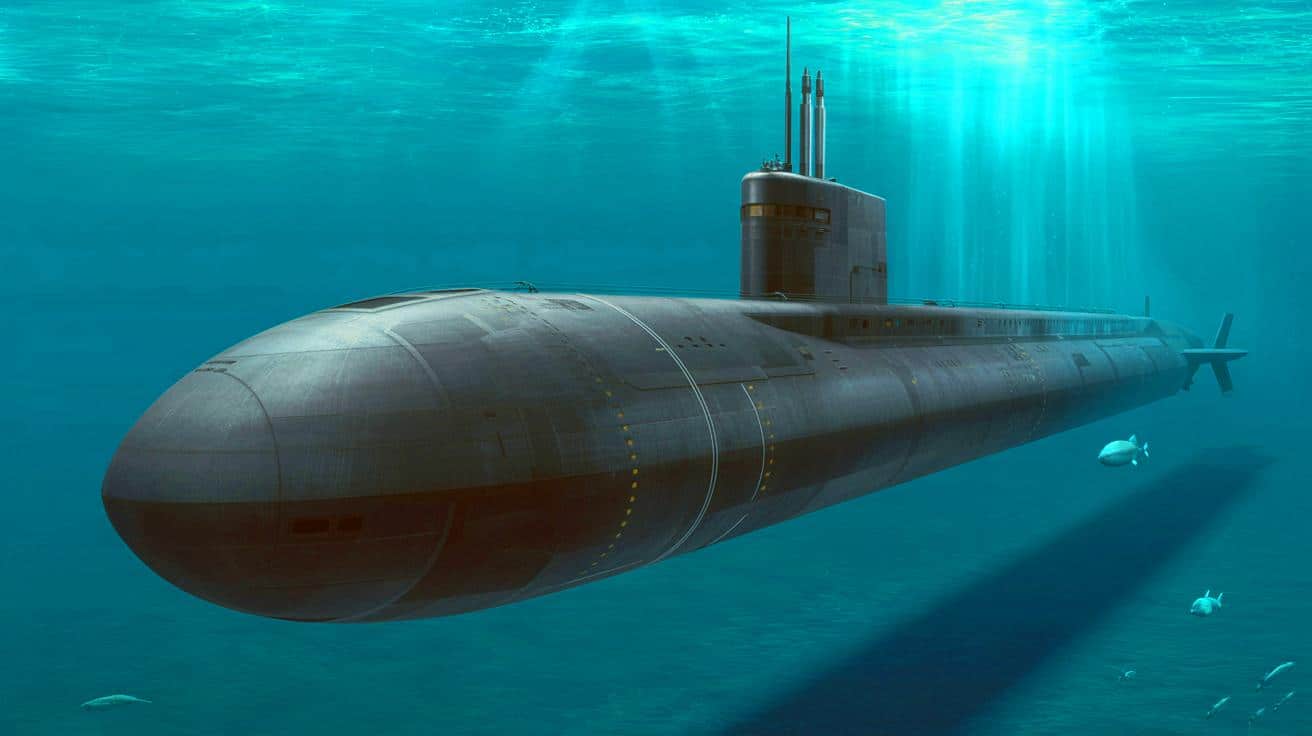
The Virginia Block V attack submarine is poised to become a cornerstone of U.S. naval strategy, blending advanced technology with unprecedented capabilities. With a contract valued at over $22 billion, the U.S. Navy and General Dynamics Electric Boat are embarking on the largest shipbuilding project in Navy history. The Block V’s design aims to redefine undersea warfare, incorporating features like an enlarged hull and a versatile payload system. As geopolitical tensions rise, the strategic importance of such advanced military assets cannot be overstated. The Virginia Block V’s potential to reshape naval operations raises questions about future military engagements and resource allocation.
Enlarged Hull and Increased Firepower
The Virginia Block V introduces a significantly enlarged hull, setting it apart from its predecessors in the Virginia-class lineup. This expansion includes the addition of an 84-foot section to accommodate four large-diameter tubes. Each tube is capable of carrying seven Tomahawk cruise missiles, leading to a total capacity of 40 cruise missiles when combined with those in the bow. This increase in strike capability positions the Block V as a formidable asset in modern naval warfare.
Beyond traditional Tomahawk missiles, the Block V’s tubes are versatile, enabling the deployment of unmanned undersea vehicles and hypersonic prompt-strike missiles. The adaptability in payload options significantly expands the submarine’s operational scope. Whether tasked with precision strikes or surveillance missions, the Block V is equipped to handle an array of challenges. This flexibility makes it a crucial component in the Navy’s evolving strategy to maintain global maritime dominance.
Operational Excellence and Versatility
The Block V is designed to serve as a multimission submarine, taking on roles previously assigned to retiring guided-missile submarines. This shift in operational focus requires a reevaluation of traditional submarine roles. According to Bryan Clark, a retired submarine officer, the Block V’s introduction represents a cultural shift within the submarine community, emphasizing versatility and adaptability.
Submariners will undergo training in various missions, including Tomahawk deployments and swimmer delivery, as part of the Block V’s expansive mission profile. The inclusion of the Tomahawk maritime strike missile adds an anti-ship dimension, reminiscent of Cold War-era strategies. This operational flexibility ensures that the Block V remains a pivotal asset in modern naval operations, capable of addressing diverse threats while maintaining strategic superiority.
Stealthy Design for Enhanced Performance
The Block V incorporates an acoustic superiority program, enhancing its stealth capabilities through advanced listening technologies and noise-reducing systems. These upgrades include a new vertical array, improved coatings, and machinery-quieting technology, making the Block V one of the quietest submarines in operation.
These advancements in stealth technology are crucial for the Block V to fulfill its role in undersea warfare. By improving its ability to detect adversaries while remaining undetected, the Block V can execute missions effectively without compromising its position. In contested waters, where stealth is paramount, the Block V’s enhancements ensure its continued dominance and strategic significance in naval operations.
Cost Considerations and Strategic Implications
The Virginia Block V represents a substantial financial commitment, with each submarine costing over $3.5 billion. The program’s total value, including government-furnished equipment, is estimated at $35 billion if all ten submarines are acquired. This investment underscores the Navy’s strategic emphasis on missile deployment to counter long-range threats.
However, relying on submarines for strike missions presents a strategic dilemma. While they offer superior capabilities in contested zones, the cost of maintaining such a force is significantly higher than surface alternatives. Navy analyst Jerry Hendrix suggests exploring alternatives like large unmanned surface combatants to enhance missile capacity affordably. Balancing these financial and strategic demands remains a critical challenge for modern naval warfare.
The Virginia Block V attack submarine represents a significant leap forward in naval capabilities, combining advanced technology with strategic versatility. As the Navy continues to evolve its operational concepts, the Block V’s role in modern warfare will undoubtedly be pivotal. As we look to the future of naval defense, how will the integration of unmanned systems further enhance the capabilities of submarines like the Block V?