


F-35 Stealth Jet Crashes by US Navy Base: Pilot Declares “I’m Lucky to Be Alive” as Military Faces $100M Loss
 By
Adam Kovács
By
Adam Kovács
| IN A NUTSHELL |
|
The crash of an F-35C Lightning II fighter jet near Naval Air Station Lemoore in California has reignited debates over the costly and complex F-35 program. Despite the pilot’s safe ejection, the incident highlights ongoing challenges with one of the world’s most advanced military aircraft. As nations globally invest in defense technologies, the reliability and safety of these systems remain paramount. With the F-35 program involving over 17 countries, any operational hiccup has wide-reaching implications. This recent crash underscores both the technological prowess and the vulnerabilities inherent in modern military aviation.
The Incident at NAS Lemoore
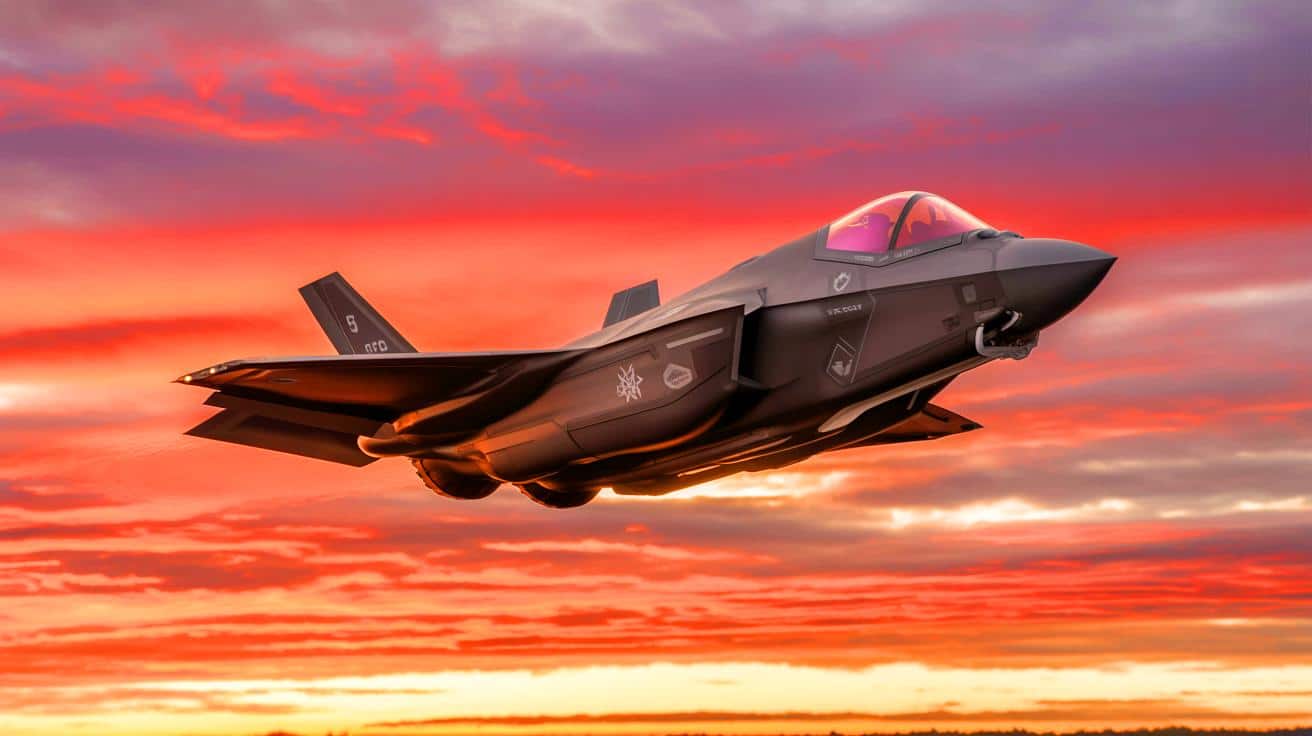
The recent crash occurred near the Naval Air Station Lemoore, a key hub for the U.S. Navy’s aviation training. The F-35C, a carrier-based version of the renowned F-35 Lightning II, was on a training mission with the VFA-125 “Rough Raiders” squadron. This squadron plays a crucial role in preparing new pilots and crew for operating these advanced jets. At approximately 4:30 PM local time, the aircraft went down just outside the airfield.
Fortunately, the pilot ejected safely, and no injuries were reported. The base quickly confirmed that there were no additional affected personnel. However, the incident represents a significant material loss, with the aircraft valued at an estimated $100 million. As the second F-35 crash reported this year, it adds to the scrutiny the program faces regarding operational reliability and safety.
Understanding the F-35 Variants
The F-35 program includes three distinct variants: the F-35A, F-35B, and F-35C, each designed for specific roles and branches of the U.S. military. The F-35C, involved in the recent crash, is tailored for carrier operations, featuring larger wings and reinforced landing gear for carrier landings. This variant serves as a vital component of naval aviation strategy, providing stealth and advanced combat capabilities.
Meanwhile, the F-35A is primarily used by the Air Force, and the F-35B, with its short takeoff and vertical landing capabilities, is deployed by the Marine Corps. Together, these variants demonstrate the multifaceted approach of the F-35 program, aiming to meet diverse operational needs across different military branches. However, the complexity of these designs also contributes to ongoing maintenance and readiness challenges.
Global Implications of the F-35 Program
The F-35 program is not just a national endeavor but a global partnership involving over 17 countries. This international collaboration underscores the strategic importance of the aircraft in modern defense planning. Nations participating in the program gain access to cutting-edge stealth technology and combat systems, enhancing their military capabilities.
However, the recent crash highlights the delicate balance between innovation and operational reliability. As countries invest heavily in these aircraft, the expectation for consistent performance grows. Any incident, like the one at NAS Lemoore, can have ramifications not just for the U.S. military but for allied forces worldwide, prompting reviews and potential adjustments in training and deployment strategies.
Challenges and Criticisms of the F-35
Despite its advanced capabilities, the F-35 program has faced persistent criticism. Maintenance issues and concerns about mission readiness have been recurring themes. The high cost of the aircraft, coupled with these challenges, has led to debates about the program’s overall value. Ongoing investigations aim to uncover the cause of the recent crash, potentially offering insights into systemic problems within the program.
Critics argue that the focus on high-tech solutions often overlooks practical operational considerations. The need for regular maintenance and the complexity of the aircraft’s systems can lead to downtime, affecting mission readiness. As the investigation progresses, stakeholders will be keenly watching for any findings that could impact the future direction of the F-35 program.
The F-35C crash near NAS Lemoore serves as a reminder of the intricate balance between cutting-edge technology and operational reliability. As the investigation unfolds, the findings may influence not only U.S. military strategies but also those of allied nations. How will the lessons learned from this incident shape the future of military aviation and the development of next-generation aircraft?
Continue reading