


“We Can Strike The Continental United States Now”: North Korea’s Kim Jong Un Unveils Advanced Hwasong-20 Missile Before Summit With China And Russia
 By
Adam Kovács
By
Adam Kovács
| IN A NUTSHELL |
|
In a significant display of military advancement, North Korean leader Kim Jong Un has unveiled a new intercontinental ballistic missile (ICBM) ahead of crucial meetings with China and Russia. The missile, known as the Hwasong-20, represents a technological leap in Pyongyang’s strategic strike capabilities. As Kim prepares to meet with Chinese President Xi Jinping and Russian President Vladimir Putin, this development underscores North Korea’s ongoing efforts to reinforce its standing as a formidable nuclear power. The unveiling comes amid heightened tensions on the global stage, and the world is closely watching how these events will unfold.
North Korea’s New Missile Technology
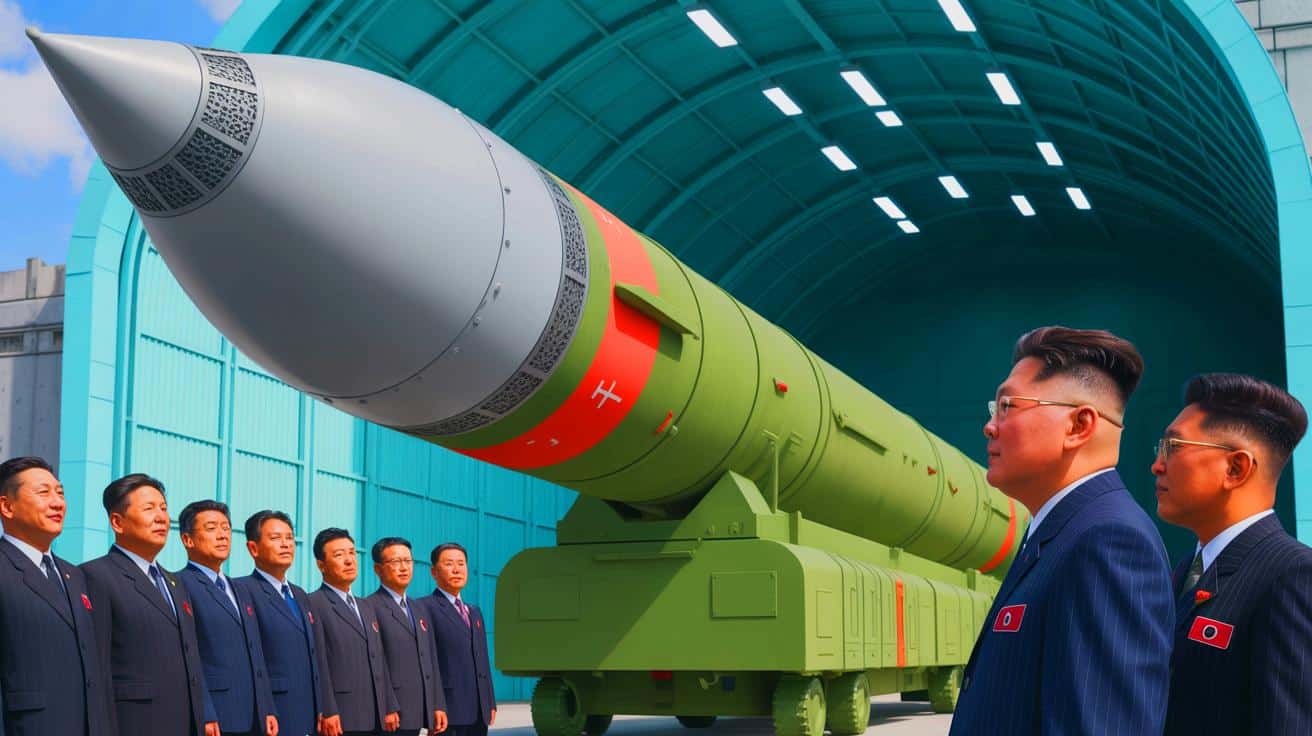
North Korea’s announcement of the Hwasong-20 missile marks a pivotal moment in its military strategy. According to the Korean Central News Agency (KCNA), this new missile is equipped with an advanced solid-fuel engine, generating a maximum thrust of 1,960 kilonewtons. This engine is set to be used in both the current Hwasong-19 ICBM line and the upcoming Hwasong-20 system.
The development of solid-fuel technology is particularly significant. Unlike liquid-fuel designs, solid-fuel engines enable quicker missile deployment, a critical factor in strategic military operations. Analysts suggest that such technology allows for more rapid response times, enhancing the missile’s effectiveness.
The Hwasong-20 project follows the unveiling of the Hwasong-18 ICBM, which reportedly has a range of over 9,500 miles, sufficient to reach any point in the United States. North Korea’s focus now appears to be on refining payload capacity and improving missile survivability to evade U.S. and allied defenses.
The meaningful achievements signal a dramatic leap in strengthening our strategic missile might and expanding its capability.
https://visegradpost.com/en/2025/08/31/lockheed-martin-leaked-the-sr-72-hypersonic-blackbird-already-flying-at-mach-6-while-pentagon-denies-it-exists/
Kim Jong Un’s statement highlights the strategic importance of these advancements, reflecting North Korea’s long-term ambitions to diversify and enhance its missile arsenal.
Strategic Inspections and Global Implications
Kim Jong Un’s recent inspections of defense facilities mark another milestone in North Korea’s military modernization efforts. During a visit to a new defense manufacturing facility, Kim reviewed an automated missile production line. This development signifies a move towards reducing reliance on manual labor and increasing production efficiency.
These inspections occurred just before Kim’s departure for Beijing, where he is expected to attend a military parade alongside Xi Jinping and Vladimir Putin. This gathering is seen as a demonstration of trilateral solidarity against the United States and its allies.
North Korea’s disclosure of its latest missile project coincides with its bid to cement its status as a nuclear-armed state on the global stage. The timing of this announcement suggests a strategic effort by Pyongyang to showcase its defense achievements ahead of high-profile diplomatic engagements.
The continued investment in advanced engines and new ICBM designs could potentially expand North Korea’s missile range, increase payload options, or allow for multiple warheads. Such developments would undoubtedly complicate U.S. missile defense planning in the Pacific and beyond.
Potential Impact on International Relations
The introduction of the Hwasong-20 underscores North Korea’s determination to enhance its military capabilities despite facing international sanctions and isolation. The missile’s unveiling, coupled with upcoming meetings with China and Russia, sends a strong message to the international community, particularly Washington.
Kim Jong Un’s strategic timing in announcing new missile technology days before meeting with Xi Jinping and Vladimir Putin highlights North Korea’s intent to assert its defense advancements on a global stage. This move is likely to influence diplomatic discussions, especially concerning security dynamics in the Asia-Pacific region.
While North Korea already claims the ability to strike the continental United States, the development of more sophisticated missile technology could alter the balance of power. Such advancements necessitate a reevaluation of current defense strategies by the United States and its allies.
The Hwasong-20 project is indicative of Pyongyang’s long-term ambitions to diversify its arsenal, signaling a potential shift in the regional security landscape.
Challenges and Future Prospects
As North Korea continues to develop its missile technology, the international community faces complex challenges. The advancements in solid-fuel technology and increased missile capabilities demand a reassessment of missile defense strategies and diplomatic approaches.
Despite international sanctions, North Korea’s progress in missile development demonstrates its resilience and determination. The unveiling of the Hwasong-20 emphasizes the need for comprehensive diplomatic efforts to address the growing security concerns in the region.
North Korea’s actions also raise questions about the effectiveness of existing sanctions and the potential need for new diplomatic strategies. The international community must navigate these challenges carefully, balancing deterrence with dialogue.
As Kim Jong Un meets with world leaders, the outcomes of these discussions will be crucial in shaping the future of regional and global security dynamics.
The unveiling of North Korea’s Hwasong-20 missile marks a significant development in the country’s military capabilities. As Kim Jong Un engages in high-stakes talks with China and Russia, the world watches closely. How will these advancements and diplomatic engagements influence the future of international relations and security strategies?