



“Pentagon Tests 2,000-Pound Ship Killer From B-2”: Stealth Bomber Deploys Quicksink Weapon Breaking Naval Vessels in Norwegian Waters
 By
Adam Kovács
By
Adam Kovács
| IN A NUTSHELL |
|
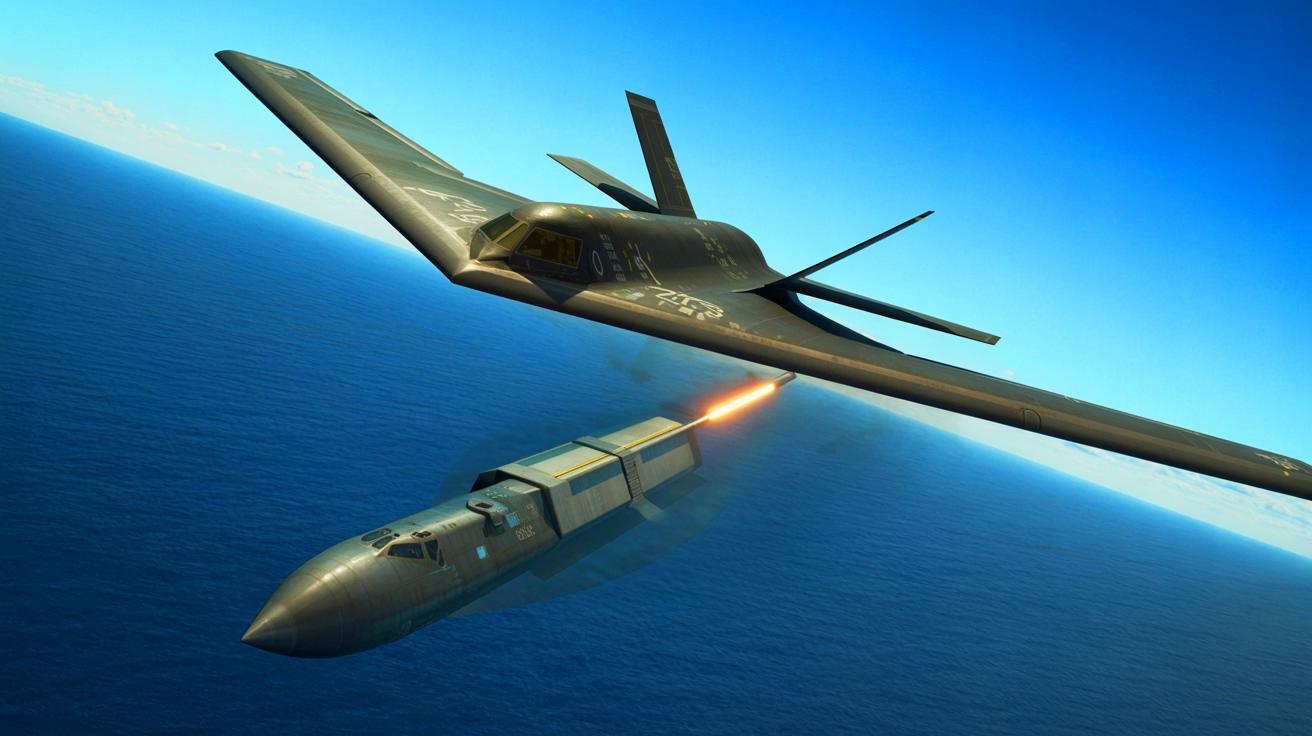
The U.S. Air Force’s B-2 bomber has long been renowned for its strategic capabilities, particularly in nuclear deterrence. However, recent developments have showcased its ability to adapt and evolve, catering to modern military needs beyond its original mission. A recent test involving a 2,000-pound Quicksink bomb has highlighted the B-2’s potential to transform into a formidable maritime force, capable of neutralizing naval threats with precision and efficiency. This test, conducted in collaboration with Norwegian allies, underscores the growing importance of maritime strike capabilities in a world where naval power continues to play a pivotal role in global security dynamics.
The Evolution of the B-2 Bomber
The B-2 Spirit stealth bomber has always been a symbol of American military might. Traditionally used for long-range nuclear deterrence, the aircraft is now being harnessed for advanced maritime missions. The recent test in the Norwegian Sea saw the B-2 employ its stealth capabilities to penetrate simulated defenses and deliver a precision-guided Quicksink bomb. This new role is indicative of the Air Force’s strategic pivot towards addressing maritime threats. The Quicksink bomb, designed to mimic a torpedo’s destructive power from the air, allows the B-2 to break the keel of large ships, neutralizing them with a single strike.
Such innovations are crucial as the U.S. military seeks to maintain its edge in an era of rapidly advancing naval technologies. The B-2’s ability to adapt to new missions showcases its enduring relevance in modern warfare. By integrating these new maritime capabilities, the Air Force is not only preparing for future conflicts but also shaping the strategic landscape in collaboration with trusted allies like Norway.
Quicksink: A Maritime Game-Changer
The Quicksink bomb represents a significant advancement in precision maritime strike technology. Developed from the Joint Direct Attack Munition series, this weapon addresses the urgent need to neutralize maritime threats swiftly across vast ocean expanses. The specialized seeker of the Quicksink bomb allows it to utilize Mark 80-series bombs against ships, providing a solution to the challenge of limited precision-guided munitions in large-scale conflicts.
In recent tests, the Quicksink bomb demonstrated its efficacy by sinking decommissioned ships during the Rim of the Pacific exercises. The success of these tests highlights the weapon’s potential to transform aerial platforms like the B-2 into effective anti-ship tools. With global naval power dynamics shifting, the ability to launch such precision strikes without relying on submarines offers a strategic advantage. The Air Force’s commitment to developing both large and small variants of the Quicksink bomb ensures flexibility in deployment, catering to diverse operational needs.
Strategic Collaborations and Global Implications
The joint exercise in the Norwegian Sea is a testament to the value of international military collaborations. Working alongside the Royal Norwegian Air Force, the U.S. Air Force demonstrated the importance of allied infrastructure and airspace in executing complex missions. The collaboration not only enhanced operational capabilities but also reinforced the strategic ties between the two nations.
In a world where geopolitical tensions often manifest in naval confrontations, such partnerships are invaluable. The successful integration of advanced maritime strike capabilities within the Air Force’s arsenal serves as a deterrent to potential adversaries. Moreover, the ability to conduct operations in challenging environments, akin to northern maritime approaches to NATO territory, ensures readiness in the face of emerging threats.
“This test is a clear example of how we work with trusted allies to bring new capabilities into play faster and smarter,” remarked Col. Scott Gunn, 53rd Wing commander.
Future Prospects and Challenges
As the Air Force continues to refine its maritime strike capabilities, several challenges and prospects lie ahead. The integration of Quicksink bombs on various aircraft platforms, including fighter jets like the F-35, offers commanders diverse options to counter enemy fleets. However, the development of these capabilities must keep pace with global technological advancements.
China’s expanding naval presence in the Indo-Pacific, for instance, underscores the importance of maintaining a robust maritime strike capability. The ongoing development of Quicksink variants, coupled with the potential integration of other advanced munitions, positions the U.S. Air Force to effectively address these challenges. As military strategies evolve, the ability to quickly adapt and innovate becomes paramount to maintaining strategic superiority.
The transformation of the B-2 bomber and the introduction of the Quicksink bomb highlight the dynamic nature of modern military strategies. As global power dynamics continue to evolve, how will advancements in military technology shape the future of warfare and international relations?