



This Secret Skunk Works Aircraft That Nobody Saw Coming Will Strike Any Target Globally Within One Hour Terrorizing Enemy Nations
 By
Adam Kovács
By
Adam Kovács
| IN A NUTSHELL |
|
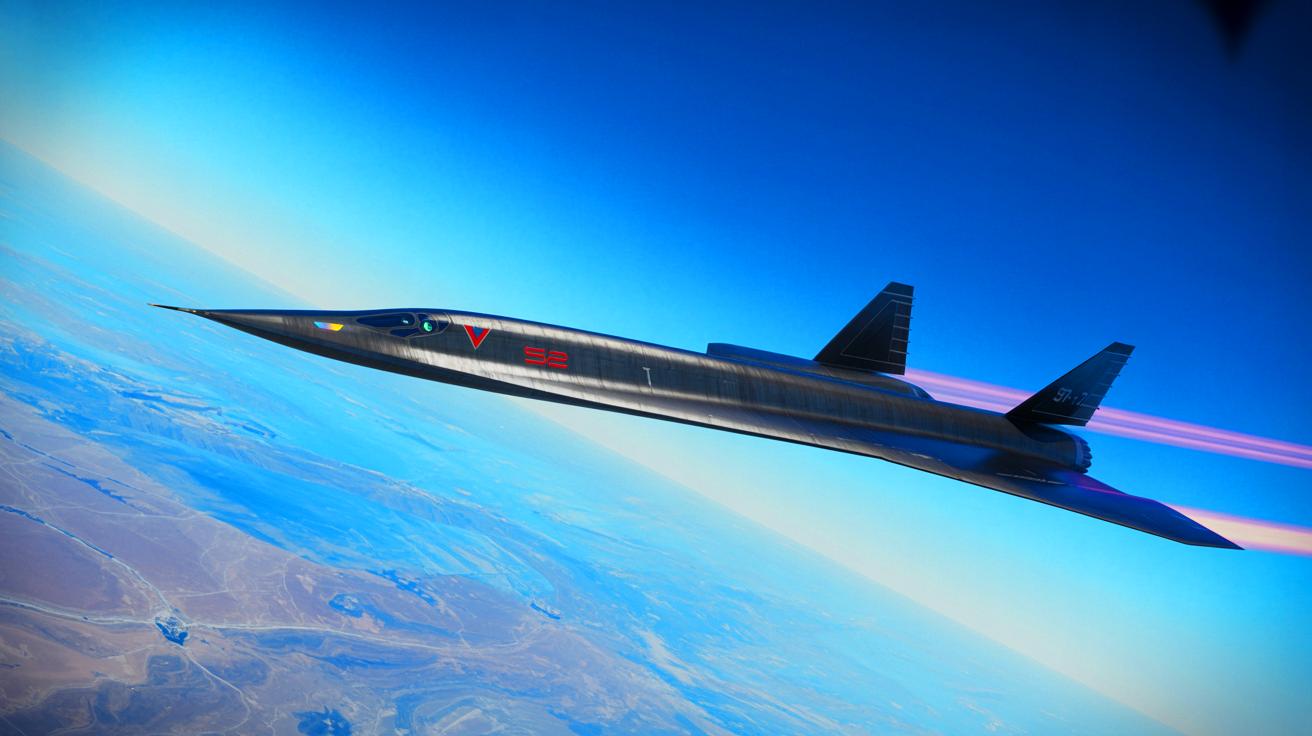
The realm of aviation is on the cusp of a revolutionary transformation with the development of the SR-72 “Darkstar.” This hypersonic aircraft is poised to become the fastest in the world, potentially reaching speeds of Mach 6, or approximately 3,700 mph. Building upon the legacy of the SR-71 Blackbird, the SR-72 is a testament to cutting-edge advancements in aerospace technology. Developed by Lockheed Martin under the auspices of their Skunk Works program, the SR-72 promises to redefine the landscape of military aviation with its unprecedented speed and reconnaissance capabilities. As the world watches, this innovation could fundamentally alter the balance of aerial power on a global scale.
The Legacy of Speed
The SR-71 Blackbird set new benchmarks in aviation history with its ability to achieve remarkable speeds at high altitudes. Designed primarily for reconnaissance missions, the Blackbird served as a cornerstone of U.S. military surveillance for decades. The SR-72 “Darkstar” seeks to extend this proud legacy by pushing the boundaries of speed and aeronautical technology even further. By incorporating advanced technologies, the Darkstar aims to transform aerial reconnaissance standards and expectations.
At its core, the SR-72 concept is centered around executing long-range missions with unparalleled speed. This capability would enable the U.S. military to respond swiftly to potential threats, reaching targets across any continent in under an hour when equipped with hypersonic missiles. Such rapid response times could revolutionize military operations, providing a strategic edge in modern combat scenarios.
Advanced Technology and Development
Lockheed Martin, a leader in aerospace and defense technology, is spearheading the development of the SR-72. Known for its Skunk Works program, Lockheed Martin has been at the forefront of numerous aviation innovations. While specific details about the SR-72 remain classified, leaked information suggests a groundbreaking aircraft in the making. The first flight of this hypersonic demonstrator is anticipated in the mid-2020s.
Leveraging a wealth of experience, Lockheed Martin is integrating state-of-the-art technologies into the SR-72. The technical challenges are substantial, particularly in propulsion and material endurance at extreme speeds. Nonetheless, recent advancements in the aeronautics field suggest that these obstacles can be overcome, paving the way for this revolutionary aircraft.
Aliens May Be 33,000 Light-Years Away: Scientists Warn of Possible Life Beyond Our Galaxy
Military Potential
The SR-72 holds the potential to transform military operations by offering unparalleled reconnaissance and attack capabilities. Its ability to reach hypersonic speeds would allow for rapid mission execution, significantly reducing reaction times to emerging threats. Moreover, the deployment of this technology could have a profound impact on military strategy, providing new and diverse tactical options.
The strategic advantage of operating at high altitudes while achieving critical speeds makes the SR-72 an invaluable asset. It facilitates faster intelligence gathering and allows operations in previously inaccessible areas with unprecedented speed. The implications for national defense and global security are considerable, marking a new era in military aviation.
Challenges and Prospects
The development of the SR-72 comes with significant technical and financial challenges. The research and development costs for such an ambitious project are steep, and the integration of advanced technologies poses substantial hurdles. However, the potential impact of this aircraft on U.S. air superiority justifies these investments. The international community is closely monitoring these developments, as they could redefine the global air power equilibrium.
As the SR-72 “Darkstar” moves closer to operational status, a lingering question remains: how will this technological advancement influence future military strategies and global stability? The answer could reshape the future of aerial warfare and international relations alike.