



“We Can’t Stop This Thing”: China Unveils DF-5C Nuclear Missile That Stays Combat Ready And Terrifies Pentagon Military Strategists
 By
Adam Kovács
By
Adam Kovács
| IN A NUTSHELL |
|
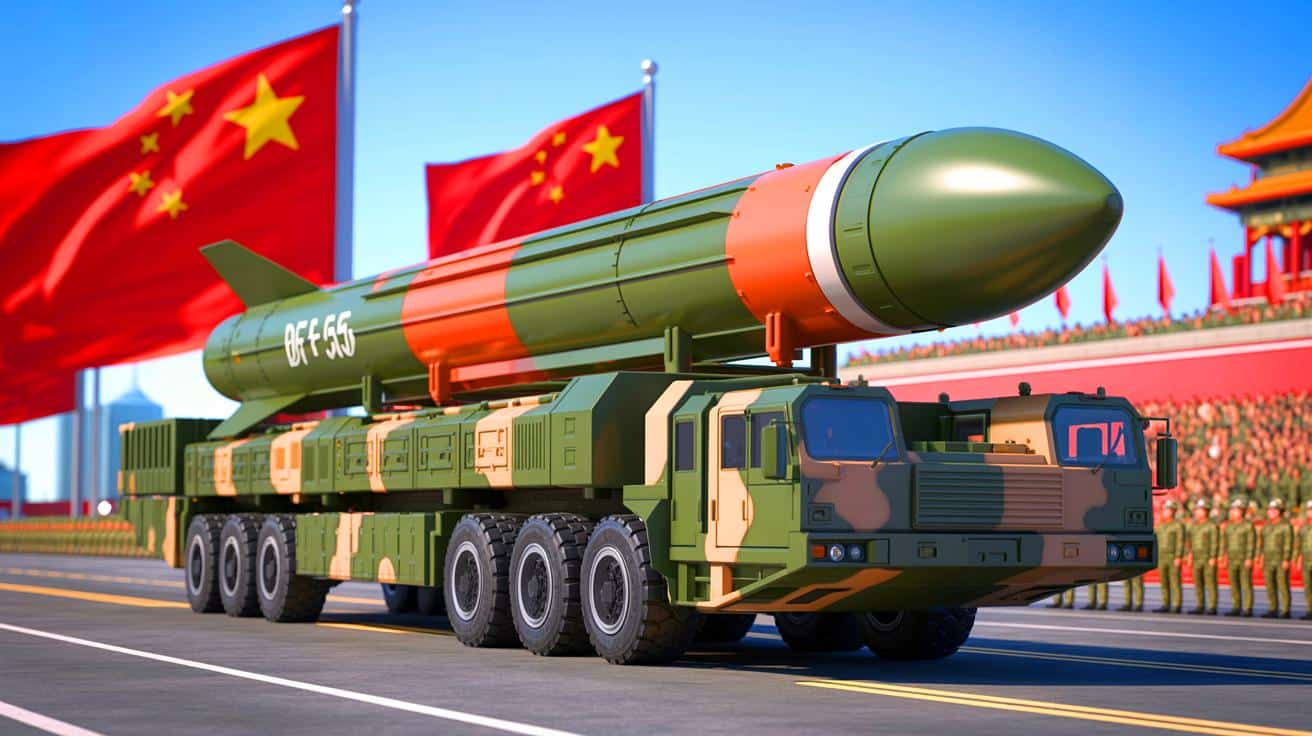
In a notable demonstration of military prowess, China has unveiled its latest intercontinental ballistic missile (ICBM), the DF-5C, during a grand parade in Beijing. Dubbed the “anywhere missile,” this advanced weapon is designed for global reach and constant readiness, symbolizing a significant leap in China’s strategic military capabilities. As tensions around the world continue to shift, the DF-5C’s introduction raises important questions about the balance of power and the future of international security dynamics.
Liquid-Fuel Challenges and Advances
Liquid-fuel ICBMs, like the DF-5C, are known for their capacity to carry heavy payloads over extended ranges. However, they have historically been difficult to maintain in a constant state of readiness due to the volatile nature of their fuels. Nitrogen tetroxide and unsymmetrical dimethylhydrazine, for instance, are highly toxic, while the cryogenic nature of liquid hydrogen and oxygen requires storage at extremely low temperatures. This poses risks, including leaks and potential explosive vaporization.
Typically, these missiles are stored un-fueled, necessitating a time-consuming and hazardous fueling process before launch. This not only delays response times but also increases detectability by surveillance technologies. The DF-5C, however, seems to have addressed some of these historical challenges. Observations during its parade debut noted the use of a silver-grey flexible material around its engine nozzles, possibly indicating advancements in fuel storage or rapid-fueling technology.
Such innovations could allow the DF-5C to remain launch-ready for longer periods, marking a significant shift in China’s strategic posture. Despite the inherent risks, the ability of liquid-fuel missiles to carry heavier warheads or more multiple independently targetable re-entry vehicles (MIRVs) makes them a critical component of second-strike capabilities, ensuring nuclear retaliation even after an initial strike.
Technological Leap and Strategic Implications
The DF-5C represents a technological leap from its predecessor, the DF-5B. While details remain classified, defense analysts suggest that the parade’s close-up footage was a calculated move to demonstrate China’s nuclear readiness. This capability aligns with the country’s long-standing “no first use” nuclear policy, intended as a deterrent rather than a first-strike weapon.
The apparent ability of the DF-5C to remain “ready at all times” indicates a shift toward a real-time deterrence model, where retaliation could be immediate against global targets. This development not only enhances China’s strategic deterrence but also signals a shift in the nuclear balance of power. It places the DF-5C alongside other modern heavy ICBMs, such as Russia’s Sarmat, reinforcing China’s position as a formidable nuclear power.
By overcoming the traditional limitations of liquid-fuel technology, China is reshaping global perceptions of its nuclear strategy. This advancement could have far-reaching implications for international security and military dynamics, particularly in the context of ongoing geopolitical tensions.
Global Context and Comparisons
The DF-5C emerges in a global context where heavy ICBMs like Russia’s Sarmat are also making their mark. Weighing over 440,000 pounds and designed to carry multiple warheads, including advanced hypersonic glide vehicles, these missiles symbolize the evolving landscape of nuclear deterrence. While solid-fuel missiles like China’s DF-61 or America’s Minuteman III remain favored for their rapid launch capabilities, the DF-5C’s extended range and payload underscore its strategic importance.
The unveiling of the DF-5C signals Beijing’s progress in surmounting the challenges of liquid-fuel technology. This could potentially alter global perceptions of China’s nuclear deterrent strategy, positioning it as a more immediate and formidable force in the nuclear arena. As such, the DF-5C serves not only as a symbol of military advancement but also as a strategic tool in the international balance of power.
Implications for International Security
The introduction of the DF-5C raises critical questions about the future of international security. As China continues to advance its military capabilities, other nations may feel compelled to respond, potentially leading to an arms race or shifts in military alliances. The DF-5C’s capabilities could influence strategic decisions, prompting nations to reassess their nuclear policies and deterrence strategies.
Moreover, China’s advancements may have implications for arms control agreements and global disarmament efforts. As nations grapple with the complexities of maintaining strategic stability, the role of advanced ICBMs like the DF-5C will be central to discussions on international security and peacekeeping.
As China’s DF-5C missile marks a new chapter in its military strategy, the broader implications for global security remain a topic of intense scrutiny. How will the international community respond to these advancements, and what measures will be necessary to ensure a stable balance of power in a rapidly evolving world?