


“Putin Gave Kim Nuclear Submarines”: Secret Reactor Transfer Terrifies Pentagon While Asian Security Collapses
 By
Adam Kovács
By
Adam Kovács
| IN A NUTSHELL |
|
Recent reports have suggested that North Korea may have acquired a nuclear reactor for submarines from Russia. This development, if confirmed, marks a significant shift in military dynamics in the region. The South Korean military has raised concerns about the potential transfer of nearly two to three nuclear submarine modules to Pyongyang. These modules, which include crucial components of a nuclear propulsion unit, could have been delivered in the first half of 2024. Such advancements in North Korea’s military capabilities could have far-reaching implications, not only for the Korean Peninsula but also for the broader geopolitical landscape.
Possible Transfer of Reactor and Key Systems
There are reports suggesting that North Korea may have received important systems, including a reactor, turbine, and cooling system, from Russia. These components are essential for building a nuclear propulsion unit. The modules in question are believed to have been taken from decommissioned Russian submarines. This potential transfer highlights the ongoing cooperation between Moscow and Pyongyang, which has raised alarms across the international community.
A South Korean government source indicated that North Korea had been actively seeking nuclear submarine technology from Russia since last year. Initially, Moscow was reportedly hesitant to provide such advanced military technology. However, recent developments suggest that Russia may have agreed to supply North Korea with the necessary technology. This cooperation could significantly enhance North Korea’s military capabilities and alter the balance of power in the region.
Nuclear Submarines and Their Strategic Advantage
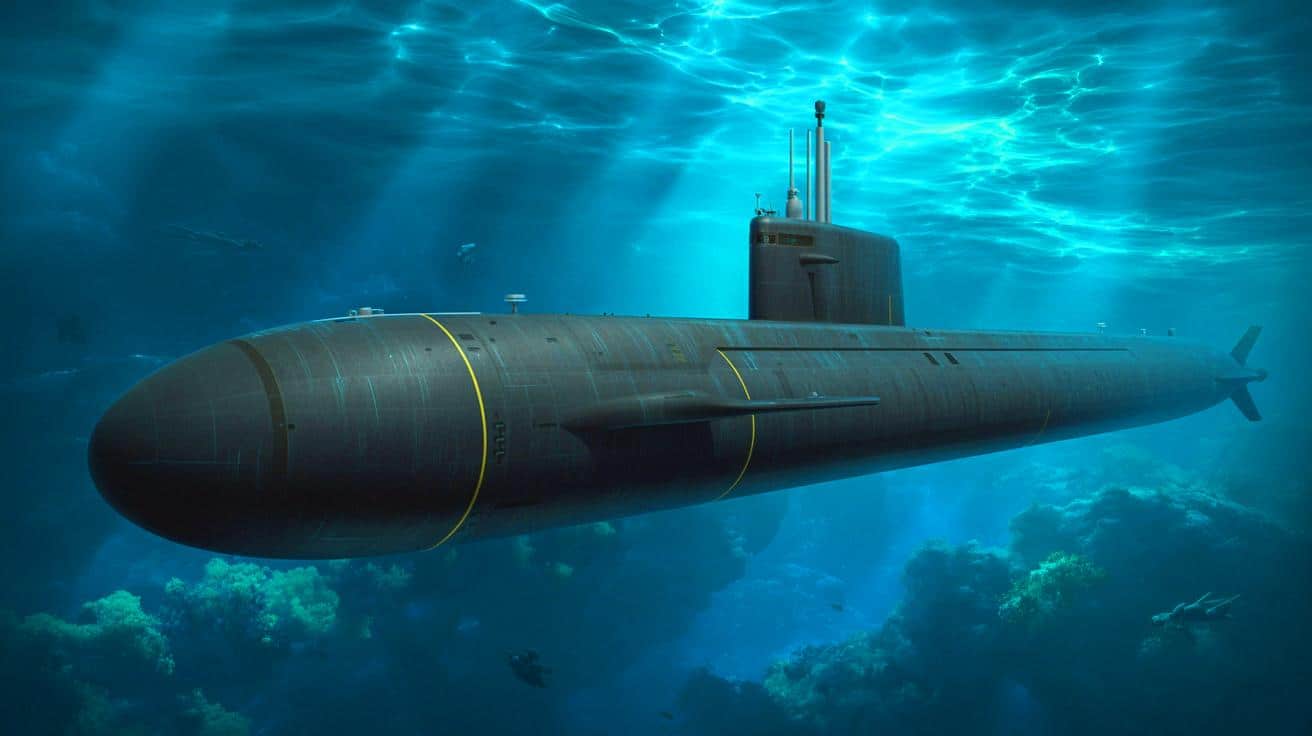
Nuclear submarines are a formidable addition to any naval fleet due to their stealth capabilities. They can remain submerged for extended periods, making them difficult to detect with conventional sonar and radar systems. However, they do produce a constant heat signature from their reactor, which can sometimes be tracked. The ability of these vessels to conduct covert operations in enemy territories without detection represents a significant strategic advantage.
The conventional design of a nuclear submarine involves using a Pressurized Water Reactor (PWR) to generate heat through fission. This heat is transferred to a secondary loop to produce steam, which then drives a turbine for propulsion. The steam is subsequently cooled and recycled, allowing the submarine to operate efficiently for prolonged durations. If North Korea has indeed acquired such technology, it poses a considerable threat to neighboring countries and U.S. interests in the region.
Implications for U.S. and Regional Security
North Korea's potential acquisition of nuclear submarine technology is a matter of grave concern for the United States and its allies. The strategic advantage provided by such submarines could embolden Pyongyang, potentially escalating tensions in the region. The North Korean regime, under Kim Jong-un, has consistently sought to enhance its military capabilities, and nuclear submarines represent a significant leap forward.
Photographs published by North Korea's state-run media earlier this year showed Kim Jong-un inspecting what appeared to be a nuclear-powered submarine under construction. This development underscores the regime's commitment to advancing its military prowess. The possibility of North Korea acquiring such technology in exchange for supporting Russia's efforts in Ukraine further complicates the geopolitical dynamics.
Challenges and Future Considerations
The potential transfer of nuclear submarine technology to North Korea presents numerous challenges for the international community. Ensuring regional stability and preventing the proliferation of nuclear technology are paramount concerns. Diplomatic efforts may need to be intensified to address these issues and prevent further escalation.
As the situation unfolds, questions remain about the extent of Russia's involvement and the potential impact on global security. The international community must consider the broader implications of such developments and explore possible avenues for dialogue and resolution. How will the global powers navigate this evolving landscape, and what measures can be taken to ensure peace and stability?
Continue reading