



“Second B-21 Ghost Bomber Takes Flight”: This $692 Million Stealth Aircraft That’s 40 Feet Smaller Than B-2 While Carrying Nuclear Weapons
 By
Adam Kovács
By
Adam Kovács
| IN A NUTSHELL |
|
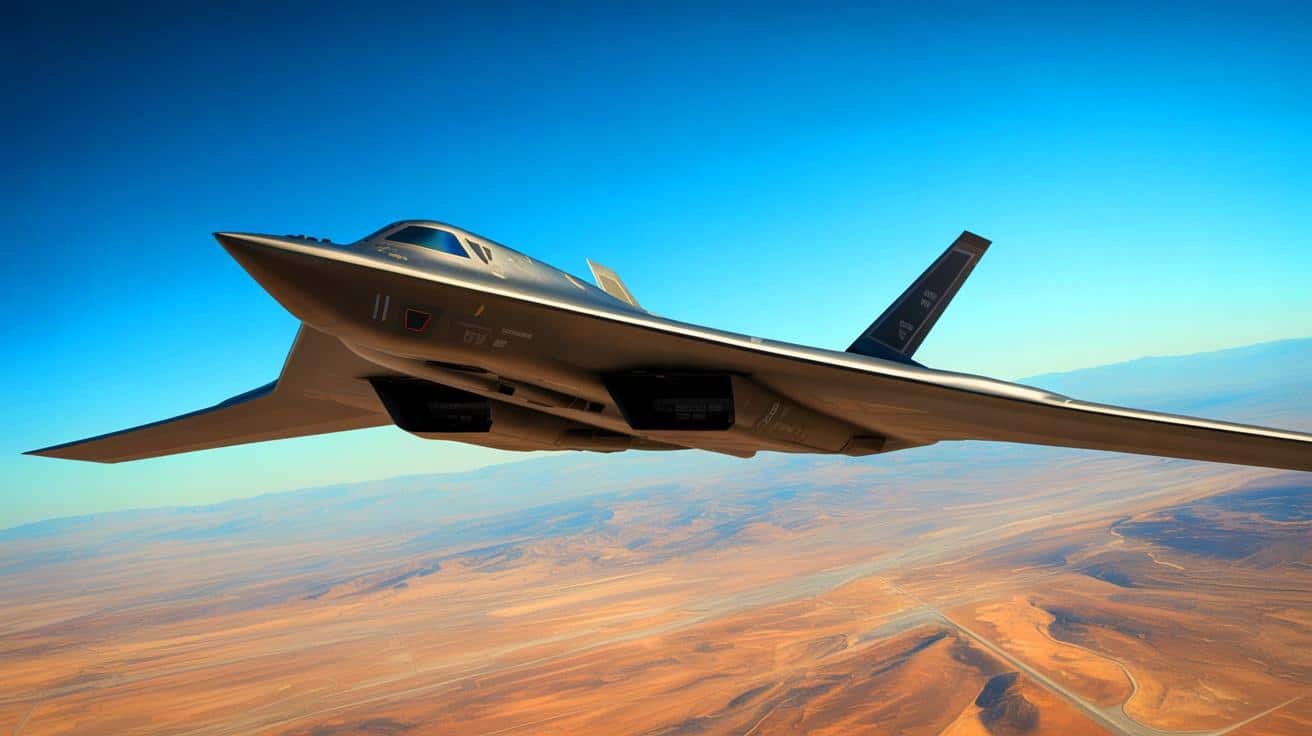
The United States Air Force’s unveiling of the Northrop Grumman B-21 Raider at Edwards Air Force Base marks a significant milestone in military aviation. Within a mere 24 hours of its initial flight, a second unit of this cutting-edge stealth bomber has soared into the skies, underscoring the strategic importance the Air Force places on this aircraft. Designed to replace the aging B-2A Spirit, the B-21 Raider is set to redefine air defense capabilities. With its advanced stealth technology and operational efficiency, the B-21 aims to maintain the U.S.’s dominant position in global air power.
The Role of the 412th Test Wing
The 412th Test Wing plays a pivotal role in the B-21 Raider’s development. Stationed at Edwards Air Force Base, this unit is tasked with conducting rigorous evaluations of the Raider’s capabilities. The 420th Flight Test Squadron, an integral part of the 412th, brings together experienced engineers and pilots to ensure the aircraft meets its design criteria. This rigorous testing is vital for achieving Initial Operational Capability, a milestone that signifies the aircraft is ready for deployment.
The B-21’s test program involves four aircraft, including a prototype and three pre-production models. Each test flight is meticulously planned to gather data on the Raider’s performance. The insights gained from these tests are crucial for refining the aircraft’s systems and ensuring it can operate effectively in diverse combat scenarios. The collaboration between the 412th Test Wing and the Global Power division highlights the strategic importance of the B-21 project in maintaining U.S. air superiority.
Communication and Public Perception
The Air Force's approach to unveiling the B-21 Raider reflects a strategic shift in communication. Historically, military projects of this magnitude were shrouded in secrecy. However, the release of images and information about the Raider marks a departure from this tradition, fostering transparency and public engagement. The photos reveal a pre-production aircraft closely resembling the final series models, indicating a move beyond the prototype stage.
The B-21 Raider is no longer just a prototype; it represents the future of American air power.
https://visegradpost.com/en/2025/09/19/raafs-ghost-bat-dominates-skies-were-becoming-completely-autonomous-a-terrifying-revolution-unfolds/
This transparency is not merely about showcasing advanced technology; it's a calculated effort to maintain public interest and support. By sharing updates, the Air Force aims to secure continued funding and reinforce the importance of the B-21 program to national security. The Raider's sleek design, optimized for stealth, is a testament to its intended role in modern warfare, and the public's insight into its development fosters a sense of shared investment in its success.
Design and Specifications
The B-21 Raider's design is a marvel of military engineering, combining stealth capabilities with advanced aerodynamics. The aircraft is notably smaller than its predecessor, the B-2A Spirit, a design choice that enhances its ability to evade enemy radar. With a wingspan of 131 feet and a length of 52 feet, the Raider is compact yet formidable. This size reduction does not compromise its mission capabilities, as it is designed to carry strategic payloads with precision.
The Raider's ground clearance is lower than traditional bombers, contributing to its aerodynamic efficiency. This design element, combined with its smaller size, exemplifies the aircraft's focus on stealth. The Raider's dimensions are carefully calculated to minimize its radar cross-section, making it a challenging target for adversaries. As the Raider moves from conceptualization to reality, its design continues to be refined to meet the evolving demands of modern warfare.
| Feature | B-21 Raider | B-2A Spirit |
|---|---|---|
| Wingspan | 131 feet | 172 feet |
| Length | 52 feet | 69 feet |
Looking Ahead: Future Prospects
The B-21 Raider's ongoing development represents a significant investment in the future of U.S. military aviation. As testing progresses, anticipation builds around its potential to reshape air combat strategies. The aircraft's introduction marks a shift from traditional secrecy to a more open communication strategy, reflecting a broader trend within the military.
As the Raider continues its journey from concept to operational status, it stands as a symbol of innovation and adaptability. This aircraft is poised to influence the future of aerial warfare, offering new capabilities that could alter global military dynamics. The B-21's development underscores the U.S. commitment to maintaining air superiority and securing its strategic interests.
As the B-21 Raider advances through testing and development, its impact on global military strategies becomes increasingly evident. How will this state-of-the-art aircraft redefine the landscape of aerial warfare, and what innovations will emerge in the realm of stealth technology to maintain the U.S. edge in military aviation?