

“India’s Nuclear Submarines Double Their Power”: Secret Mumbai Reactor Gives Navy 3,100-Mile Missiles While China Panics About Indo-Pacific
 By
Adam Kovács
By
Adam Kovács
| IN A NUTSHELL |
|
In a significant leap forward for its maritime capabilities, India is developing a powerful new nuclear reactor for its Navy’s submarines. This development, led by the Bhabha Atomic Research Centre (BARC) in Mumbai, signifies India’s commitment to bolstering its defense capabilities in response to regional challenges. The nuclear reactor, designed to generate 200 megawatt electric (MWe), promises to enhance the speed, range, and stealth of India’s submarine fleet. As India ramps up its naval prowess, this technological advancement marks a strategic move in the evolving dynamics of military power in the Indo-Pacific region.
Revolutionizing Submarine Capabilities
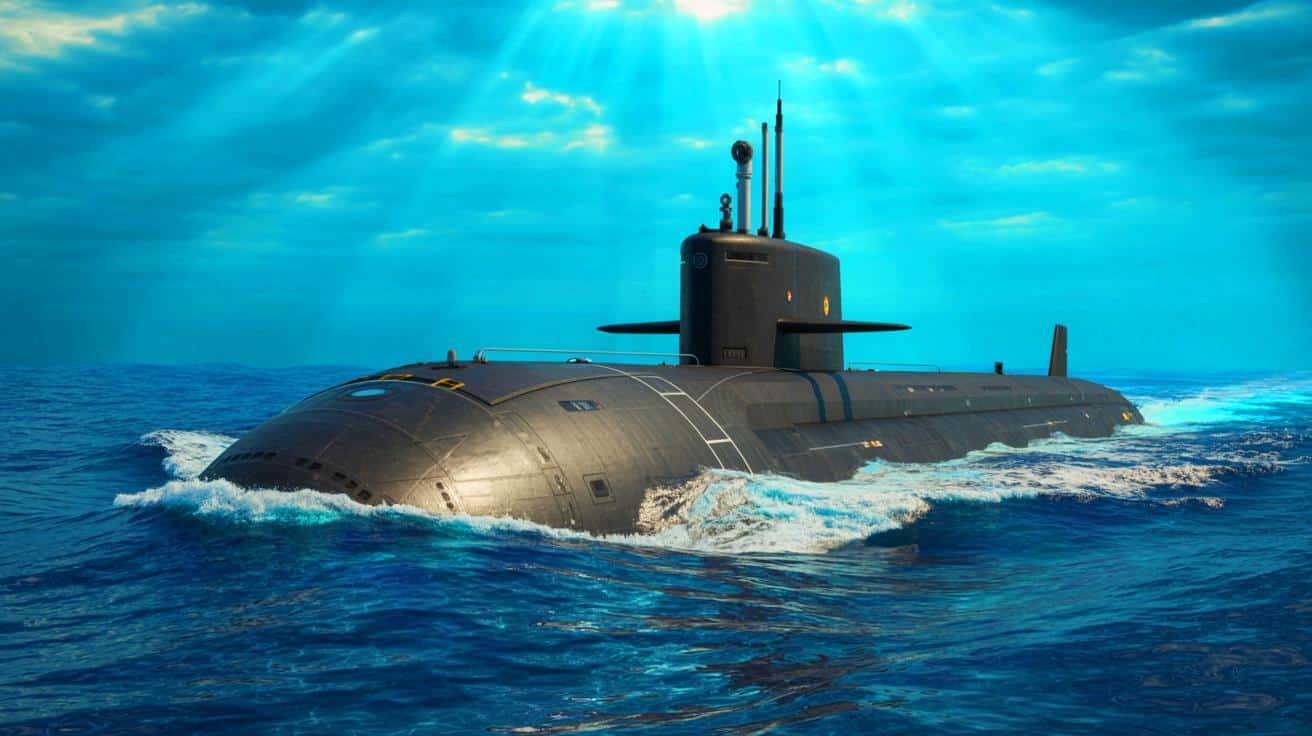
India’s current submarine fleet, including the INS Arihant and INS Arighaat, relies on 83 MWe reactors, limiting their operational endurance. The upcoming introduction of a 200 MWe reactor is expected to substantially enhance the capabilities of future submarines. This new reactor will not only extend the time these vessels can remain submerged but also allow for longer, more complex missions. The S5 Submarine, a part of this next-generation fleet, will feature a displacement of 13,000 tons and be equipped with 12 to 16 K-5 submarine-launched ballistic missiles (SLBMs) with a range of 3,106 miles.
The enhanced power output from the new reactor is anticipated to “double” the operational capabilities of these submarines. This advancement will enable India to project power more effectively across the vast expanses of the Indian Ocean and beyond. By enabling longer deployments and more sustained operations, the new reactor design will significantly boost the strategic reach of the Indian Navy.
Strengthening the Nuclear Triad
The development of advanced nuclear submarines is a critical component of India’s strategic nuclear deterrence, forming the sea-based leg of its nuclear triad. This triad ensures that India maintains a credible second-strike capability, crucial for maintaining strategic stability in the face of potential threats. The mobile and survivable nature of submarines makes them an ideal platform for ensuring that a retaliatory strike can be launched even if land-based and air-based systems are compromised.
In the context of the Indo-Pacific region, where geopolitical tensions run high, this development is a strategic necessity. China’s submarine fleet is rapidly expanding, with projections suggesting it will become the world’s largest by 2030. India’s investment in nuclear propulsion technology is thus a measured response to regional security dynamics, aimed at maintaining a balance of power.
Technological Innovations and Strategic Objectives
The new reactor, described as a pressurized light-water type fueled by enriched uranium, is noted for its fuel efficiency. It can operate for up to ten years without refueling, a significant improvement over current models. The completion of the reactor’s design and simulation phases positions India to begin production, marking a milestone in its naval modernization efforts.
BARC’s broader research initiatives include the design of a larger 555 MWe nuclear reactor and a High Temperature Gas Cooled Reactor capable of producing clean hydrogen. These projects underscore India’s commitment to leveraging nuclear technology for both defense and civilian applications. As part of its broader naval strategy, the Indian Navy is also planning to acquire four large Landing Platform Dock (LPD) warships, further enhancing its operational capabilities.
Implications for Regional Security
The advancement of India’s submarine fleet has significant implications for regional security in the Indo-Pacific. As China continues to expand its naval capabilities, India’s strategic focus on enhancing its own naval assets is crucial. The development of advanced nuclear submarines not only strengthens India’s defense posture but also reinforces its position as a key player in regional security.
By investing in cutting-edge technology and expanding its naval capabilities, India aims to ensure that it remains capable of safeguarding its interests in a highly contested region. The capability to sustain longer missions and deploy potent missile systems enhances deterrence and provides strategic depth. As India continues to develop its military infrastructure, the balance of power in the Indo-Pacific is likely to evolve, raising important questions about the future of regional security dynamics.
As India advances its nuclear submarine capabilities, it faces the ongoing challenge of balancing technological innovation with strategic necessity. How will these developments influence the broader regional security environment, and what steps will other nations take in response to India’s growing naval prowess?
Continue reading