



“This Flying Wing Kills Without Permission”: China’s AI Drone Decides Targets Alone While Human Pilots Watch Their Jobs Disappear
 By
Adam Kovács
By
Adam Kovács
| IN A NUTSHELL |
|
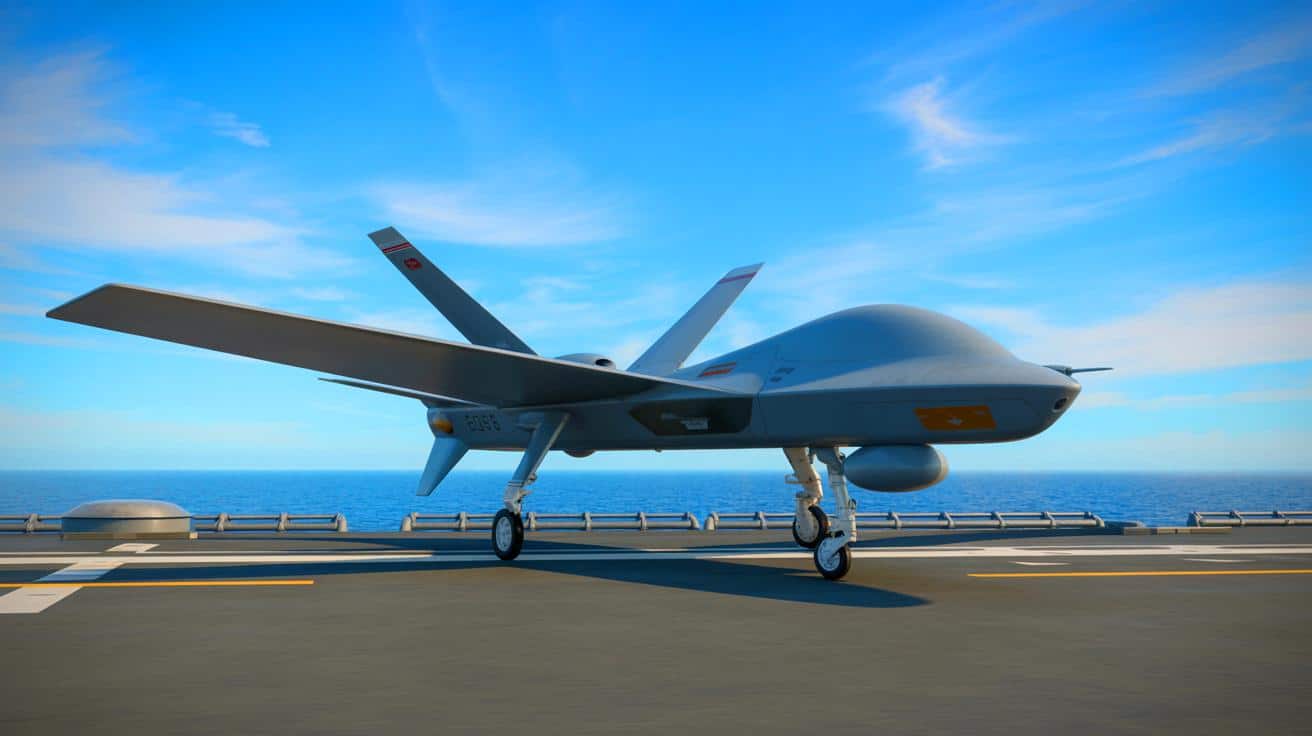
China has recently taken a significant leap in military technology with the unveiling of the GJ-11, the world’s first ship-launched stealth combat drone. This development is poised to reshape naval warfare, offering China a strategic edge in maritime conflicts. The GJ-11, also known as the ‘Sharp Sword,’ was presented to the public during the Victory Day Parade in Beijing. With its advanced design and capabilities, the drone represents a substantial enhancement in unmanned aerial vehicle (UAV) technology, emphasizing stealth and versatility. China’s investment in this drone underscores its ambitions to project power and assert its influence in global military affairs.
The Evolution of the GJ-11 ‘Sharp Sword’ Drone
The GJ-11 drone, evolving from the Shenyang Aircraft Corporation’s ‘Sharp Sword’ project, is a testament to China’s growing prowess in military aviation. Initiated in 2019, the project aimed to create a naval variant of the drone, signaling China’s intent to bolster its maritime capabilities. The drone was first publicly showcased in 2019, but its roots trace back to a prototype flight in 2013.
The GJ-11 features a flying wing design with a fully blended body, enhancing its stealth capabilities by reducing radar cross-section visibility. Measuring 32.8 feet in length with a wingspan of 45.9 feet, the drone’s design includes an air intake on top, effectively blocking radar waves from reaching the engine blades. This, coupled with a radar-absorbing coating similar to China’s crewed fighter jets, underscores the drone’s stealth emphasis.
Equipped with a turbofan engine, the GJ-11 can achieve speeds of up to 690 miles per hour. It can carry a substantial payload of up to 4,409 pounds, making it a versatile platform for both reconnaissance and strike missions. This dual capability highlights the drone’s potential to perform a wide range of military operations autonomously.
Advanced Weapon Systems and ‘Loyal Wingman’ Functionality
The GJ-11 is equipped with two internal weapons bays capable of carrying multiple guided bombs. This feature allows it to execute precise strikes on designated targets, enhancing its offensive capabilities. However, what sets the ‘Sharp Sword’ apart is its ability to function as a ‘loyal wingman.’
This capability allows the drone to operate alongside crewed fighter jets, such as the J-20, as demonstrated in a 2022 test. The UAV can function as an escort drone, launched from aircraft carriers and amphibious vessels, providing additional support and protection for manned aircraft. Furthermore, a group of GJ-11 drones can perform missions independently, with one serving as a command center.
The drone’s advanced systems enable real-time data collection and transmission to ground-based command centers, ensuring effective all-weather operations. Reports suggest that the drone boasts a combat range exceeding 930 miles, allowing it to operate efficiently in critical regions such as Japan, Taiwan, and other U.S. allies’ territories.
Moreover, the drone’s reliance on artificial intelligence enhances its ability to undertake complex tasks autonomously, reducing the operational burden on human controllers. Speculations suggest that the naval variant of the GJ-11 is primed for deployment on China’s Sichuan and Fujian aircraft carriers.
Strategic Implications for Global Military Balance
The introduction of the GJ-11 drone marks a significant shift in the global military balance, particularly in the Asia-Pacific region. As the only operational ship-based stealth combat drone, it offers China a strategic advantage in naval warfare. This development could potentially alter power dynamics, particularly in areas of territorial disputes.
China’s unveiling of the GJ-11 sends a clear message about its military capabilities and ambitions. By showcasing this advanced technology, China demonstrates its commitment to enhancing its military strength and readiness. The drone’s ability to operate autonomously and integrate with existing military assets amplifies its strategic value.
Furthermore, the deployment of the GJ-11 could prompt other nations to accelerate their own military innovations, potentially igniting an arms race in drone technology. As countries assess the implications of China’s advancement, the pressure to develop comparable systems may increase, impacting global military strategies and alliances.
Future Prospects and Challenges
As China continues to refine and deploy the GJ-11, several challenges and questions arise. The integration of such advanced systems into naval fleets necessitates careful consideration of logistical and operational factors. Ensuring seamless coordination between drones and manned aircraft is crucial for maximizing the drone’s effectiveness.
Moreover, the ethical implications of deploying autonomous drones in warfare remain a subject of debate. The potential for drones to make independent decisions raises concerns about accountability and the rules of engagement in combat scenarios. Addressing these issues will be essential as the technology becomes more prevalent.
Despite these challenges, the GJ-11 represents a significant milestone in military innovation. As nations grapple with the implications of this development, the question remains: How will this technology reshape the future of warfare, and what measures will be taken to ensure its responsible use?
Continue reading