


“The Carriers Closing In on Guam” China’s Bold Pacific Move Tests U.S. Naval Power and Pushes Regional Stability to the Edge
 By
Adam Kovács
By
Adam Kovács
| IN A NUTSHELL |
|
Recent developments in the Pacific have brought renewed attention to the already tense geopolitical climate involving major powers like China, the United States, and Japan. While no active conflict has erupted in the region for many years, underlying tensions persist, fueled by strategic maneuvers and power displays. The New York Times recently reported that, between May and June, two Chinese aircraft carriers entered the waters near Guam, a U.S.-controlled territory. This event adds another layer of complexity to the intricate web of Pacific diplomacy and raises questions about future regional stability.
Chinese Carriers Near Guam: A Show of Strength
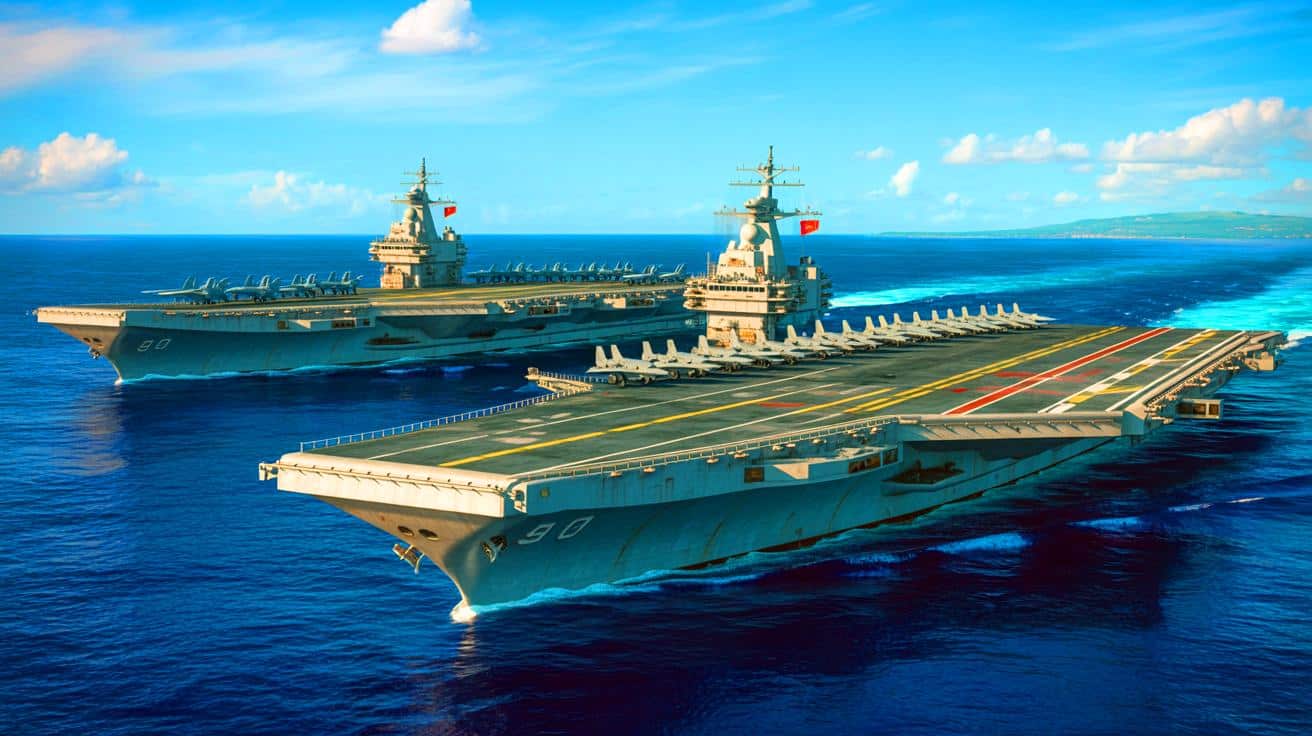
The presence of the Chinese aircraft carriers Liaoning and Shandong near Guam was not an isolated incident. It occurred against the backdrop of potential Chinese ambitions concerning Taiwan. The situation has heightened regional tensions, with China showcasing its military capabilities. This act was not an overt threat to the U.S. or Japan but rather a strategic demonstration of power.
During this period, Japan reported numerous military exercises conducted by the People’s Liberation Army. These exercises included frequent take-offs and landings of fighter jets and helicopters from the carriers’ decks, sometimes occurring up to 90 times daily. Such activities highlight China’s intention to flex its military muscles without crossing the line into direct confrontation. This display is part of a broader strategy to assert China’s presence in the region and challenge existing power dynamics.
Comparing Military Capabilities: China vs. the U.S.
China's military advancements have been significant, yet the nation is still far from matching the United States in military prowess. The Liaoning and Shandong represent only two-thirds of China's aircraft carrier capabilities. In contrast, the U.S. operates eleven nuclear-powered aircraft carriers, including the USS Gerald R. Ford, the largest in the world.
China plans to expand its fleet with three additional carriers in the coming years, aiming for a total of six. However, this still pales compared to the U.S. naval power. Despite this disparity, China's actions in the Pacific aim to demonstrate its growing military capabilities and its determination not to back down in the face of potential conflicts, especially regarding Taiwan. The strategic context of these maneuvers suggests a calculated effort to communicate strength both regionally and globally.
The Strategic Importance of Guam
Guam holds a pivotal role in the Pacific, serving as a key U.S. military base and a strategic outpost. Its location makes it a vital part of America's defense network in the region. The presence of Chinese carriers in nearby waters underscores the island's significance in any potential conflict involving major powers.
Guam's strategic position offers the U.S. a critical advantage in projecting power across the Pacific. It is a forward base for military operations and a deterrent against aggressive actions by adversaries. The Chinese maneuvers near Guam can be seen as a test of U.S. resolve and a signal to other regional players of China's willingness to assert its influence. This development raises questions about the future trajectory of regional security and the potential for escalation.
Implications for Regional Stability
The presence of Chinese aircraft carriers near Guam has implications beyond immediate military considerations. It affects diplomatic relations, economic ties, and regional security architectures. Countries in the Pacific, including Japan, Australia, and the ASEAN nations, closely monitor these developments, aware of the potential shifts in the balance of power.
China's actions may prompt a recalibration of military strategies among Pacific nations. It could lead to increased military spending and the strengthening of alliances to counterbalance China's growing influence. The challenge for regional powers is to navigate these tensions without escalating into open conflict. This delicate balance requires diplomatic finesse and strategic foresight to ensure peace and stability in the Pacific.
As tensions simmer in the Pacific, the world watches to see how these dynamics will unfold. The maneuvers near Guam are a reminder of the fragile nature of peace and the importance of diplomacy in resolving disputes. Will these developments lead to a new era of cooperation or further entrench divisions among the world's major powers?
Continue reading