


“Space Force Celebrates Triumph”: Officials Hail X-37B’s 7th Flight As Falcon Heavy Launch Sparks Tensions Over Expanding Orbital Control
 By
Adam Kovács
By
Adam Kovács
| IN A NUTSHELL |
|
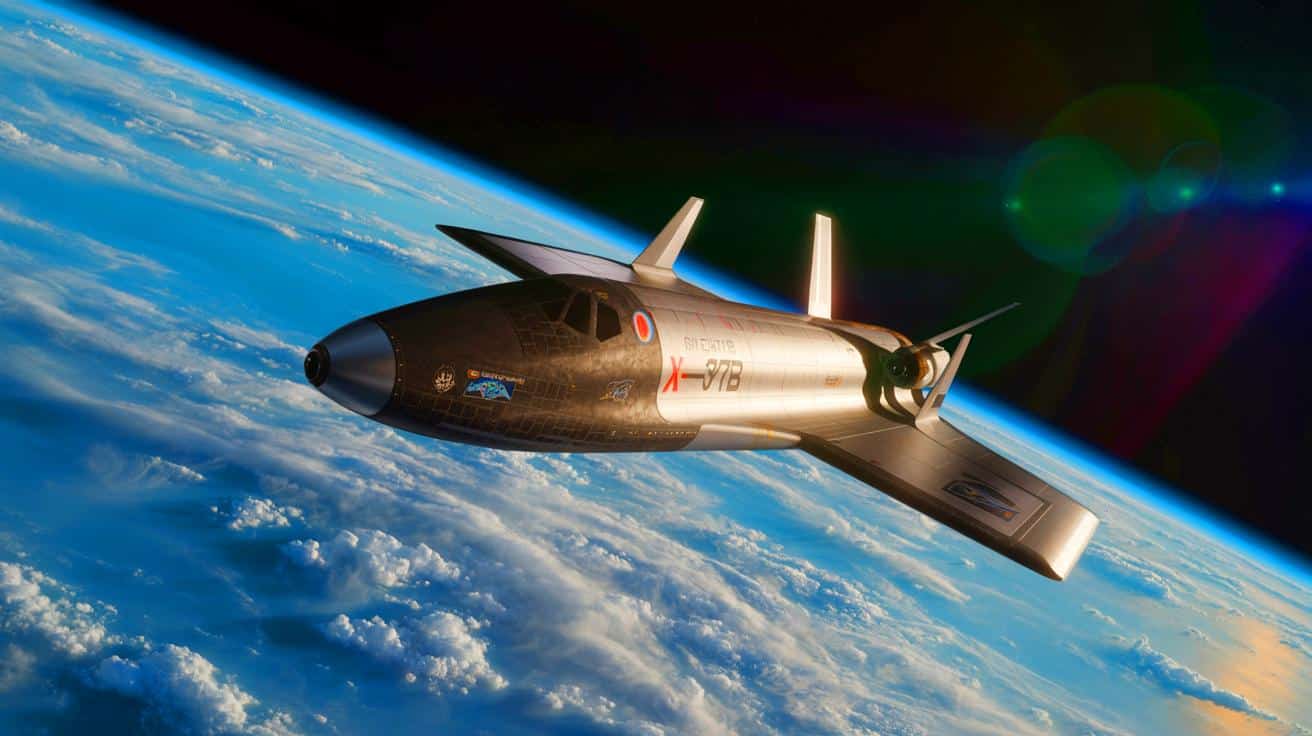
The X-37B, a reusable robotic space plane operated by the U.S. Space Force, has captivated the attention of aerospace enthusiasts and defense analysts alike. With its compact design resembling a miniature space shuttle, the X-37B embarks on long-duration missions in low Earth orbit, serving as a platform for testing new technologies and conducting experiments. The recent completion of its seventh mission marks yet another milestone in the program’s evolution, highlighting its versatility and importance in advancing space exploration and defense capabilities.
The Genesis of the X-37B
The X-37B’s origins trace back to the late 1990s when NASA initially conceived the idea to explore reusable spaceplane technologies. The collaboration with Boeing and the U.S. Department of Defense led to the development of this unique craft. In 2004, the U.S. Air Force took over the project, repurposing it for military applications. Since its debut launch in 2010, the X-37B has successfully completed seven missions, each progressively longer and more complex than the last.
This space plane operates by launching vertically atop a rocket and landing horizontally like a conventional aircraft. Its ability to return to Earth allows the recovery and analysis of experimental payloads. The X-37B serves as a testbed for various advanced technologies, including guidance systems, thermal protection materials, and autonomous orbital operations, contributing to significant advancements in space exploration and military operations.
Key Achievements and Capabilities
The X-37B's recent mission, which concluded at the Vandenberg Space Force Base in California, showcased its impressive capabilities. Notably, this mission was the first to launch on a SpaceX Falcon Heavy Rocket, demonstrating the X-37B's compatibility with modern launch vehicles. The Falcon Heavy's capacity to launch multiple X-37B planes simultaneously underscores the potential for rapid deployment in future missions.
During its latest mission, the X-37B conducted numerous tests to demonstrate its advanced maneuvering abilities, including aerobraking, a technique that uses atmospheric drag to adjust its orbit with minimal fuel consumption. This maneuver enhances the plane's efficiency and operational flexibility. Additionally, the mission's focus on space domain awareness technology aids in detecting and tracking objects in space, a critical capability for monitoring satellites and space debris.
The Role of Space Domain Awareness
Space domain awareness is a pivotal aspect of modern space operations. As the number of satellites and space debris increases, the ability to detect and track objects in orbit becomes crucial to maintaining safety and security in space. The X-37B's contributions to this field are substantial, providing the U.S. Space Force with enhanced understanding and monitoring capabilities.
By identifying potential threats and ensuring safe navigation of space assets, the X-37B plays a vital role in the broader strategy of space dominance. Its ability to perform complex tasks autonomously and return data to Earth for analysis is a testament to the technological advancements achieved through this program. As space becomes an increasingly contested domain, the X-37B's contributions will continue to be invaluable.
Future Implications and Strategic Importance
The successful execution of the X-37B's missions has far-reaching implications for the future of space exploration and defense. The program not only advances technological capabilities but also reinforces the strategic importance of maintaining a robust presence in space. The ability to rapidly deploy, recover, and analyze experimental technologies provides a significant advantage in the fast-evolving landscape of space operations.
Looking ahead, the X-37B program is poised to play a critical role in shaping the future of space policy and defense strategies. The insights gained from its missions will inform decisions on space infrastructure, technology development, and international collaboration. As the space domain continues to evolve, the X-37B stands as a symbol of innovation and strategic foresight.
As the X-37B program continues to evolve, its impact on space exploration and defense strategies will undoubtedly grow. With each mission, new capabilities and insights are uncovered, paving the way for future advancements. What new horizons will the X-37B explore, and how will it shape the future of space operations?
Continue reading