

“Rafale Jets Get Indian Backbone”: Dassault And Tata To Build Fighter Fuselages In Hyderabad, First Production Of Its Kind Outside France
 By
Adam Kovács
By
Adam Kovács
| IN A NUTSHELL |
|
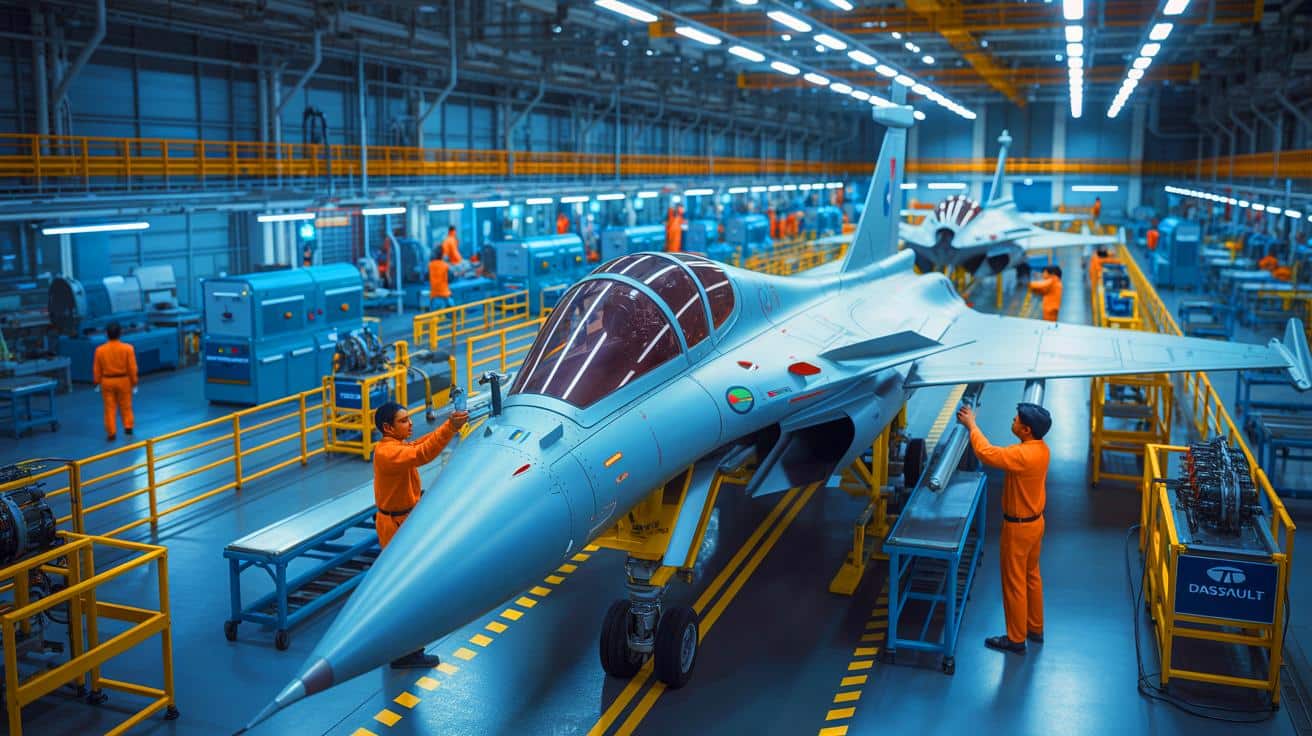
In a significant development for India’s defense sector, French aerospace giant Dassault Aviation has announced plans to manufacture the main body section of its Rafale multirole fighter jets in India. This marks the first time production of these advanced jets will occur outside France. The collaboration with India’s Tata Group is a strategic move to bolster domestic manufacturing capabilities and enhance self-reliance in defense production. The new facility in Hyderabad will not only supply fuselages to the Indian Air Force but also cater to international markets, signaling India’s growing presence in the global defense industry.
Strengthening India’s Defense Manufacturing
The collaboration between Dassault Aviation and Tata Group is a pivotal step in India’s journey toward achieving self-reliance in defense manufacturing. This partnership is part of a broader initiative by India to reduce its dependency on foreign arms imports and boost domestic production capabilities. The new facility in Hyderabad will play a crucial role in this strategy by manufacturing the fuselage of the advanced Rafale jets.
India has long been the world’s largest arms importer, a status it seeks to change by enhancing its domestic defense manufacturing capabilities. The decision to produce Rafale components in India aligns with the government’s “Make in India” initiative, aimed at promoting local manufacturing across various sectors, including defense. By producing these critical components domestically, India not only strengthens its defense capabilities but also positions itself as a potential exporter of advanced military technology.
Strategic Implications for India's Air Force
The production of Rafale fuselages in India represents a strategic milestone for the Indian Air Force (IAF). The Rafale is widely regarded as the most advanced fighter jet in the IAF's arsenal, and having the capability to produce its components domestically enhances the country's operational readiness. This development is particularly significant given recent tensions between India and Pakistan, which have highlighted the need for a modernized and self-sufficient air force.
During recent armed conflicts, both India and Pakistan claimed to have shot down rival aircraft, underscoring the importance of possessing technologically advanced and reliable fighter jets. By manufacturing Rafale components domestically, India not only ensures a steady supply of these critical assets but also gains greater control over maintenance and upgrades.
Economic and Industrial Growth
The establishment of the new manufacturing facility in Hyderabad is expected to have positive economic implications. It will create jobs and foster skill development, contributing to the local economy. The collaboration with Dassault also offers opportunities for technology transfer, allowing Indian engineers and technicians to gain valuable expertise in advanced aerospace manufacturing processes.
This initiative also positions India as a potential hub for defense manufacturing in the region. By catering to both domestic and international markets, the facility in Hyderabad can attract further investments in the aerospace sector, driving industrial growth and innovation. The move aligns with India's vision of becoming a global manufacturing powerhouse, leveraging its skilled workforce and strategic location.
Challenges and Future Prospects
While the collaboration between Dassault and Tata Group represents a significant advancement, challenges remain. The defense manufacturing sector is complex and requires stringent quality control measures. Ensuring the seamless integration of Indian-produced components with the existing Rafale jets will be crucial to maintaining their operational effectiveness.
Moreover, the success of this initiative will depend on continued government support and investment in infrastructure and technology. As India seeks to expand its role in the global defense market, it will need to navigate geopolitical dynamics and foster strong international partnerships. The production of Rafale fuselages in India is a promising step, but sustained efforts will be needed to realize the full potential of this collaboration.
As India embarks on this ambitious journey to transform its defense manufacturing capabilities, the collaboration with Dassault Aviation could serve as a model for future partnerships. How can India best leverage this opportunity to enhance its position in the global defense industry while ensuring national security and self-reliance?
Continue reading