



“The $32 Billion Failure That Promised to Change War” Inside the U.S. Army’s Futuristic Tank Program That Delivered Nothing
 By
Adam Kovács
By
Adam Kovács
| IN A NUTSHELL |
|
The U.S. Army’s quest for modernization has been a story of ambition, immense investment, and occasionally, significant setbacks. Despite being one of the most technologically advanced military forces globally, the American military’s Future Combat Systems (FCS) program stands as a cautionary tale of the challenges faced when innovation meets reality. Launched with high hopes and a $32 billion budget, the FCS aimed to revolutionize combat vehicles. However, the project ultimately failed to deliver on its promises, leaving many to question the effectiveness of such large-scale military modernization efforts.
The Vision for Modernizing Military Vehicles
In the mid-1990s, the United States was actively engaged in multiple conflicts, prompting a reevaluation of its military capabilities. The decision was made to modernize the U.S. Army’s ground vehicles, with a focus on replacing the iconic M1 Abrams tank. This led to the inception of the Future Combat Systems (FCS) program in 1999, a groundbreaking initiative intended to transform the military’s approach to ground warfare.
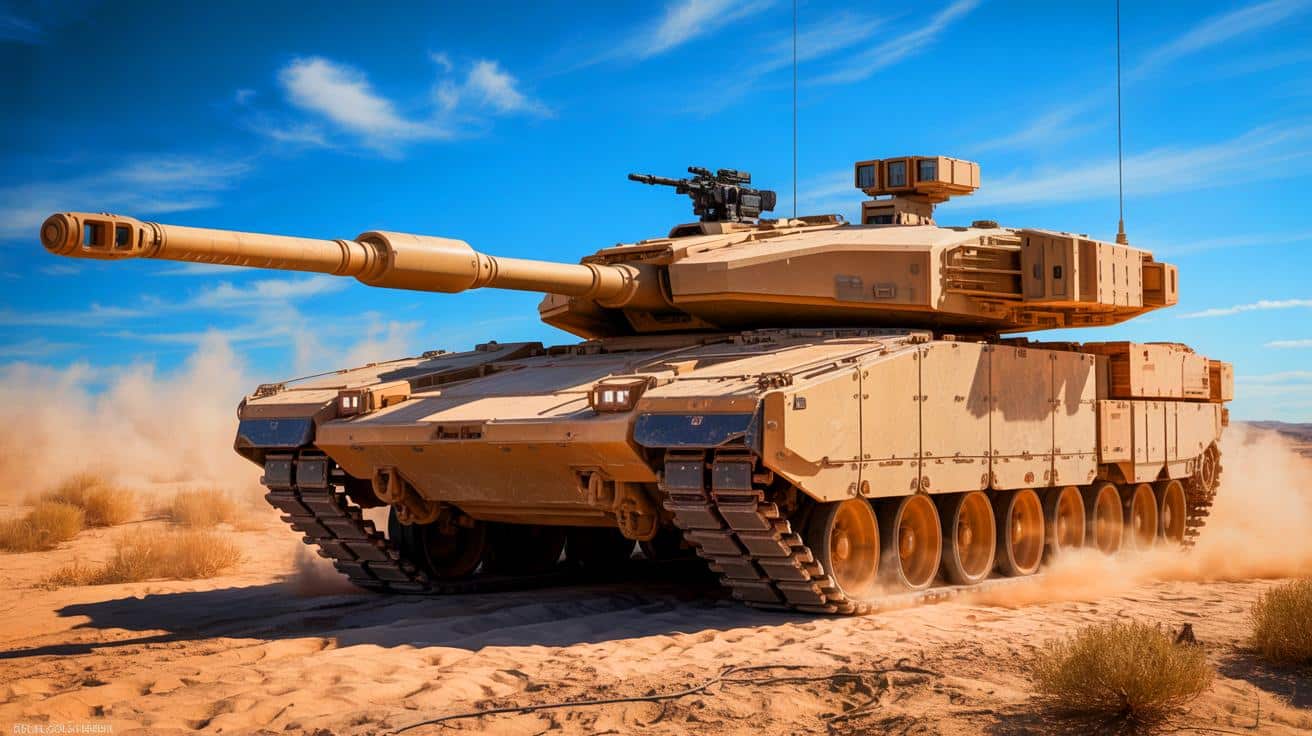
The FCS program aimed to develop the XM1202, a next-generation combat tank that would incorporate advanced weaponry and cutting-edge technology. The new design envisioned a vehicle operated by a reduced crew, capable of reaching speeds of up to 56 miles per hour. Alongside the tank, the FCS sought to create a versatile platform for armored vehicles, using a standardized chassis to enhance adaptability and efficiency across various military applications.
At its core, the FCS was a forward-thinking military project requiring substantial financial and technological investment. The goal was to produce sophisticated weaponry capable of adapting to the rapidly changing demands of modern battlefields. Despite its ambitious scope, the program faced numerous challenges that ultimately hindered its success.
Technological and Financial Hurdles
The ambitious scope of the Future Combat Systems program was met with numerous obstacles. Technological challenges were a significant factor, with repeated delays and revisions to existing plans. One key issue was the evolving design of the chassis for the armored vehicles, which increased in weight from an initial 42,000 pounds to nearly 55,000 pounds by the project's end. This increase added complexities to the project, impacting the feasibility of the envisioned designs.
Financial constraints further compounded these technological hurdles. As the project advanced, the world faced a global financial crisis in 2008, driven by the subprime mortgage collapse. This crisis led to increased scrutiny of military spending and growing concerns about the escalating costs associated with the FCS program. Despite the significant investments, the expected outcomes were elusive. By 2009, the program had consumed $32 billion, with $18 billion allocated to a combat tank that never materialized.
The financial and technological setbacks faced by the FCS highlight the challenges of managing large-scale military projects. The program's failure raises questions about decision-making processes and the allocation of resources in defense initiatives.
Lessons Learned from the FCS Experience
The Future Combat Systems program serves as a critical learning experience for military planners and policymakers. The initiative underscores the importance of adaptable strategies and the need for realistic assessment of technological capabilities. The FCS's downfall can be attributed, in part, to overambitious goals and a lack of flexibility in response to evolving conditions and challenges.
Moreover, the project highlights the risks associated with significant financial investments in unproven technologies. The FCS's failure to deliver results calls for a reevaluation of how resources are allocated and managed in military modernization efforts. It emphasizes the need for strategic foresight and the ability to pivot when faced with unforeseen obstacles.
While the FCS did not achieve its intended objectives, it provides valuable insights into the complexities of defense innovation. The experience offers an opportunity to refine future projects and develop more effective frameworks for integrating new technologies into military operations.
The Future of Military Modernization
Despite the setbacks faced by the Future Combat Systems program, the drive to modernize military capabilities remains a priority for the U.S. Army. Emerging technologies continue to shape the landscape of warfare, necessitating ongoing adaptation and advancement. The lessons learned from the FCS can inform future initiatives, ensuring that new projects are grounded in realistic expectations and adaptive planning.
Looking ahead, the challenge will be to balance innovation with practicality, ensuring that investments in defense technologies yield tangible benefits. The experience of the FCS highlights the importance of collaboration between military leaders, engineers, and policymakers to develop solutions that meet the evolving demands of modern combat.
As the U.S. military contemplates its next steps in modernization, how can it ensure that future initiatives avoid the pitfalls encountered by the FCS while still fostering innovation and technological advancement?
Continue reading