



“Russia Fears American Dominance”: The B-21 Raider Promises 100 Stealth Bombers As Moscow Struggles With Sanctions And Aging Aircraft,
 By
Adam Kovács
By
Adam Kovács
| IN A NUTSHELL |
|
The evolution of strategic bombers has been integral to military strategies since the Cold War, serving as a cornerstone of nuclear deterrence and long-range military operations. From the iconic B-52 Stratofortress to the stealthy B-2 Spirit, these aircraft have played vital roles in projecting power across great distances. Today, a new chapter unfolds with the Northrop Grumman B-21 Raider, a next-generation stealth bomber poised to revolutionize long-range bombing capabilities. As the landscape of aerial warfare changes, understanding the development and deployment of these bombers provides insight into the future of military aviation.
The B-52 Stratofortress: An Enduring Icon
Since its introduction in 1955, the Boeing B-52 Stratofortress has been a symbol of American military might. Known for its robust design and exceptional range, the B-52 has remained in service for over six decades. Its ability to carry a diverse arsenal, including nuclear missiles and conventional bombs, has cemented its role in strategic military operations.
The B-52’s endurance can be attributed to continuous modernization efforts. Updates have included the integration of cruise missiles and enhanced avionics systems. The planned upgrade to more efficient Rolls-Royce engines will further extend its operational life. Despite its age, the B-52 remains effective, particularly in regions with less advanced air defenses, underscoring its strategic value.
The aircraft’s design, featuring eight turbofan engines, provides remarkable tactical flexibility. This configuration, although seemingly outdated, has proven capable of adapting to new technologies and mission requirements. The B-52’s longevity highlights the importance of adaptability in military aviation, ensuring its relevance in both nuclear deterrence and conventional warfare.
The B-2 Spirit: A Stealth Revolution
The B-2 Spirit, introduced in 1997, marked a significant advancement in bomber technology. Its flying wing design and advanced stealth capabilities allow it to evade modern radar systems, an innovation that transformed military doctrines. The B-2 enables the U.S. to strike heavily defended targets undetected, providing a critical edge in strategic operations.
However, the B-2's sophistication comes with a hefty price tag. Its high production and maintenance costs limited the fleet to just 21 aircraft. Despite this, the B-2 has demonstrated its operational effectiveness in various conflicts, including missions in the former Yugoslavia, Iraq, and Afghanistan. Its ability to penetrate highly defended airspace, as seen in missions over Iran, underscores its role in power projection and deterrence.
The B-2's operational success has reinforced the importance of stealth technology in modern warfare. As adversaries develop more sophisticated defenses, maintaining a technological edge becomes crucial. The lessons learned from the B-2's deployment inform the development of future bombers like the B-21 Raider, ensuring continued dominance in aerial warfare.
The B-21 Raider: Next-Generation Stealth
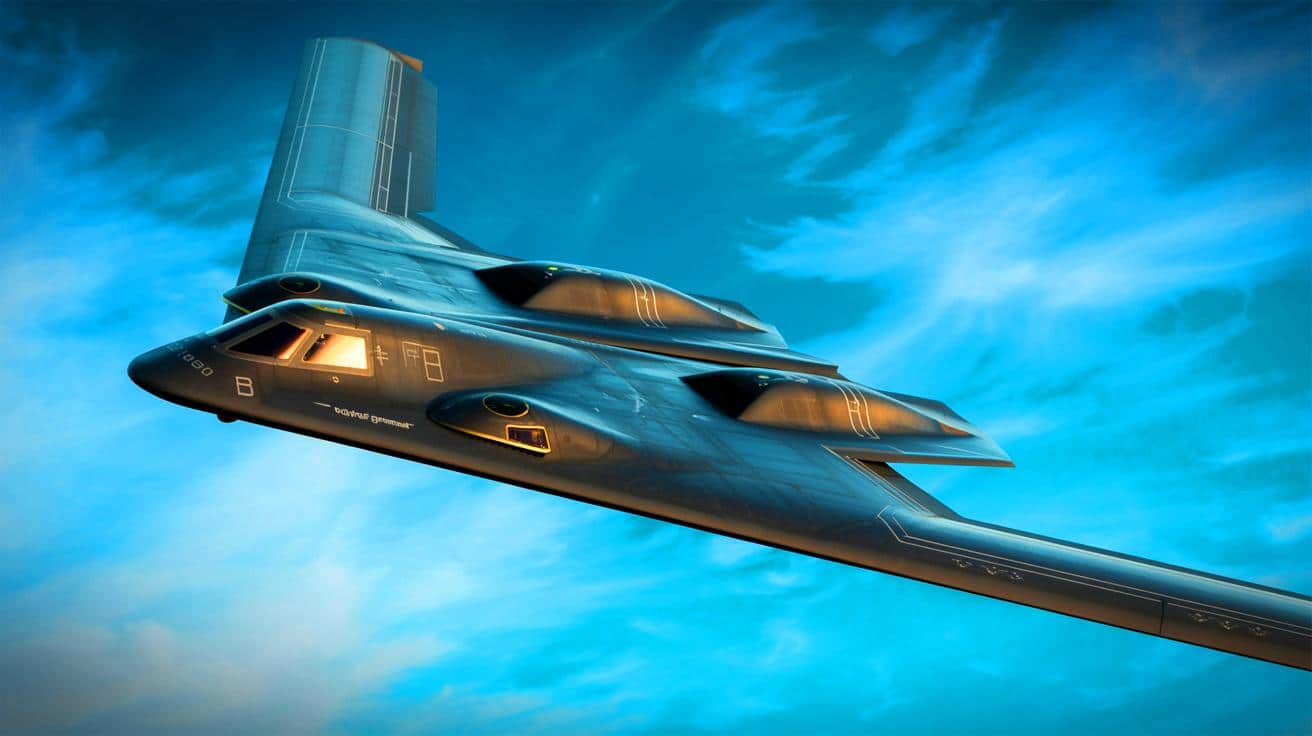
As the B-2 nears the end of its operational life, the U.S. Air Force is preparing to introduce its successor, the B-21 Raider. This next-generation stealth bomber aims to incorporate the lessons of the B-2 while advancing technological capabilities and reducing operational costs. The B-21's development represents a strategic investment in future military readiness.
The B-21's first flight occurred in November 2023, with official deployment expected by 2026. The U.S. Air Force plans to acquire over 100 units, leveraging economies of scale to lower unit costs, a benefit not fully realized with the B-2. The B-21's innovative propulsion system, utilizing high-bypass turbofan engines, promises enhanced range and reduced operational expenses while maintaining stealth capabilities.
Beyond propulsion, the B-21 is designed to meet 21st-century conflict demands. It will deploy hypersonic missiles and coordinate drone swarms for various missions, offering unprecedented flexibility and adaptability. This capability positions the B-21 as a pivotal asset in the U.S. military's strategic arsenal, ensuring preparedness for future challenges.
International Landscape: A Contrast
Globally, other major military powers maintain smaller and often less modern bomber fleets. Russia continues to operate iconic aircraft like the Tupolev Tu-95 "Bear," a turboprop bomber in service since the 1950s. Its longevity is due to the efficiency of its engines and its substantial payload capacity. However, economic sanctions and the conflict in Ukraine have hindered Russia's modernization efforts.
China, meanwhile, is gradually evolving its strategic fleet. The H-6, derived from the Soviet Tu-16, is the current backbone of China's strategic bombing capability, frequently used for power demonstrations around Taiwan. China is also developing a stealth successor, the H-20, expected to enhance its stealth and technological capabilities. Nonetheless, experts suggest it still lags behind the technological standards set by the American B-21.
The varied approaches of these nations highlight the strategic importance of bomber capabilities. As the U.S. advances with the B-21, other countries face challenges in closing the technological gap, emphasizing the role of innovation in maintaining military superiority.
The history of strategic bombers reflects a continuous race between technological innovation and strategic adaptation. From the versatile B-52 to the revolutionary B-2 Spirit and the promising B-21 Raider, the United States maintains its technological edge in this crucial domain. As other powers strive to catch up, the next generation of bombers promises to redefine aerial power projection in the coming decades. How will these advancements shape the future of global military dynamics?