



“Faster Than a Bullet, Smarter Than a Missile”: U.S.-U.K. Breakthrough in Hypersonic Engine Tech Could Redefine Global Power
 By
Adam Kovács
By
Adam Kovács
| IN A NUTSHELL |
|
The recent collaboration between the United Kingdom and the United States marks a significant milestone in military technology with the breakthrough in hypersonic missile engine development. The Ministry of Defence in the UK, alongside U.S. support, has tested a new engine design that could potentially power hypersonic cruise missiles for the UK’s military by 2030. This advancement could revolutionize warfare by offering missiles capable of speeds exceeding Mach 5, coupled with enhanced maneuverability. As the world becomes more unpredictable, the strategic implications of such technology are profound, promising to change the balance of power on the global stage.
Understanding Hypersonic Missile Technology
Hypersonic missiles are engineered to travel at speeds greater than five times the speed of sound, or Mach 5. This capability allows them to strike targets with unprecedented speed and force, rendering traditional defensive systems almost obsolete. By leveraging such velocities, these missiles can cause significant damage solely through momentum, making them a formidable addition to any military arsenal.
However, the development of hypersonic missiles is fraught with challenges. The primary hurdle is achieving and maintaining these high speeds in a practical manner. Current hypersonic vehicles typically rely on rocket motors to reach supersonic speeds before accelerating further as they descend. While effective in tests, this method is not viable for operational weapons due to its complexity and limited range.
For hypersonic cruise missiles, an air-breathing engine is preferable. This type of engine would allow the missile to sustain high speeds over longer distances and at lower altitudes, making interception more difficult. However, designing such an engine involves overcoming extremely complex engineering problems, including managing the intense heat and pressure generated at hypersonic speeds.
The Engineering Challenges Ahead
Developing an engine for hypersonic speeds involves navigating a series of engineering hurdles. A significant challenge is designing an air-breathing engine that can handle the intense pressures and shockwaves associated with air intake at speeds above Mach 5. Without careful management, these forces could easily destroy the engine.
To counter these issues, innovative solutions such as variable-geometry inlets are necessary. These components can adjust in real-time to control the shockwaves and reduce the speed of incoming air, making it manageable for the engine. Furthermore, the engine must endure temperatures exceeding 3,632 °F, requiring the use of advanced materials capable of withstanding such thermal stress.
Materials like ultra-high temperature ceramics and ceramic matrix composites are essential in constructing parts of the engine or as heat-shield coatings. These materials not only resist melting but must also withstand oxidation and mechanical stress. Additionally, the entire system must be compact and lightweight, integrating seamlessly with other propulsion systems like rocket boosters for initial acceleration.
Collaborative Testing and Development
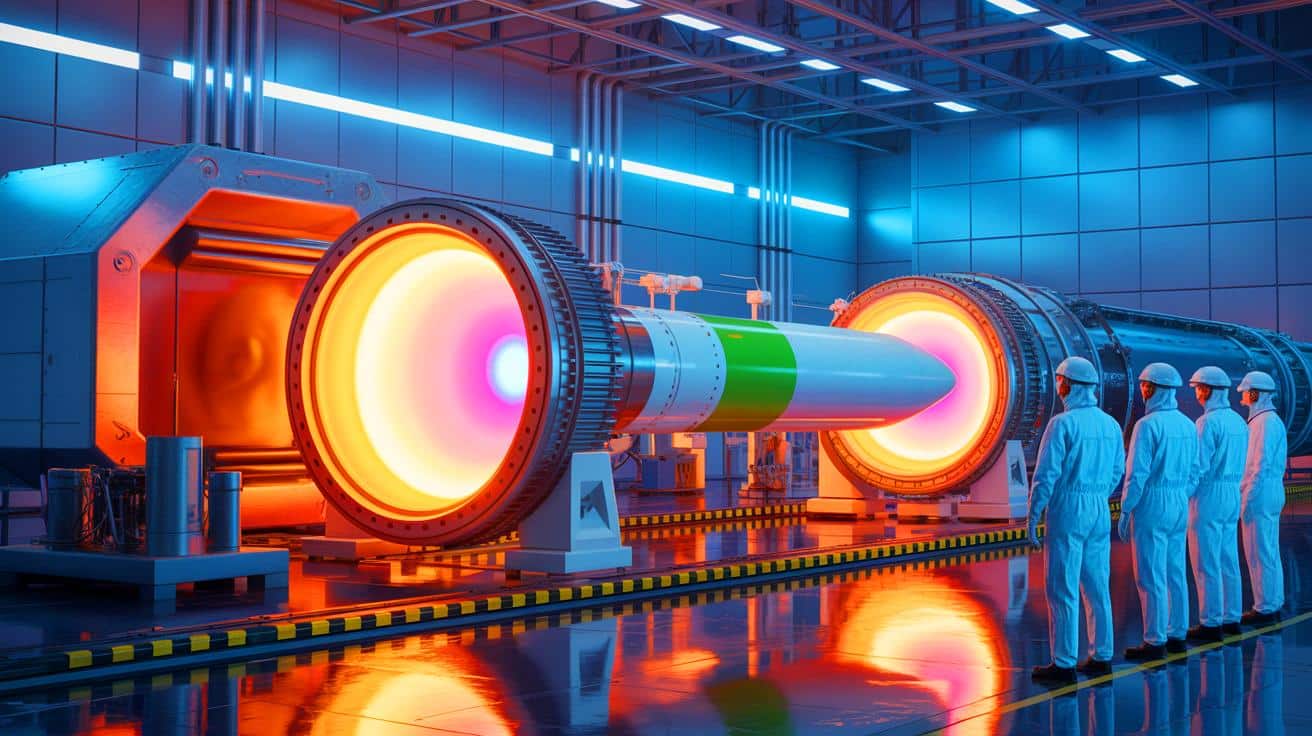
The UK Ministry of Defence, in partnership with the U.S. Air Force Research Laboratory and other industry stakeholders, has conducted extensive testing of the new engine design. Over 233 static test runs were performed in a specially designed hypersonic wind tunnel at NASA’s Langley Research Centre in Virginia. These tests, part of the UK’s Team Hypersonics program, are crucial for validating the engine’s performance and durability.
The testing phase involved multiple design variants, with data collected to inform future improvements. The collaboration underscores the strategic importance of hypersonic technology as a national defense priority. According to UK Defence Secretary John Healey, such innovations are vital for maintaining a technological edge over potential adversaries and ensuring the continued strength of national and allied defenses.
“We are living in a more dangerous world and it has never been more important for us to innovate and stay ahead of our adversaries,” said Defence Secretary John Healey MP.
https://visegradpost.com/en/2025/10/05/europes-stealth-fighter-has-no-pilot-helsings-ca-1-europa-uses-ai-to-outsmart-enemies-and-prove-europe-can-defend-itself-autonomy-achieved/
The Strategic Implications
The successful testing and eventual deployment of hypersonic missiles represent a significant shift in military capabilities. These weapons are set to redefine the dynamics of conflict by offering unparalleled speed and precision. Their ability to evade current defense systems makes them a pivotal component of future military strategy.
This development also highlights the growing collaboration between western allies, particularly the UK and the U.S., in advancing military technology. Such partnerships are crucial in the face of increasingly sophisticated threats from other global powers. As nations continue to develop their hypersonic capabilities, the geopolitical landscape will inevitably evolve, requiring strategic adjustments from all involved parties.
The implications of hypersonic technology extend beyond military applications, potentially influencing global diplomacy and power structures. As nations invest in these technologies, questions arise about arms control and international security, prompting discussions on how to manage these advancements responsibly.
The advancement of hypersonic missile technology through UK and U.S. collaboration is a testament to the rapid evolution of military capabilities. With the potential to transform warfare, these developments underscore the importance of continuous innovation and strategic partnerships. As global powers race to develop and deploy these technologies, one must consider the broader implications. How will the emergence of hypersonic weapons reshape international relations and the nature of conflict in the coming decades?
Continue reading