


“So Tanks Can See Beyond the Horizon Now”: China’s Type 100 Brings AI and Long-Range Warfare to the Battlefield (and It Changes Everything)
 By
Adam Kovács
By
Adam Kovács
| IN A NUTSHELL |
|
In a significant shift in military strategy, China’s People’s Liberation Army (PLA) is redefining armored warfare. The introduction of the new-generation Type 100 main battle tanks signifies a departure from traditional close-range engagements to long-range, beyond-visual-range combat. This transformation is driven by the integration of advanced sensors, artificial intelligence, and networked warfare into the PLA’s armored units. Experts suggest that this development positions China among the few nations capable of conducting such sophisticated long-range ground combat. As these technological advancements reshape combat dynamics, the implications for global military balance and strategy are profound.
Transformation in Armored Warfare
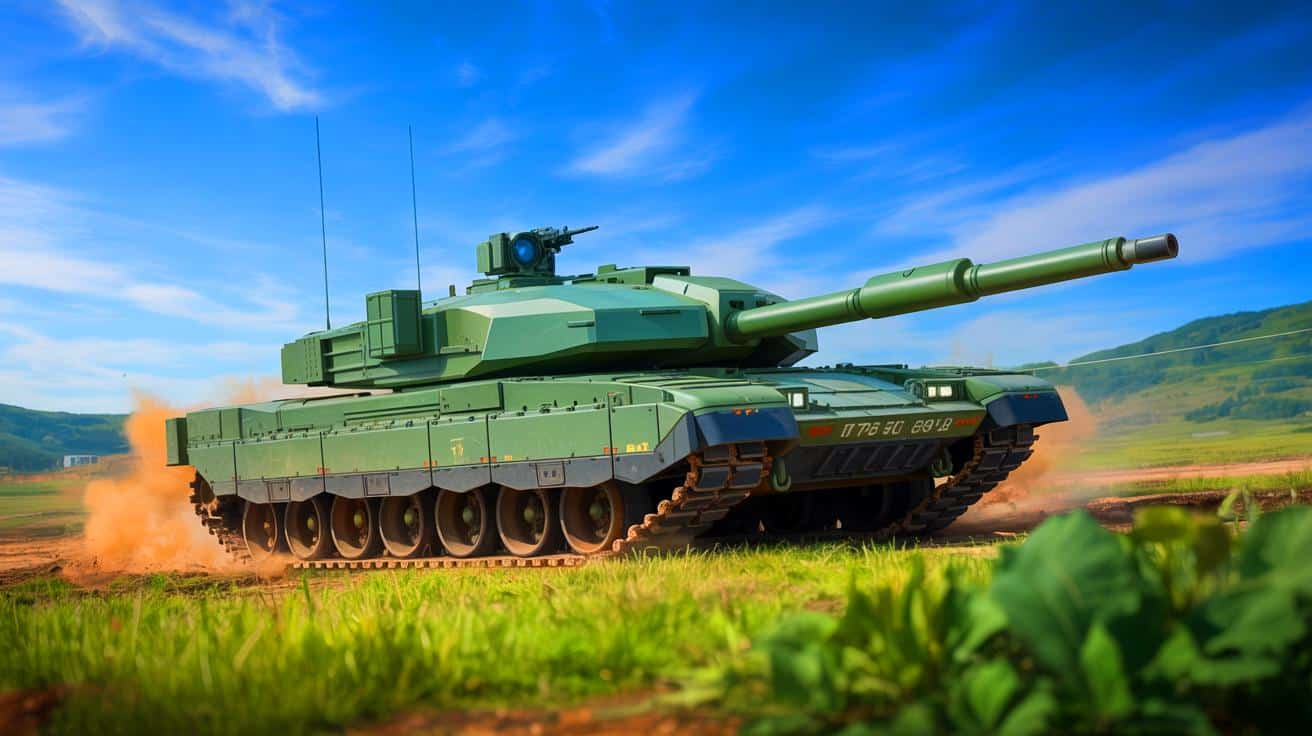
The PLA has accelerated its battlefield transformation with the introduction of the Type 100 main battle tank. This new-generation tank has fundamentally altered the modus operandi of armored forces. Tank commander Sun Yongming highlighted this evolution during a recent battalion-level exercise, emphasizing the shift from close-quarters combat to engagements that leverage long-range sensors and full-circle battlefield awareness. The Type 100, which debuted at China’s Victory Day parade, is designed for high intelligence and strong teamwork.
These tanks are not standalone units but part of a comprehensive combat network. They collaborate with helicopters, rocket launcher systems, electronic warfare units, and reconnaissance drones. This integrated approach, according to military analyst Wang Yunfei, represents an “era-defining change” in the PLA’s approach to armored warfare. The Type 100 can coordinate long-range fire missions, effectively linking with rocket launchers and drones, showcasing a sophisticated level of battlefield integration.
Jet-like Capabilities
The Type 100 tank boasts radar, electronic surveillance tools, and advanced communication systems, enabling it to target distant adversaries. This capability, typically associated with air and naval forces, extends the operational reach of ground forces. Commander Yuan, from a combined-arms battalion, described how the tank’s capabilities transcend traditional land warfare. The PLA’s integrated joint operational capabilities are epitomized through this new operational paradigm.
For ground forces, achieving beyond-visual-range operations has been a significant challenge. However, China’s advancements in miniaturized radar and electronic warfare have overcome these barriers. These breakthroughs allow tanks to function similarly to aircraft and warships in terms of long-range targeting, positioning China among the few nations with such capabilities. As Wang noted, this development marks a critical advancement in ground force capabilities, aligning them closer to their air and naval counterparts.
Strategic Implications
The strategic implications of the Type 100’s capabilities are considerable. By integrating advanced technologies, the PLA not only enhances its combat effectiveness but also shifts the balance of military power. This transformation raises questions about the future of ground warfare and the role of traditional tank divisions. With the ability to engage enemies from long distances, the Type 100 challenges conventional military tactics and strategy.
The integration of the Type 100 into the PLA’s operational framework highlights a broader trend of militaries adopting network-centric warfare. As nations strive to achieve similar advancements, the global landscape of military technology is set to evolve rapidly. This shift necessitates a reevaluation of defense strategies and military alliances, as countries adapt to new forms of warfare characterized by speed, precision, and networked systems.
Challenges and Opportunities
While the Type 100 represents a significant leap in military technology, it also presents challenges. The reliance on advanced systems requires robust cybersecurity measures to protect against potential threats. Moreover, the integration of new technologies into existing military structures demands substantial training and adaptation. The PLA’s success in these areas will determine the effectiveness of the Type 100 in real-world scenarios.
On the other hand, the introduction of such advanced tanks offers opportunities for further innovation. It encourages the development of new tactics and operational strategies, potentially leading to breakthroughs in other areas of military technology. As countries observe China’s advancements, competition in military technology is likely to intensify, driving further innovation and development in the field.
As the PLA continues to integrate the Type 100 into its arsenal, the future of armored warfare looks increasingly complex and interconnected. The capabilities of these new tanks could redefine military engagements and influence global defense strategies. How will other nations respond to these advancements, and what will be the long-term impact on international military dynamics?
Continue reading