
“They’re Really Sending Warships?”: This Sudden U.S. Buildup Near Venezuela Sparks Fears of a Caribbean Conflict (and China’s Watching Closely)
 By
Adam Kovács
By
Adam Kovács
| IN A NUTSHELL |
|
The geopolitical landscape between the United States and Venezuela is reaching a critical juncture, with tensions escalating to unprecedented levels. The ongoing standoff centers around the U.S.’s claims of drug trafficking networks allegedly supported by Venezuelan President Nicolás Maduro. In response, the U.S. has taken significant military measures in the Caribbean, heightening fears of potential military conflict or regime change. Meanwhile, Maduro has fortified his position, preparing for any eventuality, including a possible state of emergency. As the situation intensifies, the international community remains on edge, anticipating the next move from both Washington and Caracas.
The U.S. Military Buildup in the Caribbean
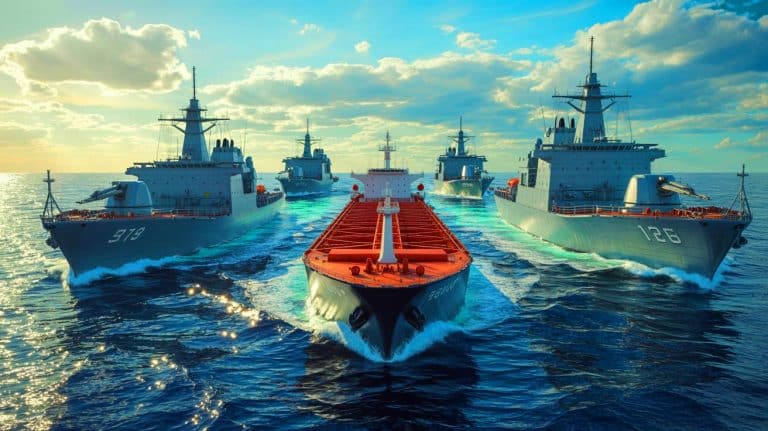
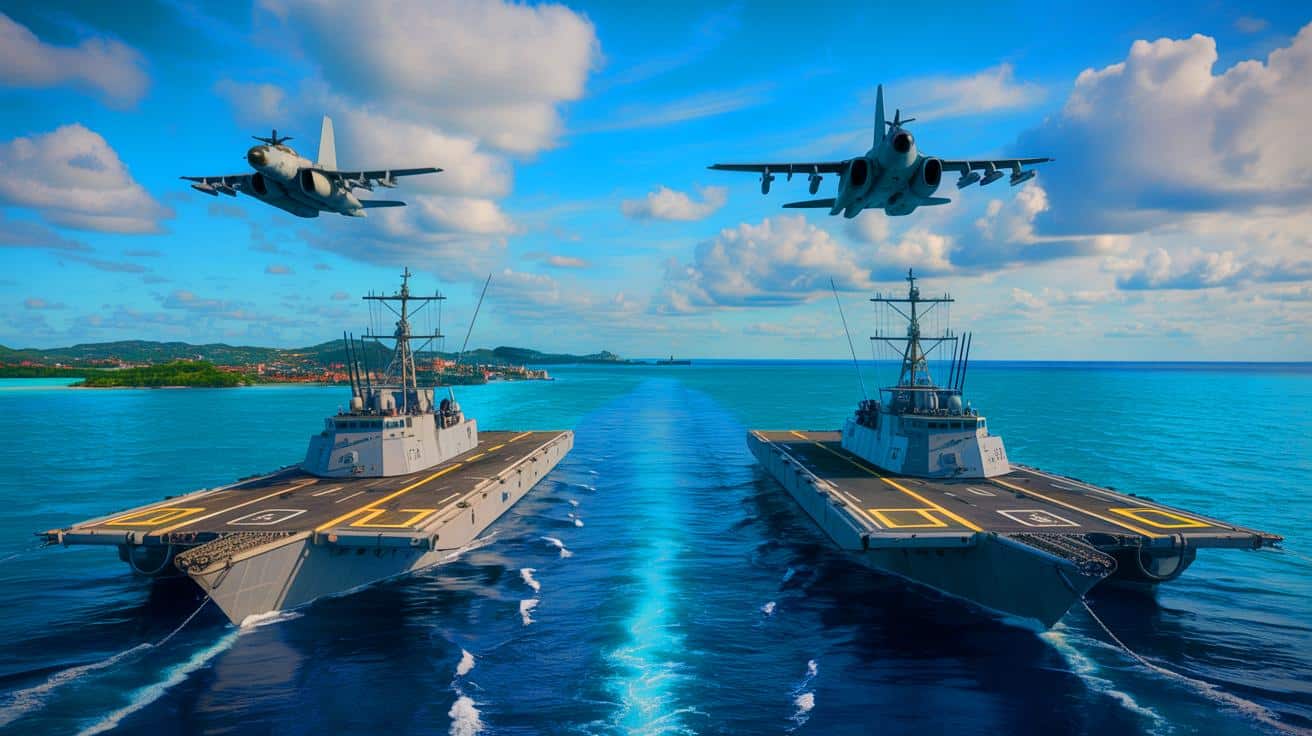
The United States has significantly increased its military presence in the Caribbean, positioning warships, an attack submarine, and aircraft in the region. The USS Stockdale, along with other vessels, has joined the USS Iwo Jima Amphibious Ready Group, strategically maneuvering near Venezuela. This deployment includes approximately 4,500 Marines and sailors, highlighting the seriousness of the U.S.’s stance.
Furthermore, the U.S. has stationed at least 10 F-35 fighters and multiple MQ-9 drones in Puerto Rico, providing capabilities for surveillance and potential strikes. While these forces are formidable, they reportedly fall short of what would be needed for a full-scale invasion.
For now, the U.S. Southern Command has framed their actions as enhanced counternarcotics operations. They emphasize joint patrols and interdiction efforts with allies such as Canada, the Dominican Republic, and the United Kingdom. However, the presence of these military assets signals a readiness for escalation if deemed necessary.
Venezuela’s Military Preparedness
In response to the U.S. military buildup, Venezuela has conducted military drills, showcasing their readiness to defend against potential aggression. President Maduro has declared “maximum preparedness” and threatened to mobilize a “republic in arms” if attacked. These actions are supported by Venezuela’s Defense Minister Vladimir Padrino López, who announced three days of drills involving naval units, aircraft, and air-defense assets.
Despite these displays of strength, Venezuela’s military capabilities have been eroded by years of economic crisis and international sanctions. While not negligible, their forces are no match for the U.S. military’s dominance in the region. However, Venezuela could resort to asymmetric tactics and militia mobilization to inflict damage on U.S. forces.
Maduro’s strategy aims to project resolve and increase the cost for Washington if it chooses to escalate the situation further. The potential for a state of emergency would centralize military control in the president’s office, underscoring the seriousness of Venezuela’s preparations.
International Dynamics and Regional Reactions
The international community is closely watching the unfolding tensions between the U.S. and Venezuela. While most regional governments have avoided taking sides, some have expressed concerns. Colombian President Gustavo Petro has called for “criminal proceedings” over recent U.S. strikes, reflecting regional unease.
In the Caribbean, there is limited appetite for hosting a U.S. invasion force. The president of Dominica emphasized that there is “no place in the Caribbean for war.” However, Guyana, engaged in a territorial dispute with Venezuela, has welcomed U.S. security cooperation.
Venezuela’s allies, including Cuba and Russia, provide a level of support to Maduro. Cuban intelligence and security advisers have long been embedded within Venezuela’s military, complicating U.S. efforts to undermine Maduro’s regime. Russia, while offering political and technical support, lacks the capacity for large deployments but remains a factor in the geopolitical equation.
China’s Role in the Venezuelan Crisis
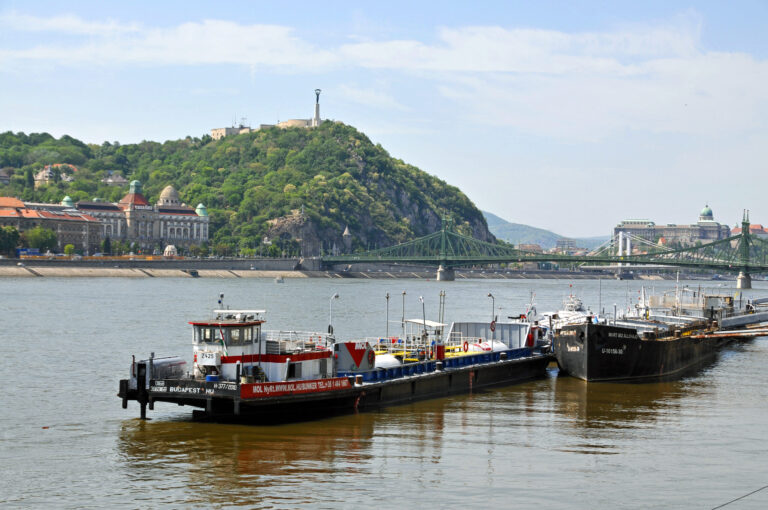
China’s position in the Venezuelan crisis is crucial, as it remains a significant buyer of Venezuelan oil. Western sanctions have led to a growing share of Venezuelan hydrocarbon exports being funneled to China through “shadow fleet” tankers and complex rerouting schemes. This allows Venezuelan crude to reach Chinese refineries despite sanctions.
Any U.S. action disrupting these flows could prompt China to respond diplomatically and commercially. In late September, China expressed its opposition to the use of force and decried external interference in Venezuela’s affairs. The Chinese ambassador in Caracas conveyed solidarity, emphasizing support for Venezuela’s sovereignty.
While China has stopped short of pledging military support, its diplomatic backing remains significant. This adds another layer of complexity to the U.S.’s strategy in the region.
As tensions between the United States and Venezuela continue to rise, the potential for conflict looms large. While the U.S. currently maintains a strategy of pressure without full commitment, the situation remains volatile. The international community watches closely, pondering the possible outcomes of this geopolitical standoff. What will be the next move in this high-stakes game of international diplomacy and military strategy?
Continue reading