


US Envoy’s Advice to Russia Sparks Debate as Navy Ends Frigate Program and USAF Plans Tanker Extension
 By
Adam Kovács
By
Adam Kovács
| IN A NUTSHELL |
|
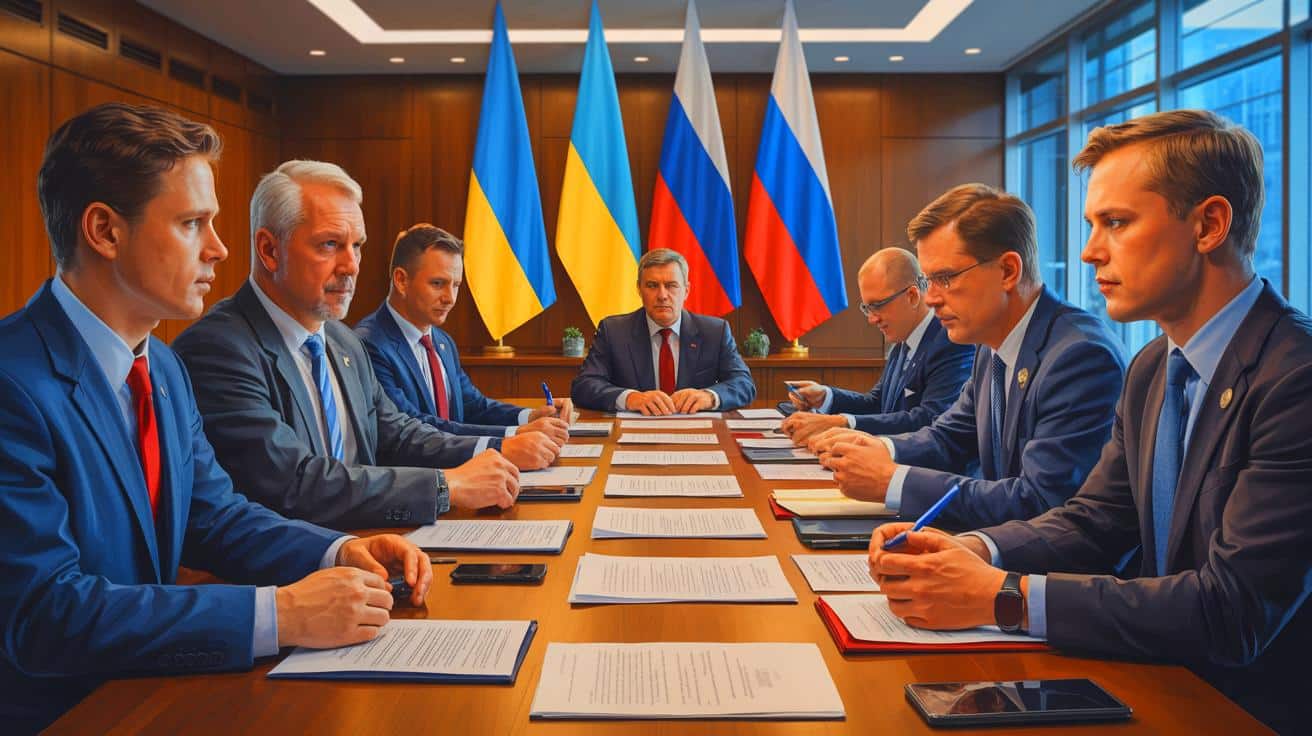
Amidst the geopolitical tensions involving Ukraine and Russia, a startling development has emerged from a recent conversation between Steve Witkoff, a prominent real estate billionaire, and Yuri Ushakov, an advisor to Vladimir Putin. The discussion centered around crafting a peace proposal aimed at resolving the ongoing conflict between Ukraine and Russia. The content of this dialogue, which has now become public, is raising eyebrows and sparking debates across international political circles. The plan, which seemingly favors Russian demands, has drawn criticism, especially from U.S. lawmakers who question its intention and implications for Ukraine’s sovereignty.
The Controversial 28-Point Plan
The peace proposal discussed by Witkoff and Ushakov consists of 28 points, which appear to be heavily skewed towards Russian interests. Among the contentious points are calls for Ukraine to cede the Donbas region to Russia and significantly reduce its military capabilities. Additionally, the plan suggests that Ukraine should never be allowed to join NATO, a stipulation that contravenes Ukrainian sovereignty and its aspirations for closer integration with Western alliances.
Critics argue that the plan draws from a Russian-authored document submitted to the Trump administration, making it seem less like a neutral peace proposal and more like a strategic move to gain territorial concessions without military engagement. The proposal’s focus on territorial swaps and military limitations has raised alarms among U.S. lawmakers and international observers who fear it could lead to long-term Russian domination over Ukraine.
The plan “drew from a Russian-authored paper submitted to the Trump administration,” highlighting its potential bias.
Political Reactions and Criticisms
U.S. politicians, particularly within the Republican party, have expressed strong opposition to the plan. Nebraska Representative Don Bacon and Pennsylvania Representative Brian Fitzpatrick have publicly denounced Witkoff’s approach, questioning why Ukraine is being asked to make concessions while Russia is not held to similar demands. They argue that the plan could enable Russia to renew its aggressive actions against Ukraine at any time.
The plan has been compared to the infamous Munich Agreement, which is often cited as an example of appeasement that failed to prevent further aggression. Lawmakers are calling for a more balanced approach that holds Russia accountable for its actions and ensures Ukraine’s territorial integrity. The discourse highlights a broader concern about the influence of Russian-aligned interests on U.S. foreign policy decisions.
Retired Air Force Brig. Gen. and Nebraska Rep. Don Bacon described the plan as “a recipe for Russian domination of Ukraine for decades to come.”
U.S. and Ukrainian Diplomatic Efforts
Despite the controversy, diplomatic efforts continue as Ukrainian officials express willingness to engage in talks aimed at achieving a peaceful resolution. Ukrainian President Volodymyr Zelensky has indicated a desire to negotiate directly with former President Trump on territorial concessions, signaling Ukraine’s openness to dialogue while maintaining its core interests.
From the U.S. side, the involvement of high-level officials such as U.S. Army Secretary Dan Driscoll in presenting the plan to Ukrainian and Russian officials has raised questions about the appropriateness of their roles in these sensitive negotiations. The choice of Driscoll, who has a background in military operations rather than international diplomacy, has sparked discussions about the strategic considerations behind U.S. diplomatic engagements in this context.
The question remains: Why was U.S. Army Secretary Dan Driscoll selected to present Ukrainian officials with Witkoff’s plan?
The European Union’s Perspective
The European Union remains a critical actor in the geopolitical landscape surrounding the Ukraine-Russia conflict. EU foreign policy chief Kaja Kallas has emphasized the need for continued sanctions against Russia and increased support for Ukraine to counter Russian military ambitions. The EU’s stance reflects a broader commitment to upholding international norms and supporting Ukraine’s right to self-determination.
The EU’s focus on sanctions and military support aligns with its strategic objectives to deter Russian aggression and reinforce its influence in Eastern Europe. The EU’s involvement underscores the complexity of the situation, where diplomatic, military, and economic measures intertwine to shape the future of the region.
“Putin cannot achieve his goals on the battlefield, so he will try to negotiate his way there,” said Kaja Kallas.
As the geopolitical dynamics continue to unfold, the implications of the Witkoff-Ushakov plan and the broader diplomatic efforts remain uncertain. With international stakeholders weighing in and the situation evolving, it raises a critical question: How will the global community ensure a fair and lasting resolution that respects Ukraine’s sovereignty and regional stability?
Continue reading