



Tiny Tech, Huge Impact: China Unveils Lightning-Fast Medical Microrobot Designed to Work Inside the Human Body With Precision
 By
Adam Kovács
By
Adam Kovács
| IN A NUTSHELL |
|
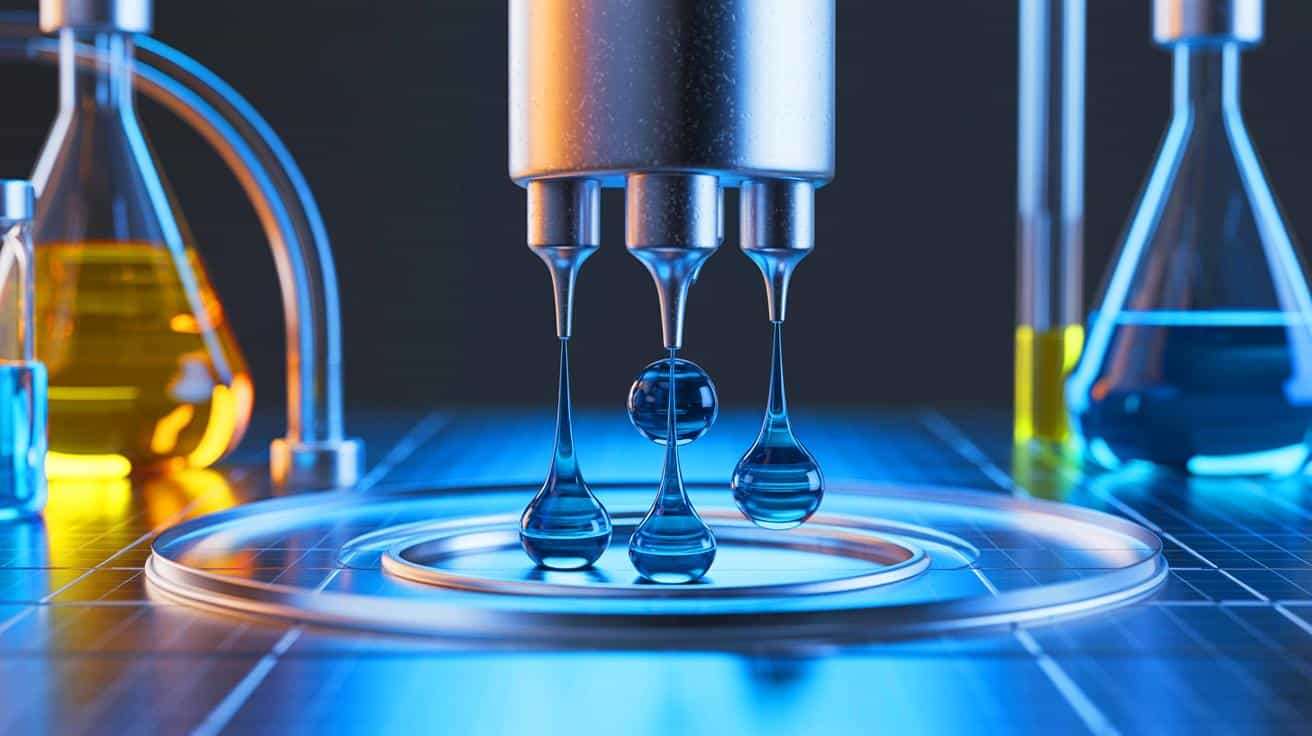
In the realm of cutting-edge technology, a remarkable development has emerged from China: a microrobot engineered to manipulate tiny liquid droplets using magnetic fields. This innovation, crafted by researchers from the Chinese Academy of Sciences and the China Electric Power Research Institute, promises to revolutionize fluid handling in various scientific and medical applications. As it combines speed, precision, and versatility, this microrobot represents a significant leap forward in the field of microscale robotics.
Next-Gen Magnetic Microrobot
In many medical and industrial processes, precision in fluid handling is paramount. Traditional methods often involve cumbersome equipment, but the advent of microrobots offers a more efficient approach. The new magnetic microrobot is designed to operate on a much smaller scale, effectively handling fluid volumes that are mere fractions of a milliliter. Built with a combination of neodymium magnetic particles, sugar, and a chemically stable polymer, the robot is engineered for high performance and chemical stability.
The construction process includes dissolving sugar to create a porous structure, which increases the robot’s surface area, and plasma treatment to make it hydrophilic. This allows for effective attraction and manipulation of water and other liquids. The integration of magnetic particles enables control through external magnetic fields, enhancing the robot’s responsiveness and performance. These innovations ensure the robot can perform delicate tasks with precision and minimal residue, making it ideal for applications in medical diagnostics and the handling of reactive chemicals.
Precision Fluid Robotics
The microrobot exhibits remarkable capabilities in manipulating liquid droplets. During testing, it successfully merged droplets at low speeds to initiate chemical reactions and split them into smaller portions at high speeds. This ability to handle diverse fluid tasks underscores its potential across various fields. The microrobot’s strong magnetic components enable it to move at speeds up to 20 times faster than previous designs, transporting droplets nearly a milliliter in volume. Its robust construction allows it to operate in harsh chemical environments, including corrosive acids, without damage.
With these features, the microrobot is poised to automate small-scale chemical processes in laboratory settings, enhancing both efficiency and safety. It also holds promise for minimally invasive medical procedures, where precision in delivering or manipulating bodily fluids is crucial. Researchers are optimistic about further advancing the microrobot’s capabilities to expand its applications in scientific and clinical settings.
Applications and Future Prospects
The versatility of this microrobot opens the door to numerous applications. In laboratory environments, it can automate complex chemical processes, significantly improving productivity and reducing the risk of human error. In medicine, its precision could revolutionize procedures by delivering targeted treatments or performing microscopic surgeries. The team’s ongoing research focuses on miniaturizing the robot for handling even smaller droplet volumes, potentially integrating it with sensors for tasks like targeted drug delivery or environmental cleanup.
As the microrobot’s capabilities continue to evolve, its integration into real-world applications becomes increasingly feasible. The potential to transform industries by offering more efficient and precise methods of handling fluids is vast. Researchers are committed to refining this technology, ensuring it meets the rigorous demands of both scientific and industrial domains.
Innovative Materials and Engineering
Creating a microrobot with such advanced capabilities required innovative materials and engineering. The use of strong neodymium magnets addresses previous limitations associated with weak driving forces, allowing for the manipulation of larger droplets at higher speeds. The robot’s design overcomes challenges related to magnetic additives that often corroded or polluted samples. By combining strong magnetism with chemical resistance, the robot achieves rapid movement and high functionality.
These advancements not only enhance the microrobot’s performance but also establish a new standard for future developments in the field. The focus on clean, efficient, and high-performance systems ensures that the microrobot can handle sensitive tasks without compromising on quality or reliability. As researchers continue to push the boundaries of what’s possible, the future of microrobotics looks promising.
The development of this microrobot marks a significant milestone in fluid handling technology. Its precision, speed, and versatility hold the potential to transform numerous fields, from chemistry to medicine. As researchers strive to further enhance its capabilities, one can’t help but wonder: What groundbreaking applications will this technology enable in the years to come?