


“Iran Bewilders Israel’s Iron Dome”: Tehran Boasts of Monday’s Missile Strike That Unnerved This Powerful Defense System
 By
Adam Kovács
By
Adam Kovács
| IN A NUTSHELL |
|
The Middle East is once again at the center of global attention as tensions between Iran and Israel escalate into a full-blown conflict. The recent missile strikes by Iran on key Israeli cities have not only resulted in tragic loss of life but have also sparked a wave of international reactions. As the world watches, the stakes grow higher, with fears of a broader regional conflict looming. This article delves into the unfolding situation, examining the military strategies, international responses, and the potential impact on global diplomacy.
Iran’s Military Strategy: New Tactics in Modern Warfare
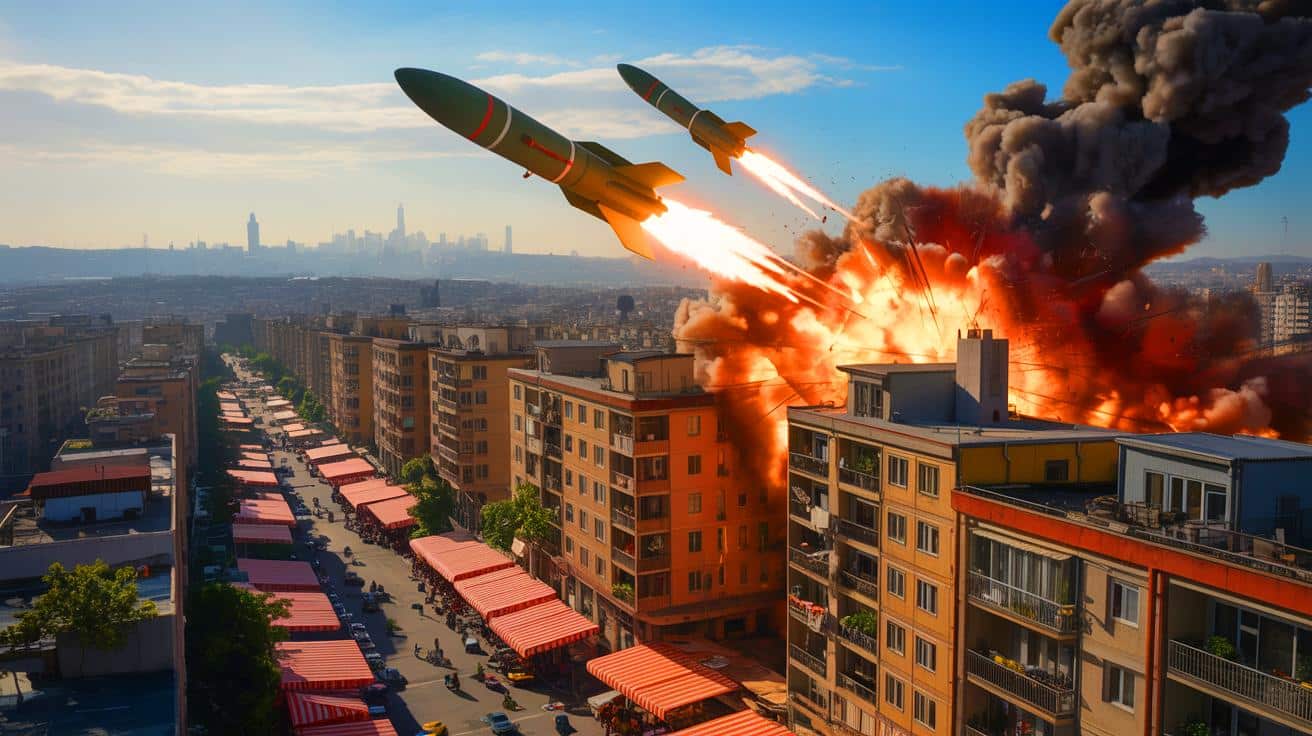
Iran’s recent missile strikes on Tel Aviv and Haifa marked a significant escalation in its long-standing conflict with Israel. The use of hypersonic missiles, particularly targeting critical infrastructure such as Haifa’s power plant, underscores a shift in military strategy. The Revolutionary Guard claims to have employed a “new method” designed to confuse and bypass Israel’s sophisticated defense systems. This tactic reportedly caused Israeli defenses to misfire, enhancing the effectiveness of Iran’s attack.
The psychological impact of these strikes cannot be overstated. By targeting high-profile locations, including areas near the U.S. Embassy and popular markets like Shuk HaCarmel, Iran aims to instill fear and demonstrate its capability to strike deep within Israeli territory. However, the immediate human cost is severe, with dozens killed or wounded, and significant damage to residential and commercial properties.
Casualties and Humanitarian Impact: A Crisis Unfolds
The human toll of the conflict is mounting. Israel’s emergency services reported at least five fatalities and over 100 injuries following the latest missile strikes. In Haifa, the situation is dire, with fires breaking out near a crucial power plant, leading to widespread panic and injuries. Meanwhile, Tel Aviv experienced multiple explosions, severely damaging residential buildings and leaving many homeless.
On the other side, Iran has suffered significant losses due to Israeli counter-strikes focused on crippling its nuclear and military capabilities. Reports indicate at least 224 Iranian casualties, predominantly civilians. The humanitarian crisis is exacerbated by the destruction of infrastructure and the looming threat of further escalation. This ongoing violence raises urgent questions about the future stability of the region and the international community’s responsibility to mediate peace.
International Reactions: Calls for Peace Amid Escalation
The conflict’s escalation has overshadowed the G7 summit, where world leaders are grappling with the implications of this crisis. German Chancellor Friedrich Merz emphasized the need to prevent nuclear proliferation and support Israel’s right to defense while avoiding further regional escalation. U.S. President Donald Trump expressed hope for a diplomatic resolution, although he acknowledged the complex nature of the conflict.
Despite these calls for peace, diplomatic efforts face significant hurdles. Iran has rejected ceasefire negotiations while under attack, leading to the cancellation of planned nuclear talks with the U.S. This stalemate raises concerns about the potential for a prolonged conflict, further destabilizing an already volatile region.
The Road Ahead: Challenges and Potential Resolutions
As the conflict intensifies, the path to resolution remains uncertain. Israel’s military continues to target Iranian command centers, while Iran vows major retaliation, threatening to “open the gates of hell.” The international community is divided, with some nations expressing support for Iran, complicating efforts to broker peace.
In Washington, President Trump has maintained a delicate balance, emphasizing the need for Iran to limit its nuclear activities while denying direct U.S. involvement in the conflict. This diplomatic tightrope walk underscores the complexities of international politics in addressing such multifaceted crises. The question remains: can global leaders navigate these challenges to find a peaceful resolution, or will the region descend further into chaos?
The situation in the Middle East underscores the complexity and fragility of international relations. As both sides brace for further confrontations, the world watches anxiously. Will diplomatic efforts be enough to prevent a larger war, or is the region destined for further turmoil? The answers to these questions will shape the future of global peace and security.
Continue reading