


Three north Wales urgent care centres could close by March 2027
Betsi Cadwaladr health board is consulting on ending walk-in style same-day services at Holyhead, Tremadog and Bangor, and local politicians are objecting.
 By
Katharina Brenner
In brief
- Betsi Cadwaladr University Health Board is consulting on ending urgent primary care centre services at three hospitals in north-west Wales.
- If approved, the centres would close by 31 March 2027, while Mold and Wrexham Maelor are not affected.
- MPs, a Senedd member and a Holyhead councillor warn of added pressure on GP practices and emergency departments.
- The health board cites financial pressures and recruitment difficulties and says the review outcome will come in the coming months.
Local politicians have objected to a plan to stop urgent primary care centre (UPCC) services in three north Wales hospitals, saying patients would have no alternative. As the BBC reports, Betsi Cadwaladr University Health Board says that a consultation on the proposal is under way.
Which centres are affected, and by when
Three sites are concerned: Ysbyty Penrhos Stanley (Holyhead), Ysbyty Alltwen (Tremadog) and Ysbyty Gwynedd (Bangor). Should the plan be approved, each of them would close by 31 March 2027. Nothing has been decided yet, since the proposal remains subject to consultation and review.
Back in 2022, the UPCCs were established in the north-west of Wales. Advanced nurse practitioners, GPs and physiotherapists work there, seeing people with pressing health issues on the day they present. The comparable units at Mold Community Hospital and Wrexham Maelor Hospital would be left untouched by the change.
The board’s reasons and a troubled backdrop
The health board says access to urgent care is a priority, but that the centres have faced financial pressures and continuing difficulties in recruiting staff. Carol Shillabeer, its chief executive, said the board was reviewing current UPCC provision and engaging with staff. She added: “The outcome of the review and the potential future approach will be developed in the coming months,”.
This consultation follows a “final chance” offered to the board in June to show improvement. By that point it had spent nine years in special measures, because of worries over the quality of care, the safety of patients and its leadership.
According to the Welsh government, it falls to the health board to decide how local NHS services are organised, and it considers the board the body most able to judge what its population requires. It added that it expects NHS Wales bodies to deal openly and transparently with stakeholders, following national guidance, whenever a change to services may be made.
Objectors warn of pressure elsewhere
Critics contend that shutting the centres would put extra pressure on GP practices and emergency departments, the very services the UPCCs were meant to ease. Those who have written to the health board include Llinos Medi, Plaid Cymru MP for Ynys Môn, Helen Jenner, who leads Reform Wales and sits in the Senedd for Bangor Conwy Môn, and Janet Finch-Saunders, a Conservative MS for that same constituency.
Finch-Saunders stated: “These centres help to relieve pressure on our accident and emergency departments when people are unable to get an appointment with their GP but require immediate care.” She also stated: “It is vital that BCUHB supports these centres to remain open. Without them, existing waiting times could increase, potentially leading to delays in treatment.” That is her warning, not an outcome the evidence has shown.
The signatories are particularly concerned about the prospect of another loss at Ysbyty Penrhos Stanley, which lost its four-bed hospice unit, run by St David’s Hospice, in 2025.
Jeff Evans, a county councillor in Holyhead, said that a closure would bring “dire consequences for the community and patients”. In his view, a great number of residents would instead go to GP surgeries and emergency departments that are already under strain.
“If you close this centre, where do the people go?”
Jeff Evans, Holyhead county councillor
Evans went on to appeal directly to the board: “Don’t treat us like second-class citizens, don’t take it away from us.”
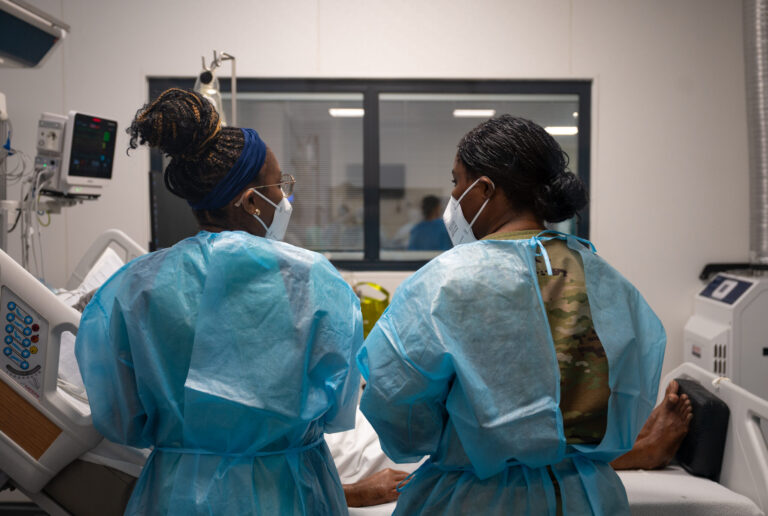
Photo: U.S. Air Force photo by Tech. Sgt. Elora McCutcheon / Wikimedia Commons