


“They Made Us Bleed in Open Water”: USS Truman Returns in Disgrace After Losing Three Super Hornets in Shocking Blow
 By
Adam Kovács
By
Adam Kovács
| IN A NUTSHELL |
|
The recent escalation of conflicts in the Middle East has reverberated beyond the immediate region, affecting international trade and geopolitical dynamics. The Israeli military actions in Gaza have prompted a regional upheaval, drawing in various actors and leading to significant maritime security concerns. The Houthis, with Iranian backing, have targeted vessels in the strategic Red Sea corridor, impacting the global shipping industry. This situation has compelled major naval powers, including the United States, to deploy forces to ensure the safety of these critical maritime routes. The deployment of the USS Harry S. Truman is particularly noteworthy in this context.
Challenges Faced by the USS Harry S. Truman
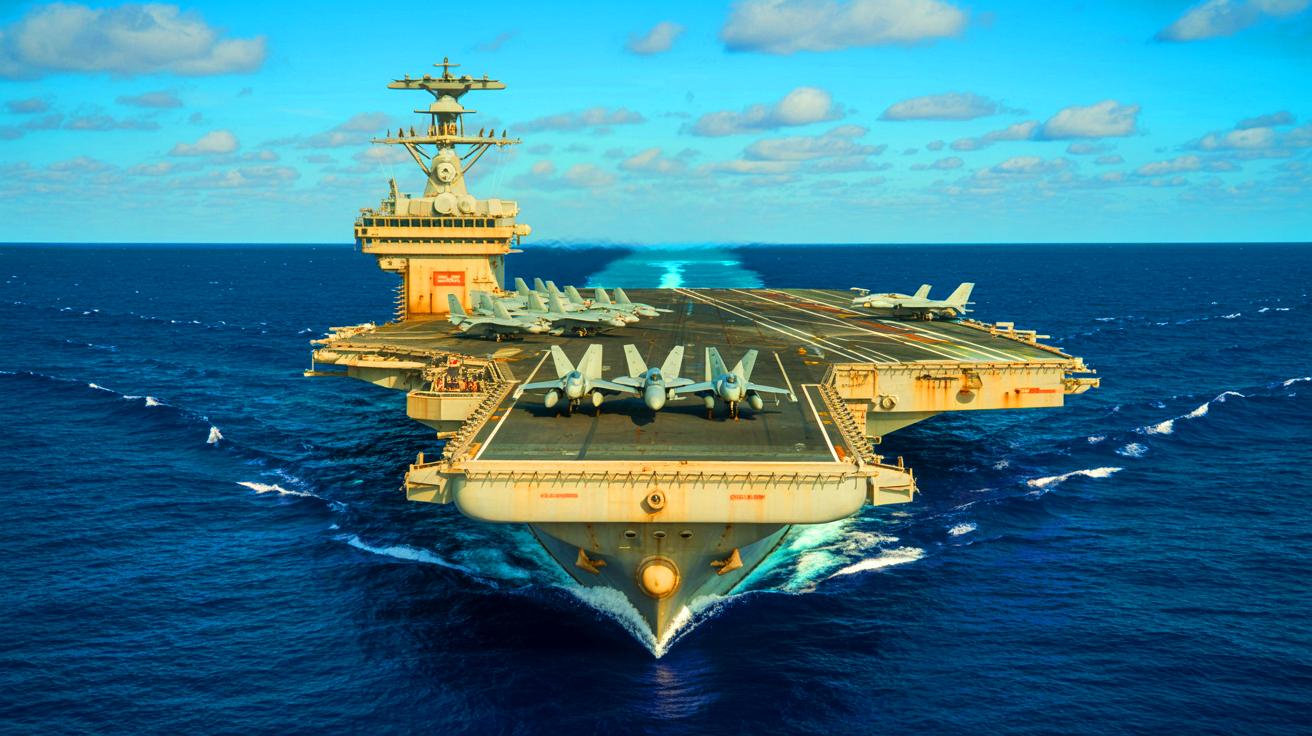
The USS Harry S. Truman, a prominent symbol of American naval power, was dispatched to the troubled waters of the Red Sea in December 2024. This deployment was part of a broader strategy to counter Houthi aggression and secure vital shipping lanes. However, the mission was fraught with unexpected challenges. During its six-month deployment, the aircraft carrier encountered several incidents that raised questions about operational readiness and strategic planning.
Notably, the Truman lost three aircraft, a significant blow to its operational capabilities. In one embarrassing incident, an F/A-18 Super Hornet was mistakenly shot down by a missile cruiser from its own fleet, the USS Gettysburg. Fortunately, the pilots survived, but the incident underscored potential flaws in coordination and communication within the naval task force. The financial implications were also considerable, with each Super Hornet valued at approximately $60 million. Such losses, both material and reputational, highlight the complexities of modern naval warfare.
Implications of the Losses for the U.S. Navy
These incidents have prompted a reevaluation of the U.S. Navy’s preparedness and strategic approach. The collision with a Panamanian merchant vessel near Port Said further complicated the Truman’s deployment, resulting in the dismissal of its commander, Captain Dave Snowden. The loss of another F/A-18, due to a mishap during routine operations, added to the challenges faced by the Truman’s crew.
The cumulative effect of these events has been a decline in confidence in the Navy’s ability to operate effectively under pressure. While the Truman was not directly hit by Houthi missiles, the loss of aircraft against a technologically inferior adversary raises concerns about future engagements with more capable foes, such as China. The incidents highlight the need for improved training, better coordination, and enhanced resilience in the face of unforeseen challenges.
The Strategic Importance of the Red Sea
The Red Sea is a crucial maritime corridor, linking the Mediterranean Sea through the Suez Canal to the Indian Ocean. This passage is vital for global trade, and any disruption can have far-reaching economic consequences. The Houthi threat, therefore, represents a significant challenge not only to regional stability but also to international commerce.
The United States and its allies have a vested interest in maintaining the security of these waters. The deployment of naval forces, including the Truman, underscores the strategic importance of the Red Sea. However, the incidents involving the Truman highlight the complexities of maintaining security in such a contested space. The need for enhanced cooperation among naval forces, better intelligence sharing, and robust contingency planning is more apparent than ever.
Looking Ahead: Lessons and Future Strategies
The experiences of the USS Harry S. Truman during its deployment offer valuable lessons for future naval operations. The incidents underscore the importance of rigorous training and the need to anticipate and mitigate potential risks. Moreover, they highlight the necessity for strong leadership and effective decision-making in high-pressure situations.
As the U.S. Navy continues to adapt to a rapidly changing geopolitical landscape, it must focus on enhancing its capabilities and readiness. This involves investing in advanced technologies, improving operational coordination, and fostering partnerships with allies to ensure the security of critical maritime routes.
The challenges faced by the Truman raise important questions about the future of naval warfare. How can the Navy better prepare for complex, multi-dimensional threats in an increasingly volatile world?
Continue reading