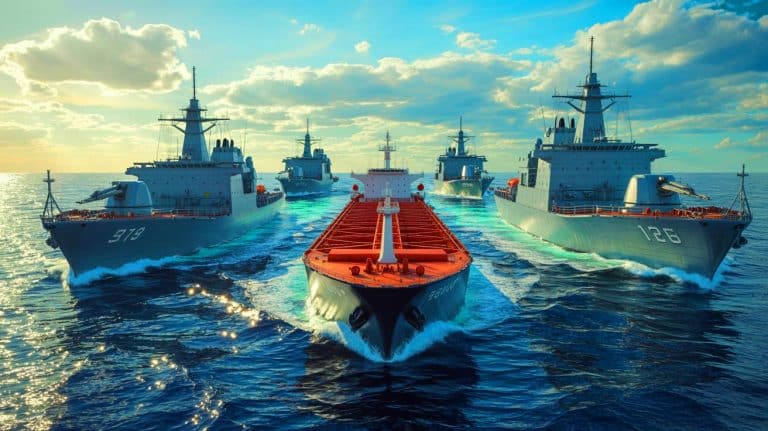



“They Said It Was Impossible”: This Revolutionary Bengal MC Autonomous Warship Carries 88,000-Pound Payload at 57 mph-A Naval Game-Changer
 By
Adam Kovács
By
Adam Kovács

| IN A NUTSHELL |
|
In the ever-evolving landscape of military technology, autonomous warships are setting new standards for naval warfare. Recently, Eureka Naval Craft unveiled their groundbreaking vessel, the AIRCAT Bengal Module Carrier (MC), at the Sea Air and Space Exhibition in Maryland. This revolutionary ship is not only capable of carrying an impressive 88,000-pound payload, but it can also reach speeds of up to 57 mph. As these advancements in technology continue to blur the lines between conventional and autonomous warships, the Bengal MC stands out as a beacon of innovation, promising to redefine naval capabilities and strategies.
Revolutionizing Naval Warfare with Advanced Autonomy
The Bengal MC represents a significant leap forward in the development of autonomous naval vessels. With the integration of AI-powered autonomy developed by Greenroom Robotics, this ship is capable of performing complex missions without the need for a human crew. This level of autonomy allows it to be deployed in potentially hazardous situations, reducing risk to personnel while enhancing operational effectiveness. The ship’s modular construction allows it to be easily reconfigured for various roles, whether as a troop transport, electronic warfare platform, or drone mothership.
This flexibility is crucial in modern warfare, where mission requirements can change rapidly and unpredictably. By eliminating the need for a permanent crew, the Bengal MC can be rapidly deployed and operated with minimal logistical support. This feature not only saves costs but also ensures that the vessel can be utilized in a broader range of scenarios. As autonomous technology continues to advance, we can expect to see more ships like the Bengal MC challenging traditional naval doctrines.
A Technological Marvel: Surface Effect Ship Design
One of the Bengal MC’s most innovative features is its design as a Surface Effect Ship (SES). This unique design combines the attributes of a hovercraft and a catamaran, allowing the vessel to travel on a cushion of air. By trapping pressurized air beneath its hull, the ship significantly reduces friction with the water, enabling it to achieve higher speeds than traditional vessels. This design not only enhances speed but also improves fuel efficiency, making the Bengal MC a more sustainable option for navies.
The SES design also contributes to the ship’s ability to perform multiple roles on the battlefield. Whether launching Tomahawk cruise missiles or acting as a minehunter, the Bengal MC’s agility and speed enable it to carry out missions with unprecedented efficiency. The combination of high-speed capability and heavy payload capacity makes it a formidable force on the water, capable of executing fast-attack maneuvers that were previously the domain of much larger ships.
Economic and Strategic Advantages
In addition to its technological prowess, the Bengal MC offers significant economic advantages over traditional warships. Its optimized design and modular construction techniques reduce both manufacturing and repair costs, making it a cost-effective alternative to existing corvettes and frigates. This presents an attractive option for navies looking to maximize their budgets while maintaining advanced capabilities.
The ship’s superior fuel efficiency and lower operational overhead further enhance its appeal. By offering a more economical solution without sacrificing performance, the Bengal MC is well-positioned to disrupt the naval market. As navies around the world face budget constraints, vessels like the Bengal MC provide a pathway to maintain military strength without incurring excessive expenses. With its ability to operate both crewed and uncrewed, the Bengal MC ensures a high degree of operational flexibility that is critical in modern naval warfare.
The Future of Naval Warfare
The unveiling of the AIRCAT Bengal MC marks a turning point in the development of autonomous naval technology. As the demands of modern warfare continue to evolve, the need for versatile, cost-effective, and high-performance ships becomes increasingly apparent. The Bengal MC meets these demands with its innovative design and advanced capabilities, setting a new standard for what autonomous warships can achieve.
As we look to the future, the question remains: how will navies around the world adapt to the rapid advances in autonomous technology, and what role will vessels like the Bengal MC play in shaping the strategies of tomorrow’s military forces?
Continue reading