

“We’re Losing the Race”: GAO Slams Air Force as Hypersonic Cruise Missile Program Falls Dangerously Behind Schedule
 By
Adam Kovács
By
Adam Kovács
| IN A NUTSHELL |
|
The recent report from the U.S. Government Accountability Office (GAO) has cast a spotlight on the delays plaguing the Air Force’s Hypersonic Attack Cruise Missile (HACM) program. These delays have significant implications for the program’s timeline and effectiveness, as the Air Force grapples with fewer flight tests than initially planned. As the armed services push the boundaries of technological innovation, the stakes are high. The development of hypersonic weapons is critical to maintaining global military competitiveness and ensuring national security. The GAO report provides a detailed examination of the challenges faced by the program, highlighting the urgency of addressing these issues. How the Air Force navigates these challenges will set a precedent for future defense initiatives.
Understanding the Hypersonic Attack Cruise Missile Project
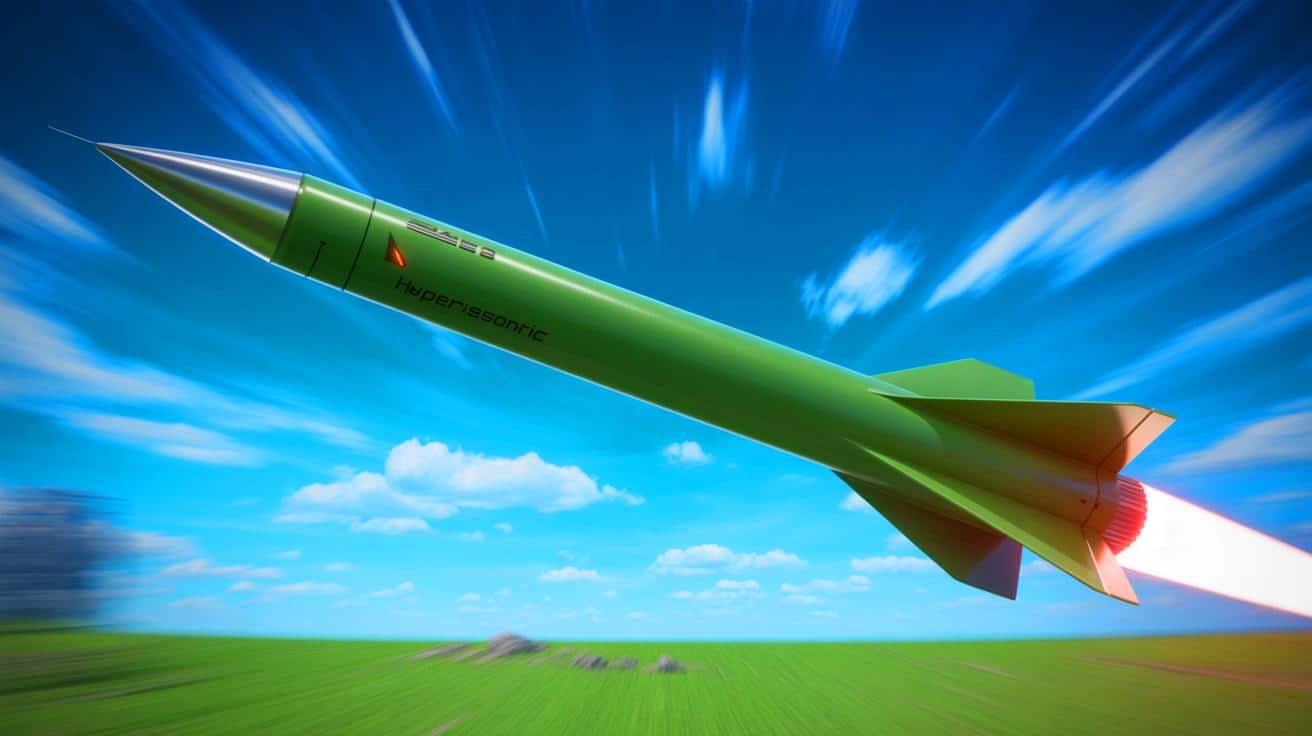
The Hypersonic Attack Cruise Missile, or HACM, is a key component of the Air Force’s strategy to develop cutting-edge hypersonic weaponry. This missile is designed to achieve speeds of at least Mach 5, making it highly maneuverable and capable of evading conventional defense systems. The program, led by Raytheon, a subsidiary of RTX, in collaboration with Northrop Grumman, aims to deliver an operational missile by fiscal year 2027. Despite its ambitious goals, the program has encountered delays in finalizing the missile’s hardware design, pushing back its first design review by six months.
These delays have had a cascading effect, limiting the number of flight tests to five, down from an originally planned seven. The reduction in testing raises concerns about the program’s ability to meet all Middle Tier of Acquisition (MTA) objectives. However, program officials remain optimistic, asserting that the HACM will still establish sufficient confidence to declare it operational. The Air Force’s commitment to rapid prototyping within a five-year framework underscores the urgency of the project, especially in the context of global power competition.
Financial Implications and Cost Management
The financial stakes of the HACM program are significant, with Raytheon initially receiving a $985 million contract, later augmented by a $407 million award, bringing the total contract value to nearly $1.4 billion. As per the latest GAO report, the program’s development cost has risen to approximately $2 billion, a slight increase from previous estimates. This escalation in costs highlights the financial challenges associated with developing advanced military technology.
Despite these challenges, the Air Force and Raytheon are exploring cost-saving measures, including the reduction in flight tests. The financial management of such a high-stakes program is crucial, as it impacts not only the program’s viability but also the broader defense budget. The balance between maintaining rigorous testing protocols and managing costs will be a critical factor in the program’s success. As the Air Force moves forward, it will need to carefully navigate these financial waters to ensure the HACM project meets its strategic objectives without undue budgetary strain.
Comparative Analysis with ARRW Program
The HACM is not the Air Force’s first foray into hypersonic technology. The service is also developing the AGM-183A Air-Launched Rapid Response Weapon (ARRW), a boost-glide missile developed by Lockheed Martin. Unlike the HACM, which uses a scramjet engine for propulsion, the ARRW relies on a rocket motor and is designed for deployment from larger platforms like the B-52 Stratofortress.
Both programs have faced their share of challenges, with ARRW experiencing a rocky test campaign, leading to a reevaluation of its procurement strategy. Despite these hurdles, the Air Force regards both ARRW and HACM as complementary systems, each offering unique capabilities. The contrasting propulsion systems and design philosophies of these two programs underscore the diversity of approaches in hypersonic weapon development. The lessons learned from ARRW’s testing will undoubtedly inform the HACM’s development, as the Air Force seeks to optimize its hypersonic capabilities.
Future Prospects and Strategic Adjustments
In response to the current challenges, the Air Force and Raytheon are revising the HACM’s development schedule to align with the MTA’s five-year rapid prototyping mandate. This involves a strategic shift from a prototype demonstration to delivering an operational capability by fiscal 2027. The Air Force plans to leverage the rapid fielding effort in fiscal 2027 to iterate on the weapon’s design, with an eye toward a major capability acquisition program set to begin production by fiscal 2029.
This strategic adjustment reflects the Air Force’s commitment to maintaining its technological edge amidst rising global competition. By focusing on a minimum viable product that meets user-defined performance requirements, the Air Force aims to deliver an operationally relevant capability within the stipulated timeframe. As the program progresses, the Air Force’s ability to adapt and innovate will be crucial in overcoming the hurdles that have historically impeded hypersonic weapon development.
The Air Force’s pursuit of hypersonic technology through the HACM program is a testament to its commitment to innovation and national security. The program faces significant challenges, from design delays to financial pressures, yet it remains a critical component of the Air Force’s strategic arsenal. How will the Air Force balance these challenges while ensuring the HACM program meets its ambitious goals?