

US Ships “Terrifyingly Powerful” 60-Foot Magnet for $25 Billion ITER Project Amid Global Energy Tensions
 By
Adam Kovács
By
Adam Kovács
| IN A NUTSHELL |
|
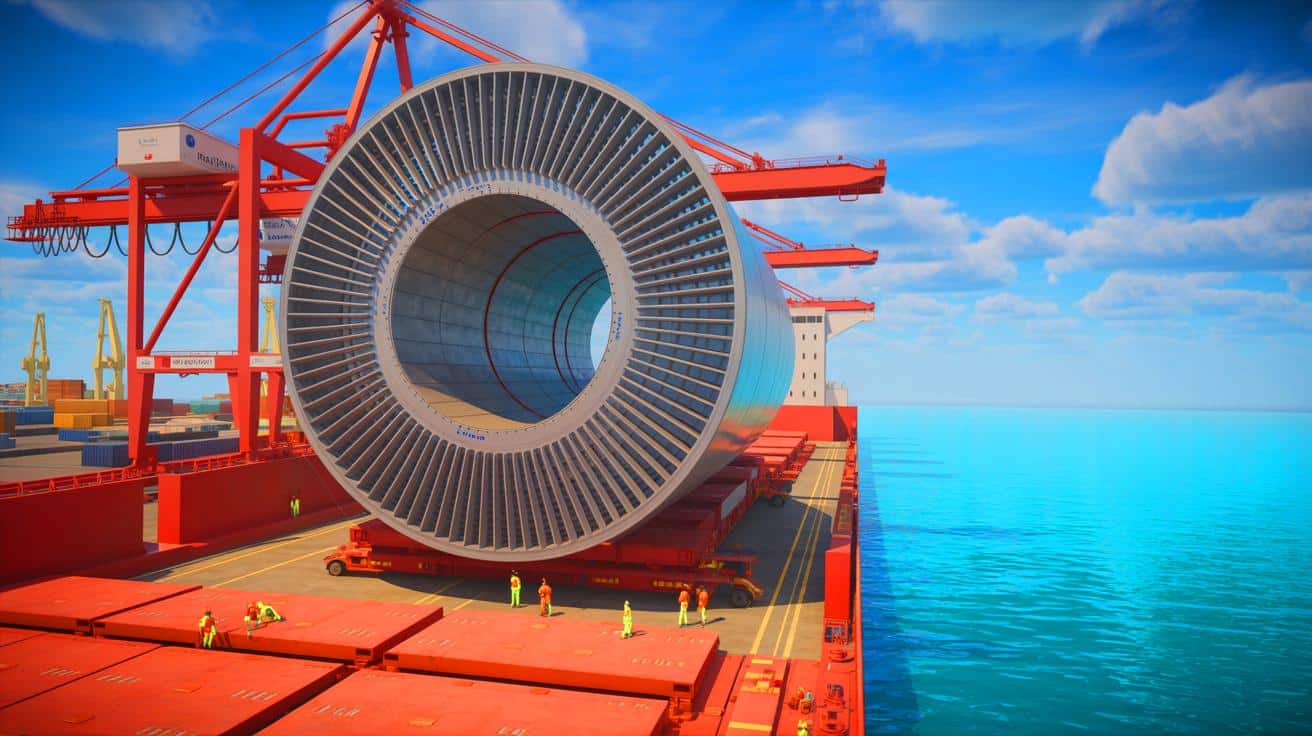
Transporting a 60-foot superconducting magnet from the United States to southern France represents a significant achievement in the pursuit of fusion energy. This ambitious project, known as ITER, aims to mimic the power of the sun here on Earth. Each component that makes its way to the construction site is a step toward realizing the dream of clean and limitless energy. The recent shipment of the central solenoid magnet marks a critical milestone in this journey, bringing the world closer to potentially unlocking a new era of energy production.
The Central Solenoid: A Superconducting Giant
At the heart of the ITER project lies the central solenoid, a towering superconducting magnet. Once fully assembled, it will stand nearly 60 feet tall and weigh approximately 1,000 tons. This massive structure consists of six coil modules, each designed to carry an impressive 45,000 amperes in a 13-tesla magnetic field. The purpose of this giant magnet is to ignite and sustain the fusion plasma required for energy production. During operation, these coils must withstand forces comparable to twice the thrust of a space shuttle at liftoff. This capability underscores the engineering marvel that the central solenoid represents and highlights the challenges involved in constructing such a complex piece of technology.
Building the Mighty Exoskeleton: US Industry Joins Forces
The construction of the central solenoid’s exoskeleton, or “magnetic cage,” is a testament to the collaborative efforts of American industry. Eight U.S. companies came together to create this crucial component, with Superbolt Inc. from Pennsylvania leading the charge. The exoskeleton features 27 tie plates, each 50 feet long, meticulously machined to tolerances of less than 0.04 inches.
Did you know? These tie plates connect the solenoid’s foundation to its upper key blocks, forming a cage that secures the magnet against vertical forces up to 60 meganewtons.
This collaboration not only showcases the prowess of American engineering but also emphasizes the global nature of the ITER project, which relies on contributions from multiple countries to succeed.
Onsite Assembly and the Journey Ahead
At the ITER site in Cadarache, southern France, significant progress has already been made in assembling the central solenoid. Four of the six solenoid modules have been stacked, with the remaining two scheduled for completion by the end of the year. Once the solenoid is fully integrated with the toroidal field coils and the vacuum vessel, engineers will focus on achieving “first plasma,” a critical milestone in the fusion reactor’s development. This phase will be followed by a series of experimental campaigns designed to refine the technology and move closer to sustainable fusion energy production. The successful assembly and operation of the central solenoid are crucial steps in realizing the potential of fusion energy to meet global energy needs.
ITER: A Beacon of International Fusion Endeavor
ITER stands as a symbol of international collaboration, uniting 35 nations, including the United States, the European Union, China, India, Japan, South Korea, and Russia. These countries have come together with a common goal: to demonstrate that fusion can be a viable energy source. The project is on track for first plasma in December 2025, marking the beginning of a multi-year experimental program. The ultimate aim is to achieve deuterium-tritium operation by 2035. The recent delivery of America’s colossal magnet to the ITER site underscores the project’s progress and the global commitment to advancing fusion technology. As the world grapples with climate change and energy sustainability, ITER offers a glimpse of what is possible through collective effort and innovation.
The journey toward harnessing fusion energy is fraught with challenges, yet the potential rewards are immense. The successful transport and assembly of the central solenoid magnet bring us closer to a future where clean and abundant energy could become a reality. As the world watches and waits, a critical question remains: Will humanity’s collaborative efforts and technological ingenuity be sufficient to unlock the power of the stars for a sustainable future?
Continue reading