



Darkstar SR-72 Stuns World as Hypersonic Jet Reaches Mach 6 and Signals Bold Warning to Russia and China on Military Supremacy
 By
Adam Kovács
By
Adam Kovács
| IN A NUTSHELL |
|
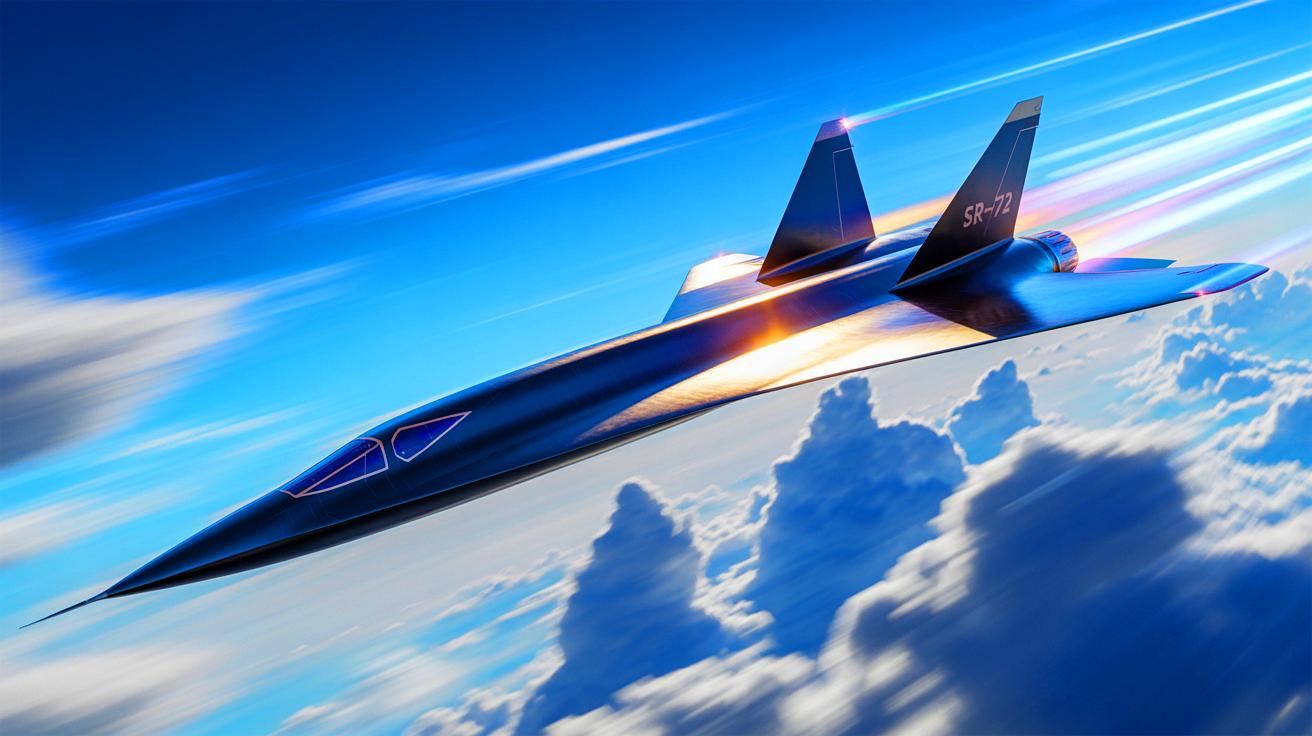
The potential development of the SR-72, a successor to the iconic SR-71 Blackbird, has stirred considerable interest in the aerospace and defense communities. This hypothetical aircraft, often referred to as “Son of Blackbird,” is rumored to be capable of reaching speeds exceeding Mach 6, significantly advancing aerial reconnaissance capabilities. Lockheed Martin, the visionary behind the original Blackbird, has hinted at the possibility of such an aircraft, leaving enthusiasts and experts alike wondering about the feasibility and current status of this project. This article delves into the clues and implications surrounding this elusive aircraft.
SR-72: A New Standard in Aerial Speed
The SR-71 Blackbird, developed by Lockheed Martin during the Cold War, was a marvel of its time, renowned for its ability to perform high-speed reconnaissance missions at altitudes above 80,000 feet. With speeds surpassing Mach 3, it was virtually invincible to enemy defenses. Since its retirement in the late 1990s, rumors of a successor have persisted, potentially taking the form of the SR-72, a hypersonic aircraft capable of Mach 6 speeds.
Such a development would position the SR-72 as a formidable strategic asset, enabling rapid deployment across vast distances while evading even the most sophisticated air defenses. This capability would be particularly advantageous in modern geopolitical contexts where speed and stealth are paramount. Although Lockheed Martin has not officially confirmed the existence of the SR-72, the mere possibility has already captured the imagination of military strategists worldwide.
From the Silver Screen to Reality
The 2022 film “Top Gun: Maverick” introduced audiences to an aircraft named Darkstar, piloted by Tom Cruise’s character. This fictional plane bears a striking resemblance to what a real SR-72 might look like. Interestingly, Lockheed Martin collaborated with the filmmakers to design Darkstar’s exterior, suggesting that its design may incorporate real aerospace concepts.
This cinematic portrayal has fueled speculation that the SR-72 could be closer to reality than previously thought. Whether Darkstar represents a prototype or simply a conceptual model remains unknown, but the collaboration itself indicates that Lockheed Martin is seriously exploring the potential of such an aircraft. The film’s impact has been significant, making the concept of hypersonic flight more tangible to the public and further igniting interest in the SR-72 project.
Clues and Speculations
In March 2023, Lockheed Martin released two cryptic tweets that sparked online discussions about the SR-72. The first tweet, featuring an image of the SR-71, proclaimed it as “still the fastest known atmospheric aircraft,” hinting at the existence of an even faster successor. The second tweet, in celebration of “Top Gun,” included images of the film’s hypersonic aircraft, with Lockheed Martin stating, “We share Maverick-worthy real aircraft images.”
These hints have led to widespread speculation about Lockheed Martin’s involvement in hypersonic aviation development. While concrete details remain scarce, these social media posts suggest that the company is invested in pushing the boundaries of speed and technology. The aerospace community continues to scrutinize every hint, eagerly awaiting any confirmation of the SR-72’s existence and capabilities.
Balancing Speed and Defense
The SR-71’s primary advantage was its speed; it could outrun enemy missiles without complex evasive maneuvers. A hypothetical SR-72, achieving hypersonic speeds, would enhance this capability, allowing it to conduct global reconnaissance or strike missions in record time. However, advancements in modern air defense technology pose new challenges.
Today’s defense systems, including high-speed missiles like the British Starstreak, which can reach Mach 3.5, present significant threats even to hypersonic aircraft. Therefore, the SR-72 would need not only speed but also enhanced maneuverability and stealth to survive in hostile environments. Finding the right balance between these factors is crucial for the SR-72 to be a viable military asset.
As the aerospace community continues to speculate about the SR-72, the intrigue surrounding its potential development only grows. Lockheed Martin’s actions suggest a keen interest in advancing hypersonic flight, but whether the SR-72 is operational or merely conceptual remains a mystery. With technology advancing at an unprecedented pace, the question lingers: how far will Lockheed Martin go to revolutionize military aviation once again?
Continue reading