



“North Korea Unveils Radar Beast”: This Russian-Inspired Il-76 Aircraft With Sci-Fi Interior Sparks Alarming Shifts In East Asia’s Military Power Balance
 By
Adam Kovács
By
Adam Kovács
| IN A NUTSHELL |
|
The recent unveiling of North Korea’s new airborne early warning and control (AEW&C) aircraft, modeled after the Russian Il-76, has captured global attention. This development marks a significant technological advancement for the nation, raising questions about its potential impact on regional stability in East Asia. The aircraft’s sophisticated interior and enhanced surveillance capabilities suggest a shift in North Korea’s military strategy. By examining these developments, we can better understand the possible strategic and technological implications for the region and beyond.
North Korea’s New Aerial Power
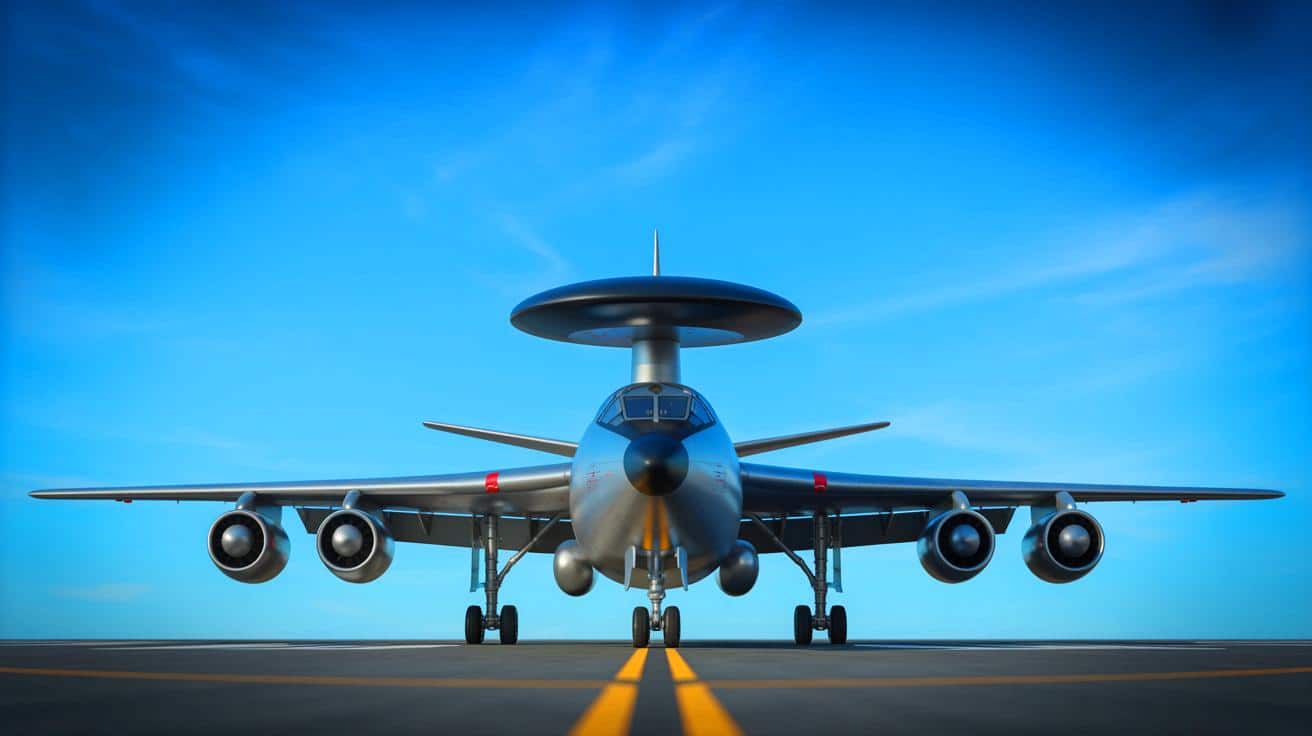
The introduction of this AEW&C aircraft represents a pivotal moment in North Korea’s military modernization efforts. Built on the framework of the Russian Il-76, the aircraft was showcased through official images with Kim Jong Un personally inspecting the plane. Designed for long-range radar surveillance and battlefield coordination, the aircraft draws inspiration from the Russian A-50 and the Chinese KJ-2000 models. It features a fixed radome with three non-rotating phased array radar antennas, providing a 360-degree coverage. This highlights the influence of modern engineering, particularly from China, and underscores the ongoing technological development in North Korea.
The aircraft’s capabilities could potentially alter the strategic balance in East Asia. Its advanced radar system allows for comprehensive situational awareness, which is crucial in both defensive and offensive operations. The ability to monitor airspace over long distances provides North Korea with a significant strategic advantage. This development could necessitate a reevaluation of defense strategies by neighboring countries such as South Korea, Japan, and the United States.
Inside the Jet: High-Tech Aesthetics and Unexpected Luxury
One of the most surprising aspects is the interior of the aircraft, which resembles a science fiction movie set more than a North Korean military platform. Images reveal at least seven individual workstations, each equipped with flat screens and minimalist design, emphasizing real-time data collection and mission coordination. Although the full functionality of this design remains uncertain, the aesthetic alone suggests ambitions for global-level command and control capabilities. The question remains whether North Korea can fully exploit such a complex system.
The presence of high-tech equipment implies a leap in North Korea’s technological capabilities. This shift could redefine the country’s military doctrine, focusing more on information warfare and electronic intelligence. The luxurious interior might also serve as a symbolic gesture, showcasing North Korea’s aspirations to be perceived as a technologically advanced nation.
Strategic Ripples in a Tense Region
The deployment of this aircraft has significant implications for regional security, particularly on the Korean Peninsula. With this jet, North Korea could enhance its early warning systems and aerial coordination, potentially complicating military operations by South Korea, Japan, and the United States. This aircraft could become a major asset in the event of conflict, but even in peacetime, it adds an extra layer of complexity to strategic planning and border surveillance.
This development may force neighboring countries to reassess their defense and surveillance strategies. The presence of a sophisticated North Korean aircraft capable of monitoring regional airspace could lead to an arms race, as nations strive to maintain a technological edge. The strategic landscape in East Asia is likely to become more complex, with each country seeking to balance deterrence and diplomacy.
Russia and China: Influence Behind the Scenes?
A key question remains unanswered: to what extent did foreign assistance play a role in the construction of this aircraft? The design clearly draws from Russian and Chinese models, but it is difficult to ascertain whether there were direct collaborations, third-party purchases, or technological imitation. Similar aircraft, like the A-50, are already in service in countries such as India, Iran, and Iraq, hinting at the possibility of technological transfer through indirect means. North Korea is known for its ability to circumvent sanctions, but any confirmed collaboration with foreign powers would raise serious diplomatic concerns.
The potential involvement of Russia and China in this development could have broader geopolitical implications. If these countries provided direct assistance, it might signal a shift in alliances and power dynamics in the region. The international community will be closely monitoring any developments in this area, as they could influence global diplomatic relations and security strategies.
As the world closely observes developments surrounding this aircraft, its impact on regional dynamics remains to be seen. The luxury of its interior and the sophistication of its technology raise fundamental questions: will this aircraft become a central pillar of North Korea’s air defense system, or is it more of a statement of intent than an operational force? The strategic implications of this technological advancement are profound, and the answers to these questions could redefine security in East Asia. How might neighboring countries adapt their strategies in response to this new reality?
Continue reading