


“We Created A Drone Hive Mind”: Durham University’s T-STAR System Lets Swarms Share Data Instantly At High Speed
 By
Adam Kovács
By
Adam Kovács
| IN A NUTSHELL |
|
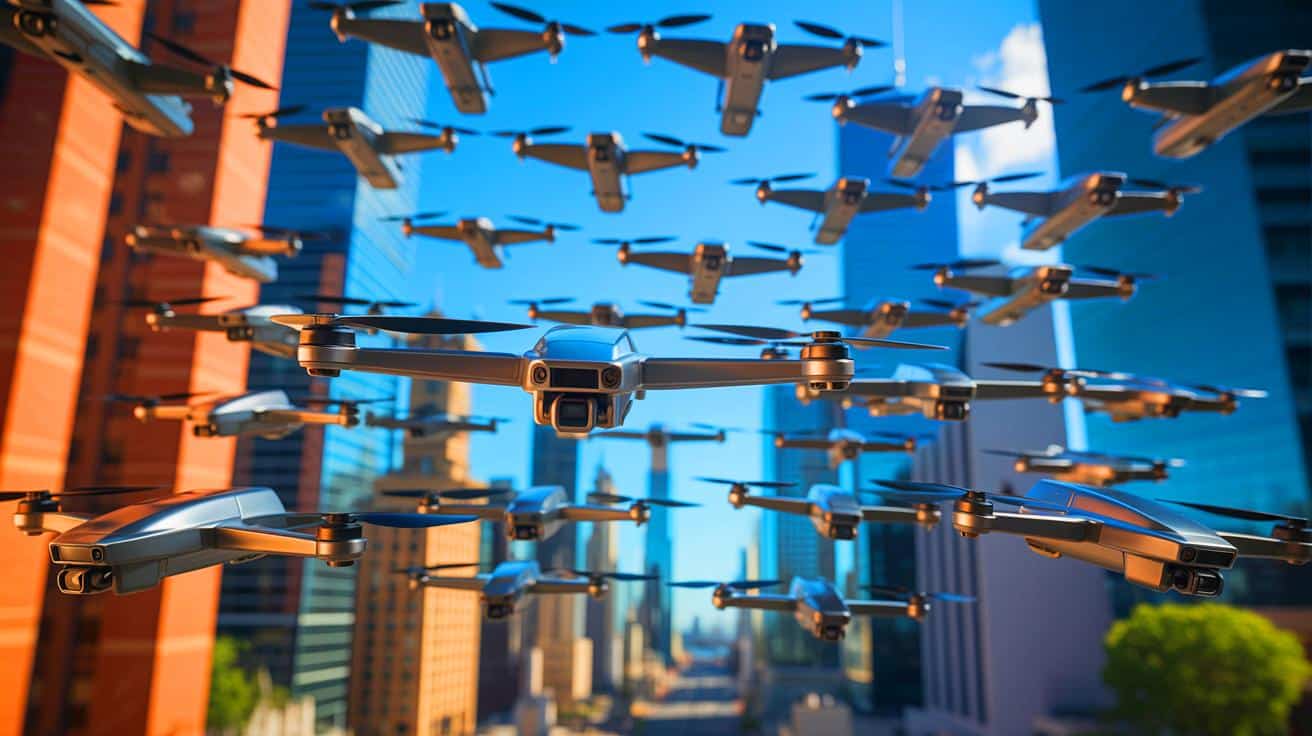
The field of drone technology is experiencing a groundbreaking evolution with the advent of T-STAR, a system developed by researchers at Durham University. This new innovation allows drone swarms to fly at high speeds while minimizing the risk of collisions. The T-STAR system emphasizes real-time communication among drones, enabling them to share data instantaneously and make rapid decisions. This development has the potential to transform various sectors, from emergency response to agriculture, by providing safer and more efficient drone operations.
The Challenge of Coordination
Traditionally, managing drone swarms has been a complex challenge, primarily due to the risk of mid-air collisions. Drones operating in groups often had to reduce their speed to maintain a safe distance from one another, which limited their effectiveness in urgent scenarios. This limitation was particularly evident in operations such as search and rescue missions, where delayed responses could mean the difference between life and death.
The introduction of the T-STAR system addresses these challenges by allowing drones to operate at optimal speeds without compromising safety. By leveraging real-time data sharing and decision-making capabilities, drones can navigate crowded spaces more effectively. This advancement is crucial for missions in high-risk conditions, such as disaster relief efforts, where speed and precision are paramount.
Understanding the T-STAR System
The T-STAR system is a breakthrough in the field of drone swarm technology, focusing on enhancing communication and coordination among drones. This system enables drones to exchange information in real time, allowing them to avoid collisions and perform tasks more efficiently. Initial tests have demonstrated that drone swarms equipped with T-STAR can complete missions faster and with greater reliability.
Dr. Junyan Hu of Durham University, the lead author of the study, expressed optimism about the system’s potential. He noted that T-STAR empowers autonomous aerial vehicles to function as a truly intelligent swarm, combining speed, safety, and coordination in unprecedented ways. This innovation opens up new possibilities for utilizing cooperative robotic swarms in complex scenarios where every second counts.
Potential applications of the T-STAR system extend beyond emergency response. Industries such as logistics and agriculture could benefit from autonomous flying robots that operate at scale, enhancing efficiency and reducing operational costs.
Comparative Developments in Drone Technology
While T-STAR is a significant advancement, it is not the only system exploring improved drone coordination. Earlier this year, Lockheed Martin and IBM introduced a similar technology designed for military applications. Their system enables drones to adapt and evolve in real-time combat situations, enhancing their operational capabilities.
In another instance, a Kyiv-based company, Ark Robotics, developed a unified interface allowing a single operator to control multiple drones. This approach also addresses communication and coordination challenges, enabling faster mission completion. These parallel developments highlight the growing interest and investment in drone swarm technologies, each catering to different needs and applications.
The Future of Drone Swarms
The introduction of the T-STAR system signifies a pivotal moment in drone technology, showcasing how innovation can expand the boundaries of what’s possible. By enabling drones to move together with greater harmony and intelligence, T-STAR offers a glimpse into a future where drones play a more integral role in various sectors.
This advancement raises intriguing possibilities for the everyday use of drones, such as delivering medical supplies to remote areas or monitoring environmental changes more efficiently. As the technology continues to evolve, the question remains: how will society adapt to and integrate these increasingly intelligent drone swarms into daily life? The potential for drones to reshape industries is vast, and the coming years will likely reveal the full extent of this transformation.
Continue reading